Key facts
- A sterile fly production plant was inaugurated in Metapa de Dominguez, Chiapas, Mexico.
Mexico and the U.S. inaugurated a $50 million sterile fly production plant in Chiapas to combat the New World screwworm outbreak. The facility aims to produce 100 million sterile flies weekly, a crucial step in controlling the parasite that has disrupted cattle trade and infected thousands of animals.
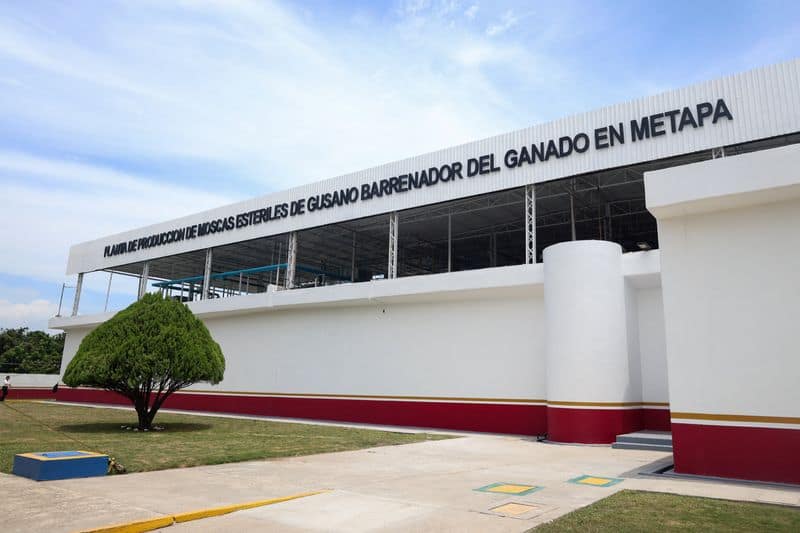
The inauguration of this sterile fly plant marks a critical joint effort between the U.S. and Mexico to control a devastating livestock parasite, aiming to mitigate significant economic disruptions to the cattle trade and protect animal health across borders.
Senior Mexican and U.S. officials inaugurated a sterile fly production plant in southern Chiapas on Saturday, a significant development in the effort to contain the New World screwworm outbreak that has spread across borders and disrupted cattle trade. The facility in Metapa de Dominguez, near the Guatemala border, is a $50 million U.S.-Mexico project designed to eventually produce up to 100 million sterile flies weekly to suppress the wild screwworm population.
The parasite burrows into the flesh of warm-blooded animals and can be fatal if untreated. Despite the new capacity, experts note that the total supply of sterile flies may fall short of what is needed for complete eradication.
The launch follows Mexico's confirmation of its first screwworm case in November 2024. The outbreak spread northward through Mexico and into Texas in early June, raising concerns for the U.S. cattle industry. U.S. Agriculture Secretary Brooke Rollins expressed optimism, stating, "Our countries have beaten this before... We will beat the New World screwworm again sooner than anyone would have thought because of the extraordinary work that is going to happen at this facility."
Despite warnings dating back to 2023 from the Panama-United States Commission for the Eradication and Prevention of Screwworm (COPEG), containment efforts struggled. The parasite has infected over 30,000 animals in Mexico. Neither country announced plans for these sterile fly plants until 2025.
In response to the outbreak, the U.S. has largely closed its border to Mexican live cattle since May 2025, impacting a trade that previously supplied over 1 million animals annually. This has led to historically tight cattle inventories in the U.S. and prompted Mexican ranchers to increase domestic fattening and processing, resulting in a surge of Mexican beef shipments to the U.S. in 2026.
Mexican President Claudia Sheinbaum emphasized the need for cross-border cooperation, stating, "Animal diseases, pests and the challenges of food safety aren't limited by borders. In the face of those challenges, the best response is to team up, share our experiences and build solutions together."
The new plant is expected to double the insect release capacity beyond COPEG's plant in Panama, which operates at about 100 million flies per week and has been releasing sterile flies near the U.S.-Mexico border.