Key facts
- Roadside Real Estate, formerly Sovereign Mines of Africa, has pivoted to focus on acquiring petrol stations.
- The company aims to expand its portfolio to over 100 sites in the next two years.
- Recent acquisitions include 12 petrol stations for £28.6m in April 2026.
- CEO Charles Dickson believes petrol and diesel cars will remain prevalent for at least a decade, downplaying immediate EV charging infrastructure investment.
- The company's stock has seen an eight-fold increase since the beginning of 2024, surpassing a £100m market cap.
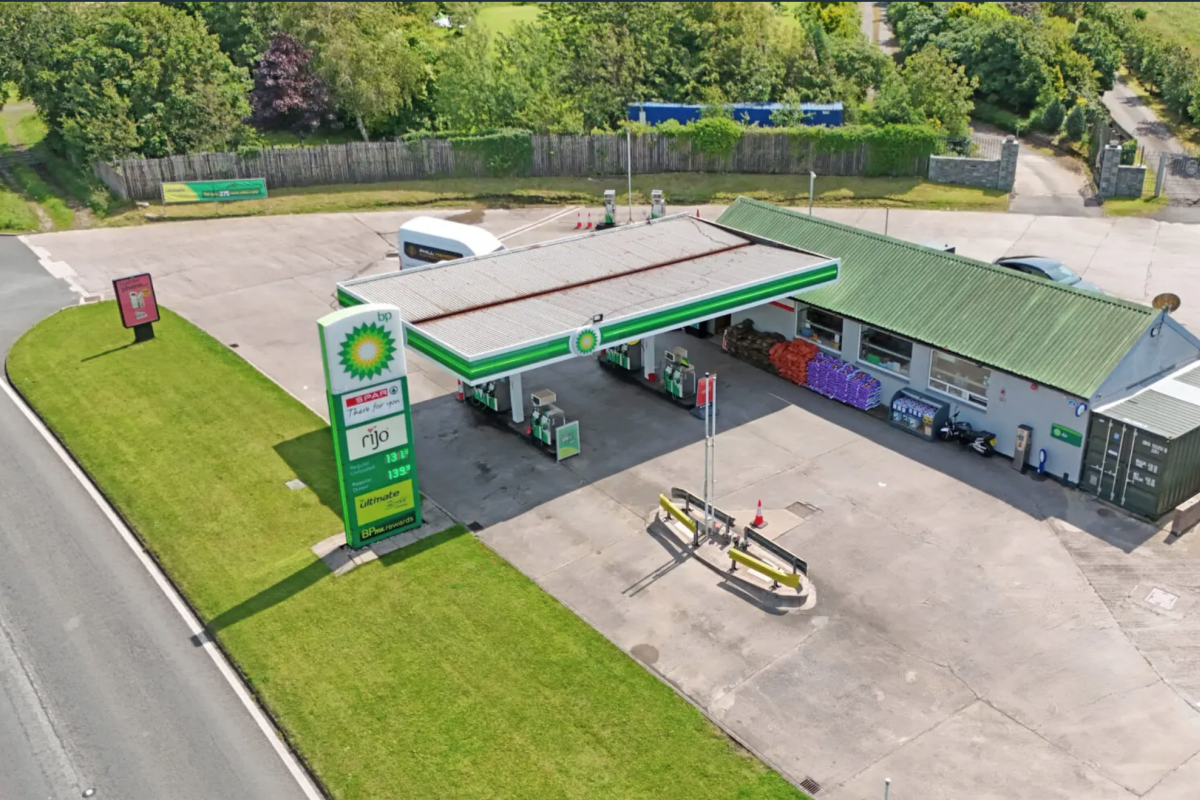
Roadside Real Estate, a company with a history of diverse acquisitions including gold mining interests, a pub chain, and a biotech business, is now aggressively focusing on expanding its portfolio of petrol stations.
Under the leadership of CEO Charles Dickson, the company has undergone a strategic pivot, shedding peripheral investments and rebranding to reflect its core focus on operational real estate, specifically fuel forecourts. Dickson, whose family founded Yates's Wine Lodge, views the business fundamentally as a property enterprise, aiming to offer investors an opportunity in the energy transition sector that is also inheritance tax qualifying.
Since the start of 2024, Roadside Real Estate's stock has seen an eight-fold increase, pushing its market capitalization past £100 million. This growth has been fueled by a series of acquisitions, including a former Sainsbury's petrol station for £1.3 million in July 2025, six more stations for £17.8 million on Christmas Eve 2025, a fuel distribution operation for £11.9 million in February 2026, and an additional 12 forecourts for £28.6 million in April 2026.
Analysts like Darren Shirley from Shore Capital note that this buy-and-build strategy in fuel forecourts is a well-trodden path, citing the success of the Issa brothers, who transformed a small forecourt business into the global EG Group. Despite the increasing momentum of electric vehicles (EVs) in the UK, Dickson remains confident that petrol and diesel cars will remain significant for at least another decade. He suggests that the substantial capital expenditure required for EV charging infrastructure, coupled with lengthy grid connection timelines, makes a serious investment in this area at least ten years away. Dickson points to government data projecting that 77% of cars on the road in 2035 will still be petrol or diesel-powered.
The company's expansion plans are ambitious, with a goal to exceed 100 sites within the next two years and potentially reach 200 to 400 sites within five years. The fragmented nature of the forecourt market, with many owners aging and considering inheritance tax implications, presents ongoing opportunities for consolidation.