Key facts
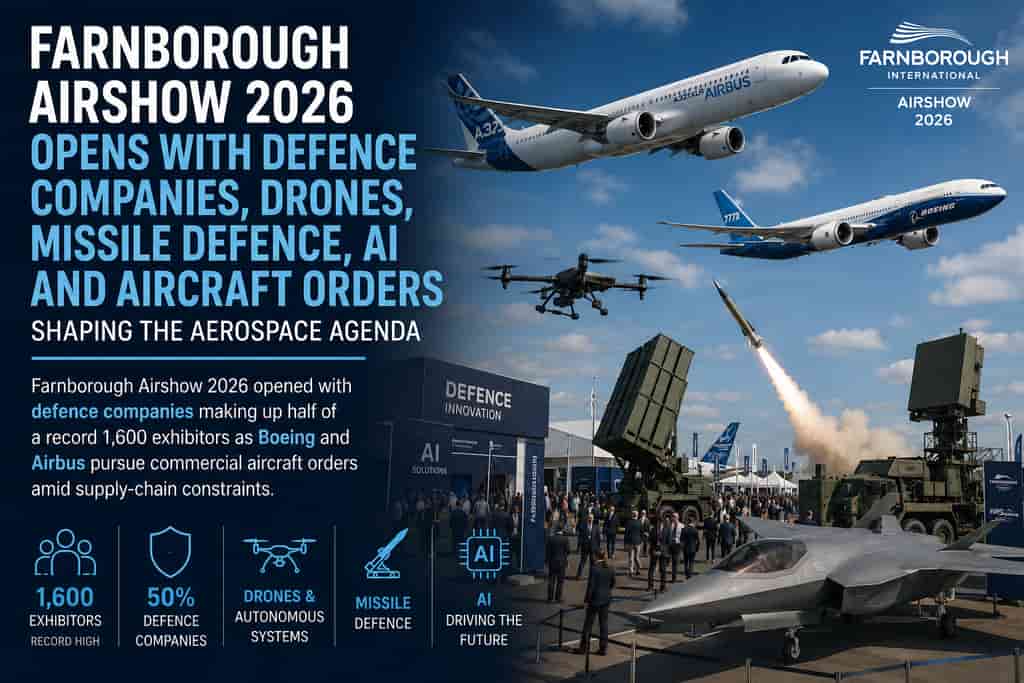
- The Farnborough Airshow has opened with a focus on both commercial aircraft orders and defence technologies.
- Boeing and Airbus are expected to secure aircraft deals, though total orders may fall short of some forecasts due to supply-chain issues.
- Defence companies, accounting for half of the record 1,600 exhibitors, are showcasing drones, missile defence systems, and AI-driven technologies.
- Increased global conflicts are driving higher defence budgets and demand for advanced military capabilities.
The Farnborough Airshow has opened, marked by initial aircraft orders for Boeing and Airbus and a significant presence of defence companies. The event's agenda is heavily influenced by ongoing global conflicts, which are driving increased demand for air defence systems, drones, and artificial intelligence in the aerospace sector.
Defence firms constitute half of the record 1,600 exhibitors at this year's show, highlighting a strategic shift in the aerospace industry. This trend reflects heightened government defence spending in European and allied countries, prompted by lessons learned from recent wars in Ukraine and the Middle East. The focus is on technologies that can address urgent operational requirements, including unmanned fighter jets, kamikaze drones, and autonomous AI software.
While commercial aviation remains a key component, with Boeing and Airbus expected to announce a combined total of just over 300 aircraft orders, this figure is below some analyst forecasts. Supply-chain constraints continue to limit production capacity for aircraft manufacturers, leading them to prioritize production discipline and delivery reliability over solely announcing new deals. The head of Boeing's commercial airplane unit emphasized the company's focus on increasing and improving aircraft production.