South Korea labour minister urges AI profit sharing with suppliers, staff | PiQ Markets
5 storiesAsia-PacificSouth Korea: KOSPI, Samsung, SK Hynix (HBM chips)
South Korea labour minister urges AI profit sharing with suppliers, staff
window 24h
IN SHORT
South Korea is set to overhaul its election process following ballot shortages during recent local elections that led to voter anger and damaged the nation's democratic image. President Lee Jae Myung has ordered a comprehensive investigation into the incident, directing the prosecution and police to probe the matter. The head of the National Election Commission has resigned amid the fallout. Separately, the Democratic Party won most provincial races, though the People Power Party retained the Seoul mayoralty.
✉Newsletter
PiQ Daily
Pick your topics. Get only what matters, on your cadence.
Key Numbers
16provincial elections contested
12provincial elections won by the DP
Who's Involved
Lee Jae Myung
President of South Korea ordering election probe
National Election Commission
South Korean body responsible for elections
Democratic Party (DP)
Political party winning most provincial races
People Power Party (PPP)
Political party retaining Seoul mayoralty
Kim Young-hoon
South Korea Labour Minister urging AI profit sharing
Samsung Electronics
Major tech firm mentioned regarding AI profit sharing
Key facts
South Korea will overhaul its election process due to ballot shortages in recent local elections.
President Lee Jae Myung ordered a probe into the ballot shortage incident.
The prosecution and police have been directed to investigate the ballot shortages.
The head of the National Election Commission resigned following the ballot shortage issue.
Voters were angered by ballot shortages at polling stations.
Some voters were unable to cast ballots, while others voted after counting began.
The Democratic Party won 12 out of 16 provincial elections.
The People Power Party retained the Seoul mayoralty.
Labour Minister Kim Young-hoon urged tech firms to share AI profits with suppliers and staff.
Samsung Electronics was mentioned as a major tech firm.
South Korea is undertaking a significant overhaul of its election processes in response to ballot shortages that marred recent local elections. The shortages led to public outcry and are seen as having damaged the country's democratic reputation. President Lee Jae Myung has ordered a comprehensive investigation into the incident, tasking the prosecution and police with conducting the probe. He also expressed regret over the National Election Commission's handling of the situation, which resulted in the resignation of the commission's head.
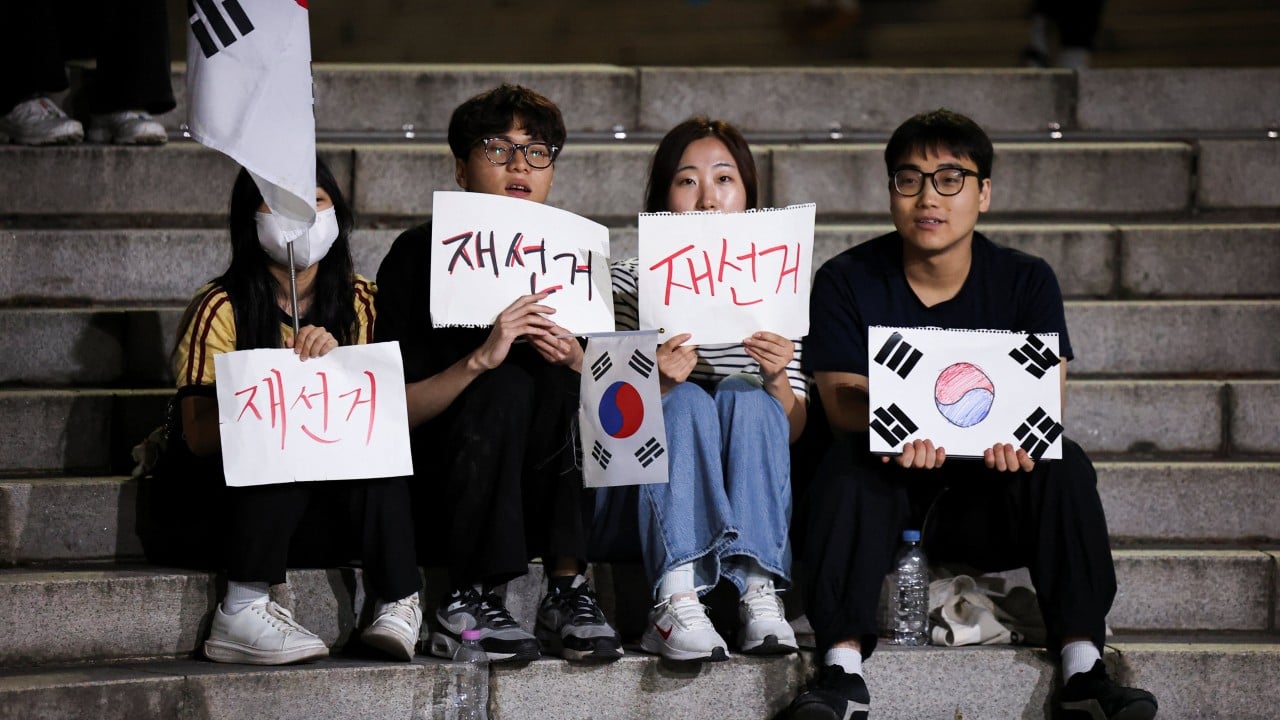
The ballot shortages caused considerable disruption, with young voters demanding answers after numerous polling stations were affected. Some citizens were unable to cast their votes, while others were forced to vote after the counting of ballots had already begun. This incident has prompted calls for reform to ensure the integrity of future electoral processes.
In parallel developments from the local elections, South Korea's Democratic Party (DP) achieved a notable success, winning 12 out of 16 provincial elections. This represents a significant turnaround compared to the results in 2022. However, the ruling People Power Party (PPP) managed to narrowly retain the critical Seoul mayoralty, indicating a mixed electoral outcome.
Separately, South Korea's Labour Minister Kim Young-hoon has urged major tech firms, including Samsung Electronics, to share excess profits generated from the AI boom with their suppliers and staff. He warned that these gains risk exacerbating inequality and proposed social dialogue to establish new distribution rules, while rejecting claims of state intervention.
↳ Why This Matters
South Korea is undertaking a significant overhaul of its election processes in response to ballot shortages that marred recent local elections. The shortages led to public outcry and are seen as having damaged the country's democratic reputation. President Lee Jae Myung has ordered a comprehensive investigation into the incident, tasking the prosecution and police with conducting the probe. He also expressed regret over the National Election Commission's handling of the situation, which resulted in the resignation of the commission's head.
Frequently asked questions
Minister Kim Young-hoon is urging major tech firms to share excess profits from the AI boom with their suppliers, subcontractors, and workers, suggesting this is a form of reinvestment and a way to combat inequality.
He argues that the massive AI-driven profits risk widening the inequality gap and that these gains are a result of contributions from labor, suppliers, and public resources, not just management.
The proposal has drawn criticism from the conservative opposition, who label it as 'state intervention,' while the presidential office has welcomed the idea of a debate.
Kim previously helped avert a strike at Samsung by brokering a pay deal, indicating a willingness to intervene in labor-management relations, especially concerning the unprecedented profits from the AI chip sector.
What Happens Next
01The Labour Minister plans to host a forum on sharing excess corporate profits.
02South Korea's government, businesses, unions, and suppliers are expected to engage in public dialogue on profit distribution.
Get the newsletter.
Pick the topics you actually care about. We'll email when there's news worth your time, on the cadence you choose. Cancel any time from your account.