Key facts
- China's national GDP growth slowed to 4.7% in the first half of 2026.
- High-tech hubs in China like Zhejiang and Anhui are accelerating growth.
- Traditional industry and property-reliant regions in China are lagging.
- Young Chinese workers are sharing bedrooms and beds to cut rental costs.
- India's industrial output grew 7.3% year-on-year in June.
- India's industrial output grew 5.0% in May (revised).
- Singapore's economic growth is projected to remain steady.
- The Monetary Authority of Singapore identifies AI as a major uncertainty.
- Hong Kong's export growth is expected to continue due to the AI boom.
- China's individual income tax revenue rose 13% to 900 billion yuan in H1 2026.
- China's individual income tax growth was fueled by stock market gains and tech/metals sectors.
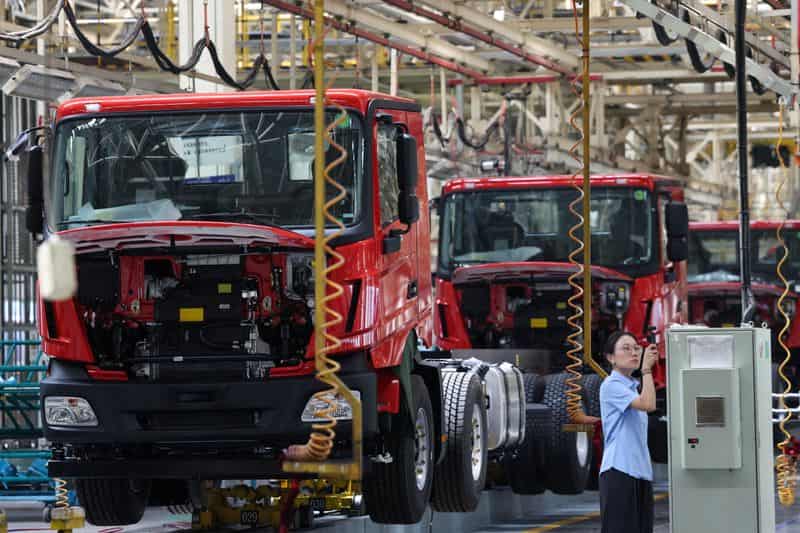
China's economic landscape is marked by increasing divergence, with high-tech manufacturing centers such as Zhejiang and Anhui experiencing accelerated growth, contrasting with lagging traditional industries and property-reliant regions. The nation's Gross Domestic Product (GDP) growth slowed to 4.7% in the first half of 2026. This economic strain is leading young Chinese workers to adopt cost-saving measures, including sharing bedrooms and even beds, to cope with stagnant wages and job insecurity. These trends in slowing growth and flatlining consumption could further impact household spending and property demand.
In contrast to China's uneven performance, India's industrial output demonstrated robust growth, accelerating to 7.3% year-on-year in June. This figure surpassed economists' expectations and was primarily driven by strong manufacturing activity and increased electricity generation, following a revised 5.0% expansion in May. Singapore's economic growth is projected to hold firm, according to the Monetary Authority of Singapore. However, the central bank has identified the rapid advancement of artificial intelligence (AI) as a significant source of uncertainty for the nation's economic outlook.
Further highlighting the impact of technological trends, Hong Kong's export growth is predicted to continue, bolstered by the global AI boom. Economists anticipate this surge will positively influence the city's GDP outlook, driven by heightened demand for technology and related goods. Concurrently, China's individual income tax revenue saw a substantial increase of 13% year-on-year, reaching 900 billion yuan in the first half of 2026. This rise is largely attributed to gains in the stock market and strong performances within the technology and non-ferrous metals sectors.