Key facts
- China's industrial production grew 4.5% in May.
- China's retail sales fell 0.6% in May.
- This is the first monthly drop in retail sales since December 2022.
China's economy shows a widening imbalance as retail sales fell 0.6% in May, the first monthly drop since December 2022. This decline in consumer spending is attributed to households accelerating debt reduction and concerns over falling home prices. In contrast, industrial production rose 4.5% in May, exceeding forecasts, largely driven by demand for AI. Fixed-asset investment also contracted 4.1% in the first five months of the year, deepening economic concerns.
China's economy is exhibiting a significant imbalance, with retail sales experiencing their first monthly contraction since December 2022, falling by 0.6% in May. This downturn in consumer spending is exacerbated by households actively reducing debt and grappling with declining property values, a trend that has been ongoing. The weakening domestic demand is increasing the nation's reliance on exports for economic growth, which have shown strong performance.
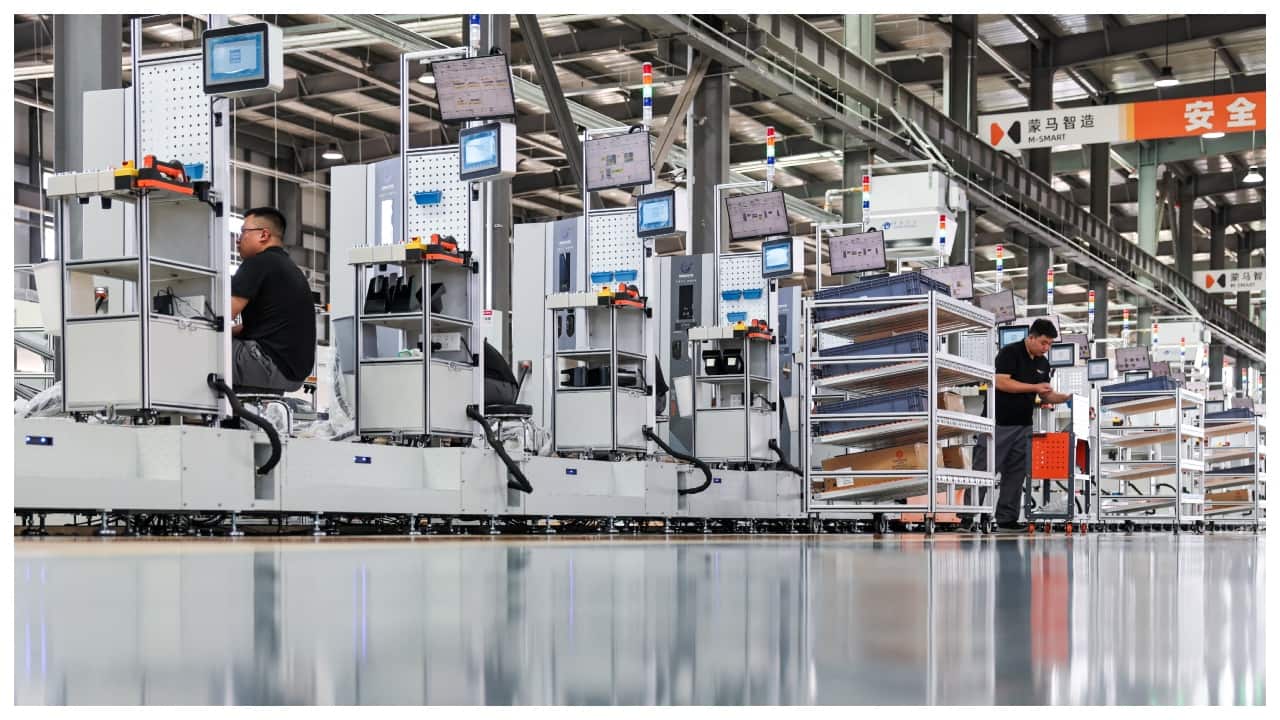
Contrasting with the retail slump, China's industrial production saw a robust increase of 4.5% in May, surpassing analyst expectations. This growth was notably fueled by demand stemming from the artificial intelligence sector. However, fixed-asset investment presented another area of concern, contracting by 4.1% in the first five months of the year. This decline is deeper than anticipated and is attributed to the persistent property crisis and a rare contraction in manufacturing spending.
The economic challenges are further highlighted by a general slump in investment and weakening consumer and business confidence. The protracted property slump and trade uncertainties are contributing factors to the faltering domestic demand. Despite these domestic headwinds, foreign investors re-entered China's sovereign bond market in May, marking their first participation in over a year. This reentry was reportedly driven by the market's resilience during a global debt selloff.
Meanwhile, in a separate economic development, Peru's economy expanded by 3.73% in April year-on-year, exceeding forecasts. This growth was primarily propelled by strong performance in the construction and trade sectors, notwithstanding a contraction in mining and hydrocarbons.
China's economy is exhibiting a significant imbalance, with retail sales experiencing their first monthly contraction since December 2022, falling by 0.6% in May. This downturn in consumer spending is exacerbated by households actively reducing debt and grappling with declining property values, a trend that has been ongoing. The weakening domestic demand is increasing the nation's reliance on exports for economic growth, which have shown strong performance.