Key facts
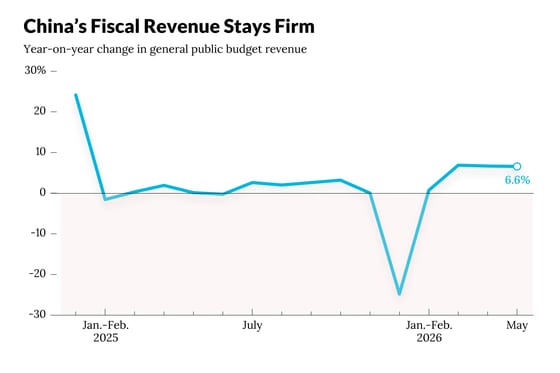
- China's general public budget revenue increased by 6.6% year-on-year in May.
- The revenue increase was driven by a stock market boom and rising prices.
- Government spending contracted for the second consecutive month in May.
- The shrinking government spending challenges Beijing's pledge for a more proactive fiscal stance.
China's general public budget revenue experienced a 6.6% year-on-year rise in May. This increase was primarily attributed to a booming stock market and inflationary pressures. However, government spending contracted for the second consecutive month, presenting a challenge to Beijing's stated intention of adopting a more proactive fiscal stance. The revenue growth, notably from stock market activities, suggests that while certain financial sectors are performing well, the broader fiscal policy may not be effectively translating into increased public expenditure. This situation raises questions about the efficacy of current fiscal strategies in stimulating economic activity and meeting domestic demand. The contraction in spending could indicate a cautious approach by the government or potential constraints on fiscal capacity, despite the revenue gains. The trend of shrinking government spending, if it continues, could impact various sectors reliant on public investment and social programs. Beijing's pledge for a more proactive fiscal policy implies a readiness to increase spending to support economic growth, a commitment that appears to be at odds with the recent spending trends.