Key facts
- China has unveiled measures to deepen Hong Kong's role as an offshore yuan hub.
- New initiatives aim to expand cross-border investment channels.
- Hong Kong's gold trading infrastructure is being expanded.
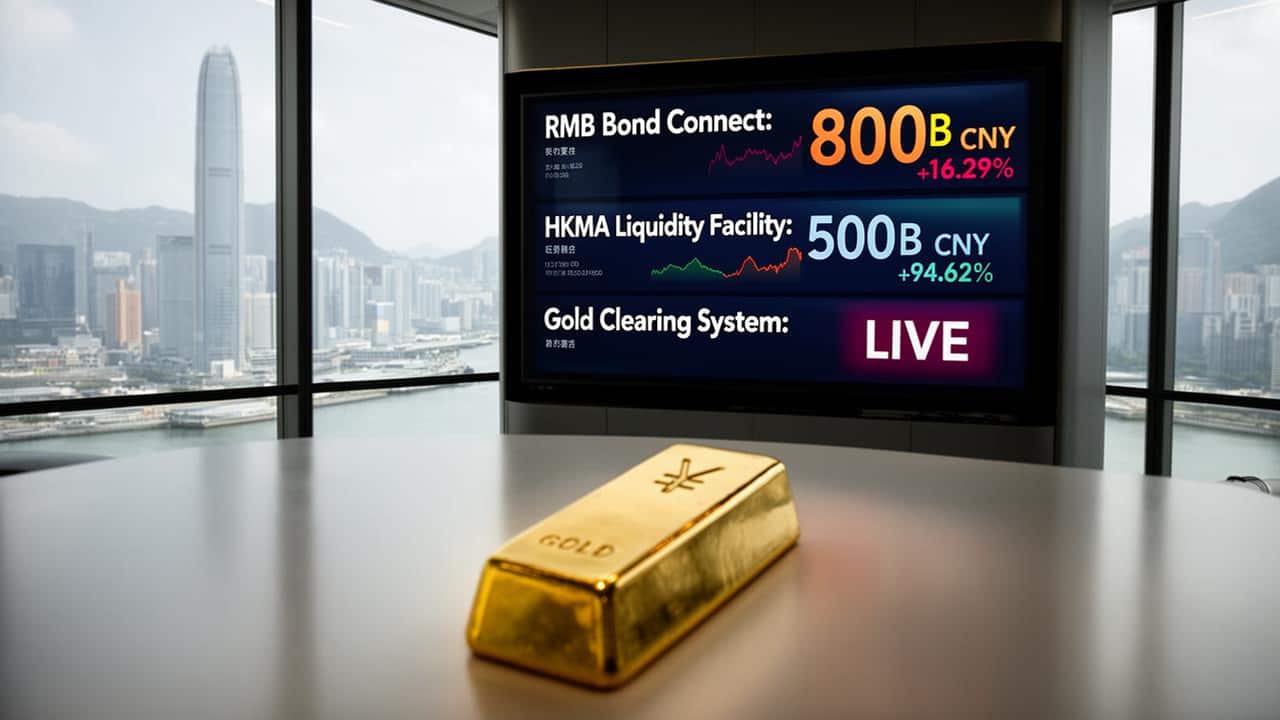
- The southbound Bond Connect quota has increased to 800 billion yuan.
- The RMB liquidity facility with the HKMA has risen to 500 billion yuan.
China has introduced a series of measures to significantly enhance Hong Kong's financial infrastructure and its role as a key offshore yuan hub. The initiatives aim to deepen cross-border investment channels and expand the city's gold trading capabilities. A central component of these measures is the increase in the southbound Bond Connect quota, which has been raised to 800 billion yuan. This expansion allows for greater capital flow into mainland Chinese bonds from Hong Kong investors. Additionally, the RMB liquidity facility provided in conjunction with the Hong Kong Monetary Authority (HKMA) has been elevated to 500 billion yuan. This facility aims to ensure ample yuan liquidity for market operations and financial stability in Hong Kong. These developments are expected to further solidify Hong Kong's position as a vital financial center for China, facilitating international access to Chinese markets and promoting the internationalization of the yuan. The expansion of gold trading infrastructure also signals an effort to leverage Hong Kong's existing strengths in commodity trading and its strategic location.