Key facts
- China aims to deepen Hong Kong's role as an offshore yuan and bond market hub.
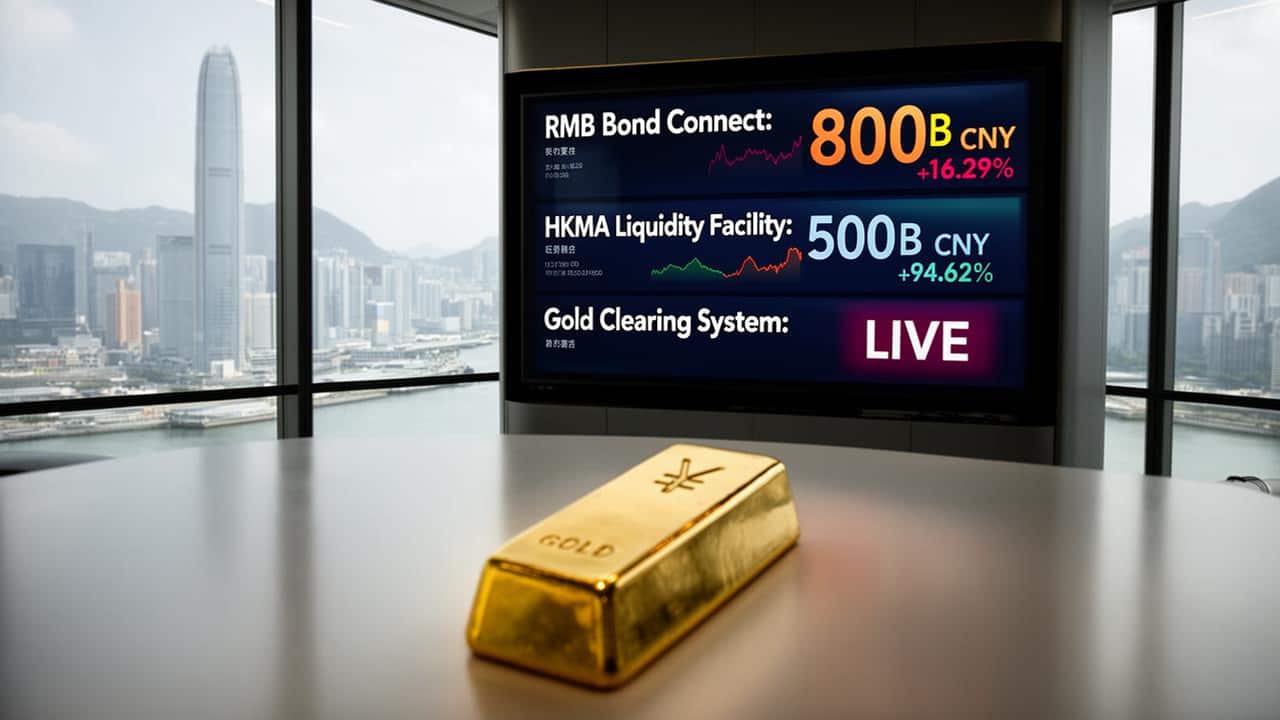
- The southbound Bond Connect quota for mainland investors buying Hong Kong bonds increased to 800 billion yuan.
- The RMB liquidity facility between the PBOC and HKMA was raised to 500 billion yuan.
- Hong Kong launched a central clearing system for gold and revived US dollar gold futures trading.
- Plans include expanding gold storage capacity and exploring renminbi-denominated gold futures.
China has introduced a comprehensive set of financial measures aimed at bolstering Hong Kong's position as a leading offshore renminbi hub and a global financial center. These initiatives include significant expansions of cross-border investment channels and the development of new gold trading infrastructure.
At the Hong Kong Fixed Income and Currency Summit and Bond Connect Forum, People's Bank of China Governor Pan Gongsheng outlined four strategic priorities. A key development is the expansion of the southbound Bond Connect program, increasing the annual net investment quota for mainland Chinese investors in Hong Kong bonds to 800 billion yuan from 500 billion yuan. The scope of eligible products will also broaden to include Hong Kong dollar and renminbi-denominated bonds, extending coverage to Macau's bond market.
To ensure sufficient liquidity, the PBOC will raise its dedicated renminbi facility with the Hong Kong Monetary Authority (HKMA) to 500 billion yuan from 200 billion yuan, with a maximum tenor of three years. The central bank also confirmed the execution of its first transaction under a new repurchase tool, enabling the HKMA to access renminbi liquidity by using high-grade Chinese government bonds as collateral.
Hong Kong is also advancing its ambition to become a regional gold trading and storage hub. Chief Executive John Lee announced the launch of a central clearing system for gold and the revival of US dollar gold futures trading. The city is exploring renminbi-denominated gold futures and has initiated a "Delivery Connect" program with the Shanghai Gold Exchange to facilitate cross-border bullion settlements. The government aims to more than tenfold Hong Kong's total gold storage capacity, targeting over 2,000 tonnes by 2030, and is developing tax incentives for gold trading.
Julia Leung, CEO of the Securities and Futures Commission (SFC), revealed plans for a new electronic platform, developed with the PBOC's trading unit, to enhance efficiency in secondary bond and foreign exchange trading. Pan also stated that China would continue to increase the proportion of its foreign exchange reserves allocated to Hong Kong's financial markets, providing momentum for the capital market's development. The PBOC is also supporting the launch of five-year renminbi government bond futures in Hong Kong.