Key facts
- Chinese companies are leading in advanced technologies such as batteries, solar panels, and rare earths.
- CATL, a Chinese battery manufacturer, has developed technology for electric vehicles with significantly faster charging capabilities.
U.S. officials are concerned about growing reliance on China's advanced technologies, including batteries and solar panels, as Chinese firms like CATL lead in innovation. This shift raises questions about industrial competitiveness and potential geopolitical leverage for Beijing.
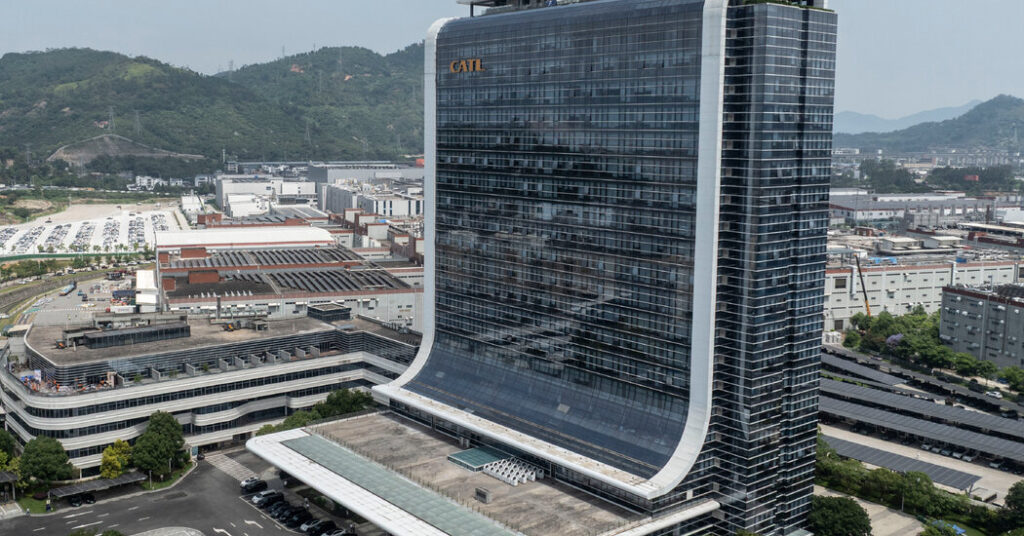
The U.S. faces a critical strategic decision regarding its technological future, balancing the benefits of China's advanced and affordable technologies against the risks of economic dependence and potential geopolitical leverage for Beijing.
Chinese companies are increasingly leading in the development of advanced technologies, prompting concerns among U.S. officials about potential over-reliance. Sectors like batteries, solar panels, and life sciences are seeing China surge ahead, with firms like Contemporary Amperex Technology Company Ltd. (CATL) showcasing innovations such as batteries that can power electric vehicles for 250 miles after less than 10 minutes of charging.
Historically, U.S. companies held a technological advantage, often manufacturing in China and transferring knowledge. However, this dynamic has shifted, with China now developing cutting-edge technologies and planning to dominate global markets. CATL's rapid charging battery technology is already powering millions of Chinese electric vehicles exported worldwide, and the company expresses interest in the U.S. market.
U.S. lawmakers, such as Representative John Moolenaar, argue that China has used subsidies and predatory practices to build market dominance and foster global dependence, calling it a "grave error" to entrust critical industries to Chinese firms. He stated that China subsidized CATL "to undercut non-China competitors and build worldwide dependence."
Conversely, some experts suggest that avoiding collaboration with Chinese firms could cause U.S. companies to fall behind and hinder scientific advancement, including efforts to combat climate change. Kyle Chan, a fellow at the Brookings Institution, noted that the traditional flow of technology and innovation from the West is reversing.
The United States is at an inflection point, needing to decide whether to leverage China's cost-effective and advanced technology or invest significantly in developing an independent supply chain for critical industries like battery manufacturing, which could underpin U.S. energy infrastructure. While U.S. officials are generally opposed to Chinese car imports, there is division regarding batteries, as most major battery makers are foreign companies.