Key facts
- Taiwan plans a $6.6 billion special budget over six years to boost domestic drone production for defense.
- The government aims to purchase over 208,000 coastal attack drones and other uncrewed systems.
- Taiwanese companies are seeking international partnerships to sell drones and components to the US military and other overseas buyers.
- Drone exports from Taiwan reached $115 million in the first three months of 2026.
- Challenges include political deadlock, competition from China's DJI, and reliance on some Chinese-made components.
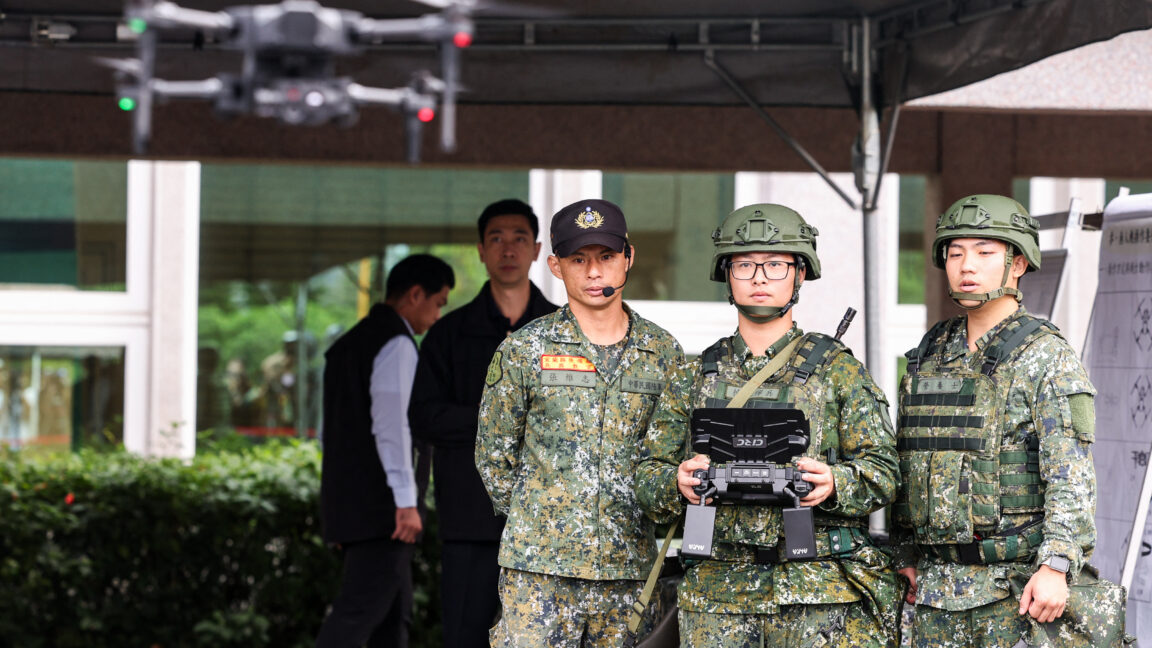
Taiwan is significantly increasing its domestic production of military drones and seeking international partnerships to bolster its defense capabilities amid escalating tensions with China. The Ministry of National Defense has proposed a special budget of $6.6 billion over six years to acquire more than 208,000 drones and other uncrewed systems, aiming to enhance its arsenal beyond current US-made and domestically produced drones.
Taiwanese companies, such as Thunder Tiger, are actively pursuing overseas markets, particularly the US military. Thunder Tiger's drones have qualified for the Pentagon's cleared list, and the company is expanding its manufacturing capabilities with a new facility in Ohio. Other Taiwanese firms are exporting drone components and components to Ukraine and importing countries like Czechia and Poland. These companies are also collaborating with Western firms to integrate advanced AI and software into their drone systems.
Despite these efforts, Taiwan faces challenges, including political disagreements within its legislature that have previously stalled defense funding. The island also contends with the manufacturing scale and competitive pricing of China's drone industry, particularly DJI, which holds a dominant global market share. Furthermore, Taiwanese manufacturers are working to eliminate Chinese-made components from their supply chains.
Inspired by Ukraine's rapid expansion of drone production, Taiwan aims to increase its monthly drone output from 15,000 to over 100,000 by 2030. The government also supports drone flight training for citizens, recognizing the critical role of human operators in drone warfare.