All NewsEducationTV
Equities & FundsCrypto & Digital AssetsAI & TechnologyBusiness & CorporateUS Politics & PolicyGeopolitics & Global RiskMacro, Rates & FXCommodities & EnergyEuropean Politics & MarketsAsia-PacificReal Estate & Property
Story archiveAll categories
← All Stories

South Korean Stocks Surge After AI Demand Rebounds, Samsung Reports Profit Jump

Created at 31 Jul · 4:16 AM1 source↑ Market-relevant
IN SHORT

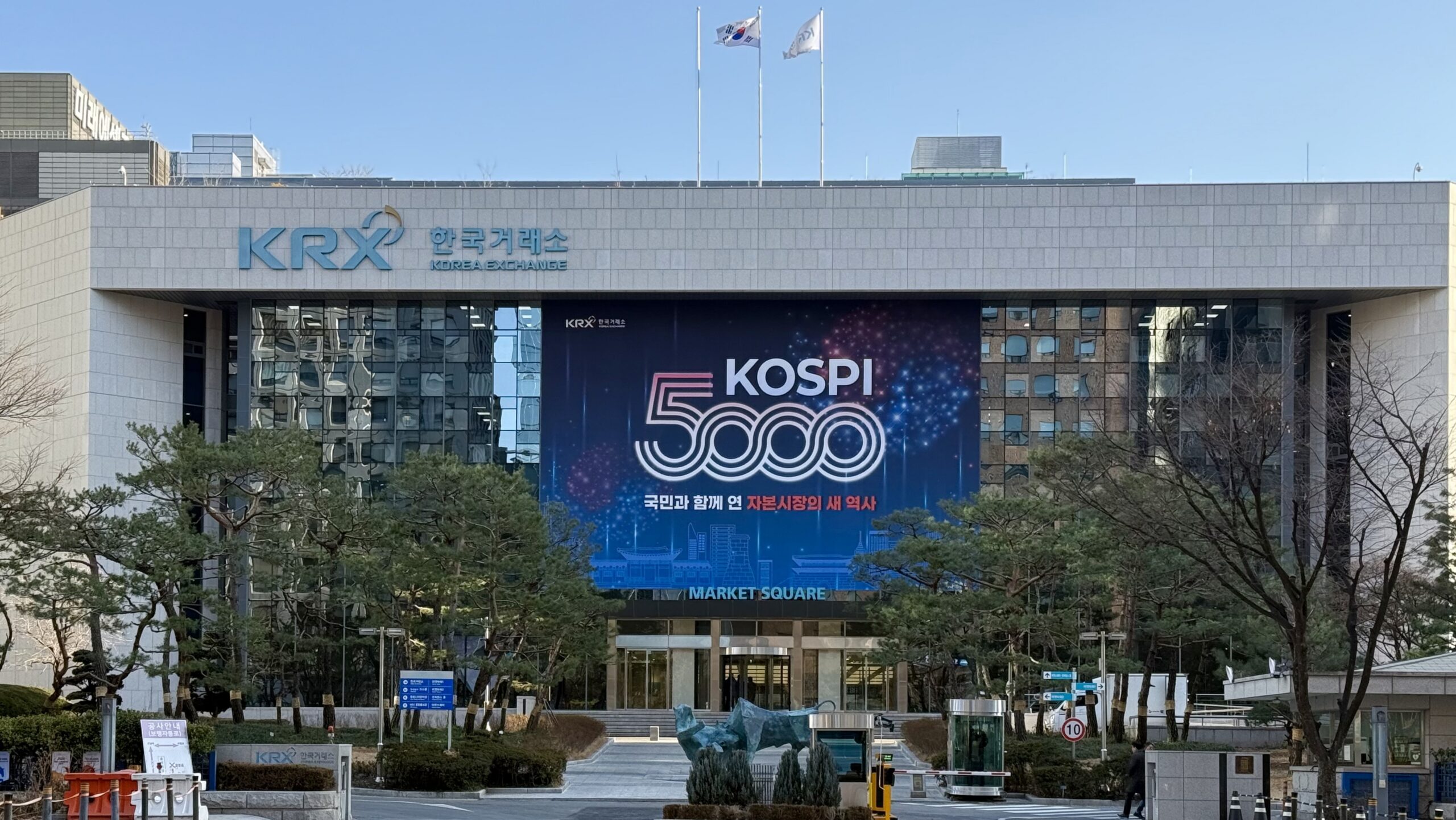
South Korea's KOSPI index rallied significantly, driven by a rebound in AI-driven semiconductor demand and a massive profit surge reported by Samsung Electronics. The gains followed a sharp sell-off, with regulators pledging measures to curb volatility from leveraged ETFs.

✉Newsletter

PiQ Daily

Pick your topics. Get only what matters, on your cadence.

Key Numbers

15 percentstock market surge
3.0 percentgovernment GDP growth forecast for 2026
2.0 percentprevious GDP growth forecast
27 percentKOSPI decline from June 19 high
0.99average KOSPI price-to-book ratio (2014-2024)
1.8average Japan price-to-book ratio
3.7average US price-to-book ratio
48 percentEPS revision for companies excluding Samsung/SK Hynix
261 percentEPS revision for total market including Samsung/SK Hynix
10.1 timesSK Hynix share price rise since June 2025
5.6 timesSamsung Electronics share price rise
1,813 percentSamsung's Q2 operating profit jump
130 percentSamsung's Q2 revenue surge
1,300 percentSamsung's Q2 net profit surge
six percentSamsung's share price rise on Thursday
16 percentSamsung's share price drop on Tuesday/Wednesday
20 percentSK Hynix's share price drop in previous two days
five percentKOSPI rally in morning trade
one percentTokyo stock market rise

Who's Involved

Samsung Electronics
Leading Korean chipmaker reporting significant profit surge
SK Hynix
Leading Korean chipmaker impacted by market volatility
Korea Exchange
Triggered market-wide circuit breakers multiple times
South Korea's finance ministry
Stated commitment to curb leveraged ETF access for retail traders
President Lee Jae Myung
Made boosting the stock market a core economic objective
Microsoft
Reported fastest cloud unit growth in four years
Meta
Posted a disappointing revenue forecast
US President Trump
Made comments regarding potential military action
South Korean Stocks Surge After AI Demand Rebounds, Samsung Reports Profit Jump

↳ Why This Matters

The rally in South Korean stocks, particularly in its dominant semiconductor sector, signals a potential stabilization after a period of extreme volatility. It highlights the market's sensitivity to AI demand and corporate governance reforms, while also underscoring the risks associated with sector concentration and the impact of leveraged trading.

Key facts

  • South Korea's KOSPI index experienced a significant rally, recovering from a sharp sell-off.
  • Samsung Electronics reported an 1,813% increase in second-quarter operating profit, driven by AI-driven demand for memory chips.
  • The rally followed concerns over AI spending, which had previously led to a tech sector retreat.
  • South Korean regulators plan to introduce measures to limit retail traders' access to leveraged ETFs to curb market volatility.
  • The KOSPI has been highly volatile, with its volatility index surpassing its 2008 peak and triggering circuit breakers multiple times.

South Korea's KOSPI index experienced a significant rally, recovering from a sharp sell-off that had seen its volatility index surpass its 2008 global financial crisis peak. The surge was primarily driven by renewed optimism surrounding artificial intelligence demand, which boosted shares of major chipmakers Samsung Electronics and SK Hynix. Samsung Electronics reported a staggering 1,813% jump in second-quarter operating profit, with revenue and net profit also seeing substantial increases, meeting expectations and helping to lift its stock.

This rebound follows a period of intense volatility for the KOSPI, which had triggered market-wide circuit breakers multiple times. Analysts suggest that concerns over the vast sums being invested in AI and the timing of returns had contributed to the previous downturn. However, the underlying AI sector remains robust, as evidenced by Samsung's strong results and Microsoft's cloud growth.

In response to the market's volatility, exacerbated by concentrated trading in single-stock leveraged products, South Korea's government has pledged to introduce measures to curb retail traders' access to these instruments. This move aims to stabilize the market, which has seen its two largest chipmakers account for over half of the country's market capitalization.

Historically, Korean equities have traded at a discount relative to global peers, attributed to factors such as weak corporate governance, complex ownership structures, low dividend payout ratios, and geopolitical risks associated with North Korea. However, recent reforms and the AI boom have driven significant gains, with the KOSPI nearly doubling in the first half of 2026, prompting the government to raise its GDP growth forecast.

Frequently asked questions

The surge was driven by renewed optimism in artificial intelligence demand, which boosted chipmakers like Samsung Electronics and SK Hynix, coupled with Samsung's strong profit report.

Volatility has been attributed to concerns over AI spending, market concentration in a few large companies and sectors, and the growing role of leveraged exchange-traded funds.

The 'Korea Discount' refers to the historical tendency for Korean equities to trade at a lower valuation compared to global peers, often linked to weak corporate governance and market structure.

South Korean regulators plan to introduce measures to limit retail traders' access to leveraged exchange-traded funds.

What Happens Next

01South Korean regulators will introduce measures to curb retail traders' access to leveraged ETFs.
02Further corporate governance reforms may be implemented to address the 'Korea Discount'.

Get the newsletter.

Pick the topics you actually care about. We'll email when there's news worth your time, on the cadence you choose. Cancel any time from your account.

Cadence

How It Developed

South Korea's KOSPI index nearly doubled in the first half of 2026.
The KOSPI Volatility Index exceeded its 2008 global financial crisis peak.
The Korea Exchange triggered market-wide circuit breakers seven times in 2026.
The KOSPI index declined roughly 27 percent from its June 19 high.
Samsung Electronics reported a 1,813 percent jump in second-quarter operating profit.
Samsung's revenue surged 130 percent and net profit 1,300 percent.
Samsung's shares rose more than six percent on Thursday.
SK Hynix was flat after a 20 percent drop in the previous two days.

Sources

T1
In Another Wild Day for South Korean Stocks, Market Surges 15 PercentThe New York Times
T2
South Korea's Kospi, Samsung, SK Hynix: meltdown to record rebound - CNBCcnbc.com
T2
South Korean stocks bounce after rout, oil holds gains on Mideast woes ...bssnews.net
T2
Explaining South Korea's Stock Market Boom - keia.orgkeia.org

Related Stories

Japan's golf courses attract South Korean visitors amid rising domestic costs
31 Jul · 1:51 AM
South Korea to tax crypto gains over $1,740 from 2027
30 Jul · 11:22 AM
South Korea's industrial output rises 2.3% in June
30 Jul · 11:11 PM
Japan removes spending caps for fiscal 2027 budget requests
30 Jul · 6:16 PM
Lee says S. Korea, Chile can create synergy on critical minerals, defense industry
30 Jul · 11:26 PM