Key facts
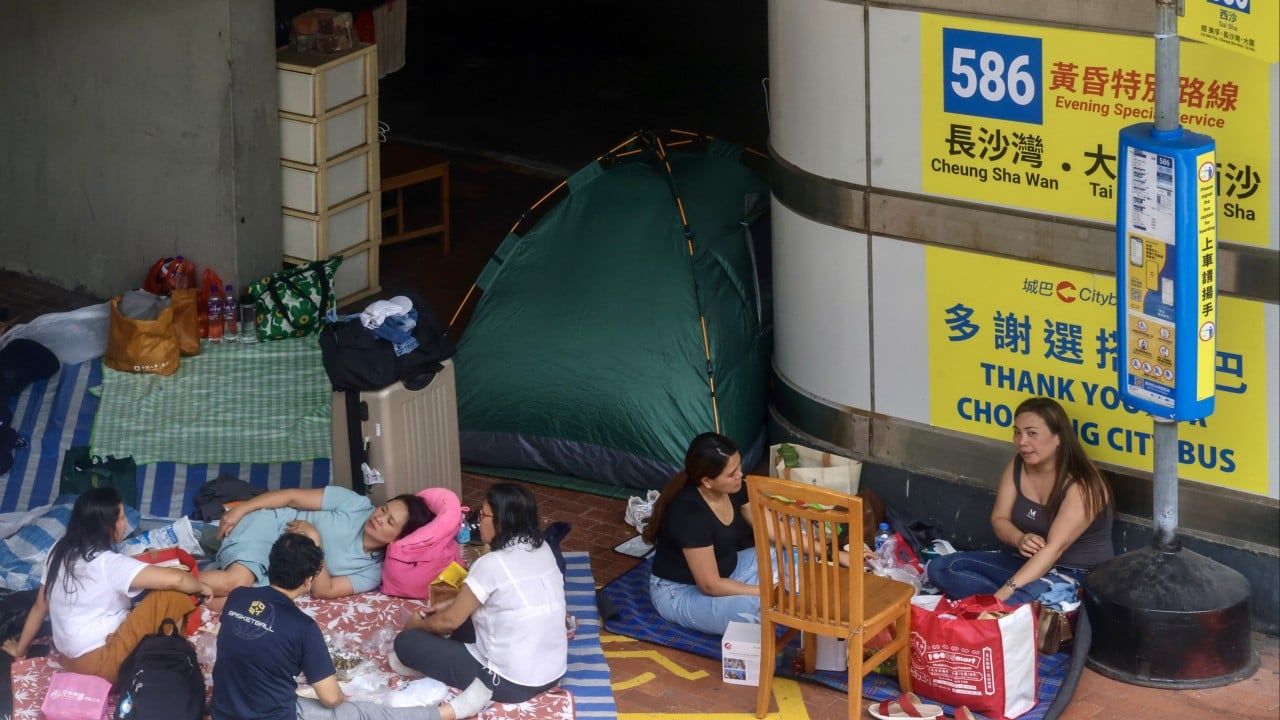
- Hong Kong faces challenges regarding safe public spaces for foreign domestic helpers on their days off.
- Ensuring acceptable working conditions, especially during hot summer months, is another key issue.
- The number of foreign domestic helpers in Hong Kong is approaching pre-pandemic levels, with 368,000 in 2024.
- These helpers represent approximately 10% of Hong Kong's workforce, predominantly from the Philippines and Indonesia.
- Local families rely on domestic helpers for childcare, elder care, and household tasks.
- The minimum monthly pay for helpers is HK$5,100.
Two significant issues are emerging for Hong Kong's substantial population of foreign domestic helpers: the need for safe public spaces on their days off and the provision of adequate working environments within homes, particularly during hot weather. These challenges are amplified by the growing number of helpers and the increasing impacts of climate change.
The number of foreign domestic helpers in Hong Kong is steadily rising, approaching the 2019 peak of 399,000, with 368,000 recorded in 2024. These workers constitute about 10% of the city's workforce, with the majority being women from the Philippines (55%) and Indonesia (42%). Local families rely heavily on them for childcare, elder care, and general housework, a trend expected to continue given Hong Kong's aging population.
The demand is further reinforced by employers needing to show a minimum monthly income of HK$15,000 (US$1,914), while the employment of helpers enables more women to pursue their own careers. However, the minimum monthly pay for helpers is only HK$5,100. While increasing these minimums might seem like a solution, it could lead to social disruption. Many helpers observe Sundays as their day off, a schedule that suits employers and allows helpers to attend religious services.