Key facts
- Honda and GAC have extended their joint venture, GAC Honda, through 2038.
- The partnership was originally established in 1998.
- GAC Honda has sold over 11 million vehicles since its inception.
- The joint venture has a capital of $867,215,960 with a 50/40/10 ownership split.
- Three new models, including ICE, hybrid, and EV, are planned for launch in 2027.
- Sales for Honda China have seen significant year-on-year declines.
Honda Motor Co., Ltd. has announced an extension of its joint venture with China's Guangzhou Automobile Group (GAC), continuing the partnership through 2038. The agreement, signed on July 20, 2026, extends the collaboration for an additional 10 years beyond its original 2028 expiry.
Established in 1998, GAC Honda was Honda's first automobile production venture in China. The joint venture operates with a capital of $867,215,960, with GAC Group holding 50%, Honda Motor Co., Ltd. 40%, and Honda Motor (China) Investment Co., Ltd. 10%. To date, GAC Honda has achieved a cumulative sales volume exceeding 11 million units.
The partnership has recently modernized its infrastructure with the 2024 launch of a dedicated new energy vehicle (NEV) plant, signaling a strategic shift towards electrification. Despite this, GAC Honda has faced significant sales declines, with June retail sales down 44.5% year-on-year and first-half sales down 34.7% for Honda China. GAC Honda's own sales figures show a 53.03% drop in June and a 55.82% decline in the first half.
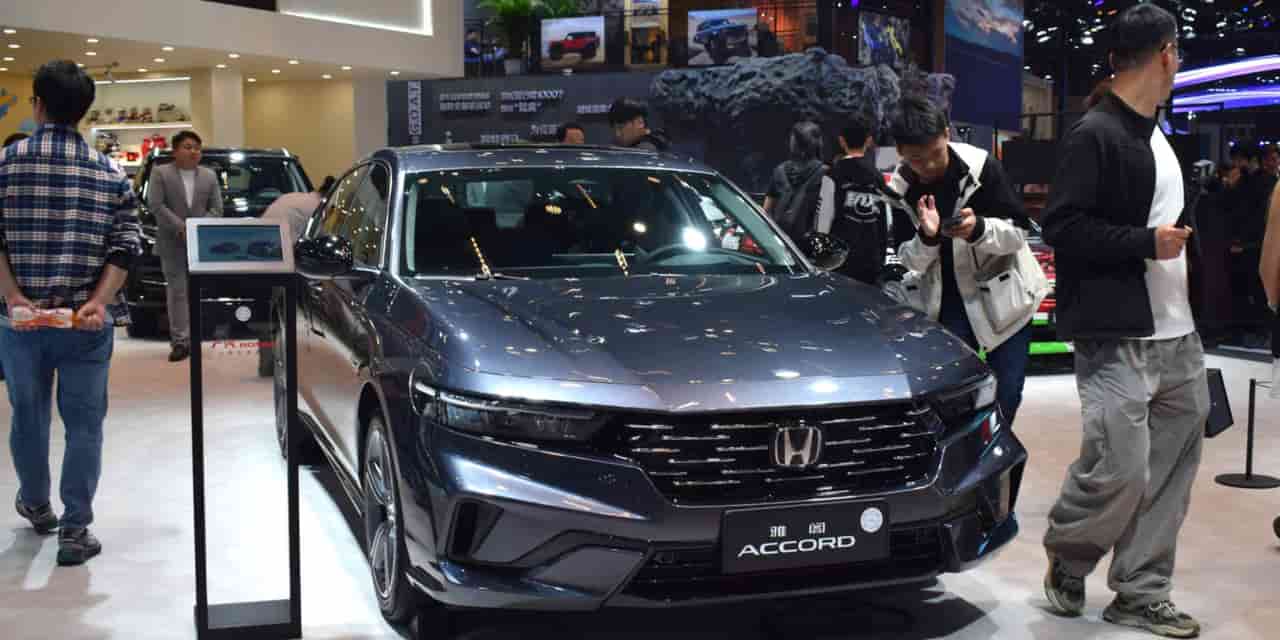
Looking ahead, GAC Honda plans to launch three all-new models in 2027, covering internal combustion engine, hybrid, and new energy vehicle segments. This lineup will include the next-generation Accord, a new model with Honda's fifth-generation i-MMD hybrid system, and a China-specific EV developed on a dedicated platform. The company is also collaborating with Huawei and Momenta to enhance its intelligent cockpit and advanced driver assistance systems.
Honda stated that the extension will have a minor impact on its consolidated financial results for the fiscal year ending March 2027. The move aims to address market concerns about Honda's commitment to China and drive the joint venture's transition to NEVs.