HomeAll NewsEducationTV
Equities & FundsCrypto & Digital AssetsAI & TechnologyBusiness & CorporateUS Politics & PolicyGeopolitics & Global RiskMacro, Rates & FXCommodities & EnergyEuropean Politics & MarketsAsia-PacificReal Estate & Property
Story archiveAll categories
← All Stories

Foreign Automakers Use China JVs as Export Hubs Amid Market Decline

Created at 23 Jul · 5:41 PM1 source↑ Market-relevant
IN SHORT

Foreign automakers are repurposing their Chinese joint ventures into export hubs, leveraging local technology and cost advantages to counter declining domestic market share and intense price competition from Chinese EV makers. This shift aims to boost global competitiveness and utilize idle factory capacity.

✉Newsletter

PiQ Daily

Pick your topics. Get only what matters, on your cadence.

Key Numbers

30%joint-venture brands' market share in China in 2025
60-70%peak market share for joint-venture brands around 2014
100,000 unitsNissan's short-term export target from China
300,000 unitsNissan's long-term export target from China
30 percentdevelopment time reduction for Volkswagen's smart EVs via local partnerships
40 percentdevelopment cost reduction for Volkswagen's smart EVs via local partnerships
582,000 vehiclestotal vehicles exported by Yueda Kia since 2018
170,000 unitsYueda Kia's annual exports in 2024 and 2025
82,000 vehiclesBeijing Hyundai exports in 2025

Who's Involved

Nissan
Japanese automaker repurposing Chinese JVs for global exports
Ivan Espinosa
Nissan Chief Executive on China ecosystem's role in overseas competitiveness
Hyundai Motor
South Korean auto group using China as a product launch and export hub
Jose Munoz
President and CEO of Hyundai Motor on leveraging Chinese market for technology export
Volkswagen
German auto giant evaluating China as an export base for smart EVs
Oliver Blume
Volkswagen Group CEO on providing products to the Southern Hemisphere from China
Yale Zhang
Managing Director of Automotive Foresight, commenting on China's leadership in EV tech
Dongfeng Nissan
Joint venture producing vehicles for export, including the N7 sedan
Yueda Kia
Hyundai joint venture, an early mover in exporting vehicles from China
Beijing Hyundai
Hyundai joint venture exporting vehicles from China
Foreign Automakers Use China JVs as Export Hubs Amid Market Decline

↳ Why This Matters

This strategic pivot by foreign automakers highlights China's growing influence as a global automotive manufacturing and innovation powerhouse. It signifies a reversal of traditional technology transfer dynamics and demonstrates how global companies are adapting to intense local competition and leveraging China's advanced EV and intelligent driving capabilities to compete worldwide.

Key facts

  • Foreign automakers are transforming Chinese joint ventures into global export hubs.
  • This strategy leverages China's advanced technology and cost advantages.
  • Nissan, Hyundai, and Volkswagen are among the companies expanding exports from China.
  • The shift is driven by declining market share and intense competition from Chinese EV makers.
  • Joint-venture brands' market share in China has dropped significantly, leading to idle factory capacity.

Foreign automakers are increasingly utilizing their joint ventures in China not just for domestic production but as significant export hubs, a strategic shift driven by the evolving automotive landscape. Facing intense competition from domestic electric vehicle (EV) manufacturers, a fierce price war, and declining market share in China, global carmakers are turning to their Chinese operations for cost advantages and advanced local technology.

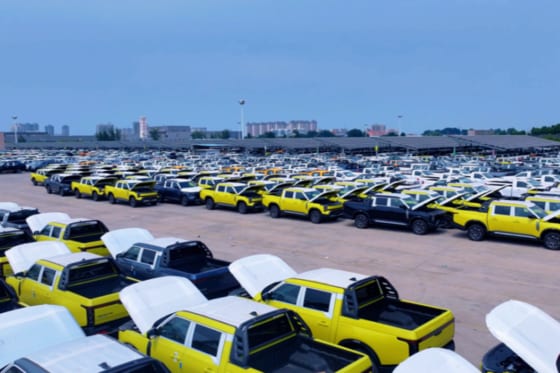
Companies like Nissan are planning to ship models such as the N7 sedan and Frontier Pro pickup from China to markets in Latin America, Southeast Asia, and the Middle East. Nissan's Chief Executive Ivan Espinosa highlighted that the technologies, development speed, and costs achieved within China's ecosystem are crucial for overseas competitiveness. The company has established an import-export joint venture in China with ambitious export targets.

Hyundai Motor is also positioning China as a key hub for launching new products and exporting cutting-edge technologies. Similarly, Volkswagen is collaborating with Chinese tech firms like XPeng and Horizon Robotics to accelerate its smart EV development, aiming to reduce both development time and costs. Volkswagen Group CEO Oliver Blume indicated plans to supply products to the Southern Hemisphere from China, leveraging its cost positioning and technological strengths. The SAIC Volkswagen ID. ERA 9X electric model is slated for export to Germany.

Industry experts note that China's leadership in electrification and intelligent driving technologies makes it indispensable for foreign automakers seeking to remain competitive in the new energy vehicle sector. By developing new models in China, these companies gain access to superior product capabilities and the cost benefits of China's robust industrial supply chain. This strategy is seen as a smart move with promising prospects.

The trend of exporting China-made vehicles is intensifying as domestic headwinds mount. Joint-venture brands saw their market share in China plummet to approximately 30% in 2025, a significant drop from their peak of 60-70% around 2014. This decline has resulted in reduced sales volumes and substantial idle factory capacity, which the export business is now helping to revitalize. Yueda Kia, a Hyundai joint venture, has been an early exporter since 2018, shipping over 582,000 vehicles and ranking among the top joint-venture exporters, thereby stabilizing its market position.

Frequently asked questions

They are leveraging China's advanced technology, cost advantages, and idle factory capacity to compete globally, driven by declining market share and intense price wars within China.

Nissan, Hyundai, and Volkswagen are actively repurposing their Chinese joint ventures as export hubs.

It helps revitalize idle factory capacity resulting from the decline in market share for joint-venture brands.

The focus is on electrification and intelligent driving technologies, including advanced EV platforms, battery technology, and driving assistance systems.

What Happens Next

01Nissan plans to ship the N7 sedan, Frontier Pro pickup, and NX8 SUV from China to various overseas markets.
02Volkswagen is evaluating exporting its ID. ERA 9X electric model to Germany.
03Hyundai plans to deploy cutting-edge technologies developed in China to other global markets.

Get the newsletter.

Pick the topics you actually care about. We'll email when there's news worth your time, on the cadence you choose. Cancel any time from your account.

Cadence

How It Developed

Foreign automakers are increasingly exporting vehicles developed by their Chinese joint ventures to overseas markets.
This strategy reverses decades of technology transfer into China.
Carmakers are drawing on Chinese R&D and manufacturing capabilities due to shrinking market share and price wars in China.
Nissan plans to export the N7 sedan, Frontier Pro pickup, and NX8 SUV from China to Latin America, Southeast Asia, and the Middle East.
Nissan established an import-export joint venture in China with export targets of over 100,000 units short-term and 300,000 long-term.
Hyundai Motor views China as a hub for launching new products and exporting cutting-edge technologies globally.
Volkswagen is partnering with Chinese firms like XPeng and CATL to accelerate EV development, reducing time and costs.
Volkswagen aims to supply products to the Southern Hemisphere from China, leveraging cost positioning and technological advantages.
Sponsored

London Quick Take - 22 July - UK inflation softens, oil rises and chips rally ahead of Alphabet, Tesla earnings

SAXO

Sources

T1
Foreign Carmakers Turn China Joint Ventures Into Export BasesCaixin Global
T2
How, GM, Ford, VW, others turned China into new global export hub ...autonews.com
T2
Foreign carmakers repurpose Chinese plants as export hubsglobal.chinadaily.com.cn

Related Stories

Hong Kong's offshore yuan market grows into global funding hub
22 Jul · 11:16 PM
China Curbs Loan Structure Widely Used by Distressed Developers
23 Jul · 5:51 AM
China Expands Bulk Drug Procurement to Include Brand-Name Medicines
23 Jul · 3:20 AM
Beijing Pushes Back as Europe Tightens Pressure on Chinese E-Commerce
22 Jul · 7:36 PM
Port of Shanghai aims to rival Singapore, London in maritime services
23 Jul · 9:11 AM