Key facts
- Dreame Technology, a robot vacuum maker, utilized local government-backed investment funds for expansion.
- A city government in Jiangsu province requested audits of companies' exposure to Dreame-linked entities.
- China's State Council introduced new regulations to enhance oversight of its 23 trillion yuan private fund industry.
- Dreame's expansion was significantly fueled by state money, with its venture capital fund heavily backed by local governments.
- New state council guidelines aim to restrict the creation of new government investment funds without higher approval.
The partnership model between Chinese cleaning-appliance maker Dreame Technology and local government-backed investment funds, initially seen as mutually beneficial, is now under scrutiny. Dreame gained capital for new ventures, while local governments sought advanced manufacturing projects and jobs. However, this approach has exposed structural weaknesses in China's state-backed tech funding, leading to concerns about capital misallocation and fiscal waste.
Recent developments include a Chinese city government ordering companies to disclose their financial ties to Dreame, and the State Council issuing sweeping rules to tighten oversight of the country's 23 trillion yuan ($3.4 trillion) private fund industry. Dreame, which became the world's largest robotic vacuum maker by sales in the first quarter of 2026, has rapidly expanded, spawning nearly a thousand affiliated enterprises across sectors like electric vehicles, smartphones, and satellite networks. Its founder, Yu Hao, had ambitious claims about building a $100 trillion company, though his social media account was later suspended.
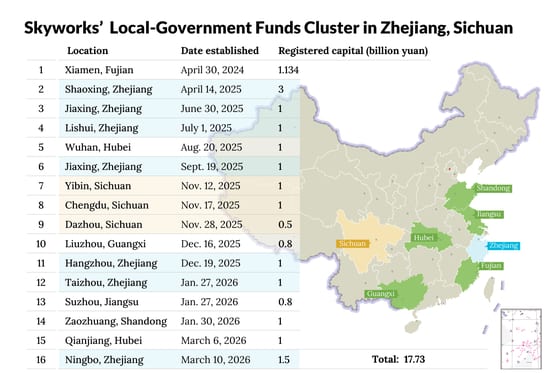
Much of Dreame's expansion was financed by state money, with its Sky Factory Venture Capital Fund managing 41.6 billion yuan, approximately 80% of which came from local government industry funds. Analysts like Dan Wang of Eurasia Group note that Beijing is now reining in this co-investment model, where local authorities have competed to attract businesses, often leading to substantial fiscal waste and credit risks. Chinese local governments have been shifting from land financing, which collapsed after the early 2020s housing crisis, to equity finance using state capital and guidance funds.
Tilly Zhang, an industrial policy analyst at Gavekal Dragonomics, explained that the 'patient capital' model of guidance funds can incentivize companies to align with government priorities to secure funding. She noted that local governments may lack the expertise to differentiate between credible and opportunistic ventures, citing a loss-making semiconductor project in Wuhan that cost the government around 15 billion yuan. Research by Rhodium Group indicates that thousands of such government guidance funds have been created, often resulting in duplicated investments and wasted capital. Bob Chen, a Shanghai-based investor, compared China's decentralized approach to Singapore's sovereign wealth fund, Temasek, stating that 'every level of government has its own Temasek.' The State Council's new guidelines aim to impose stricter controls on the establishment of new government investment funds and require approval from higher government levels for funds set up by counties and districts.