Key facts
- China's factory activity expanded in June, with the official PMI at 50.3.
- Demand for AI-related products and semiconductors boosted export orders.
- U.S. retailers accelerated orders to avoid upcoming tariffs.
- Factory gate prices declined, signaling a potential deflationary trend.
- Employment in the manufacturing sector continued to decrease.
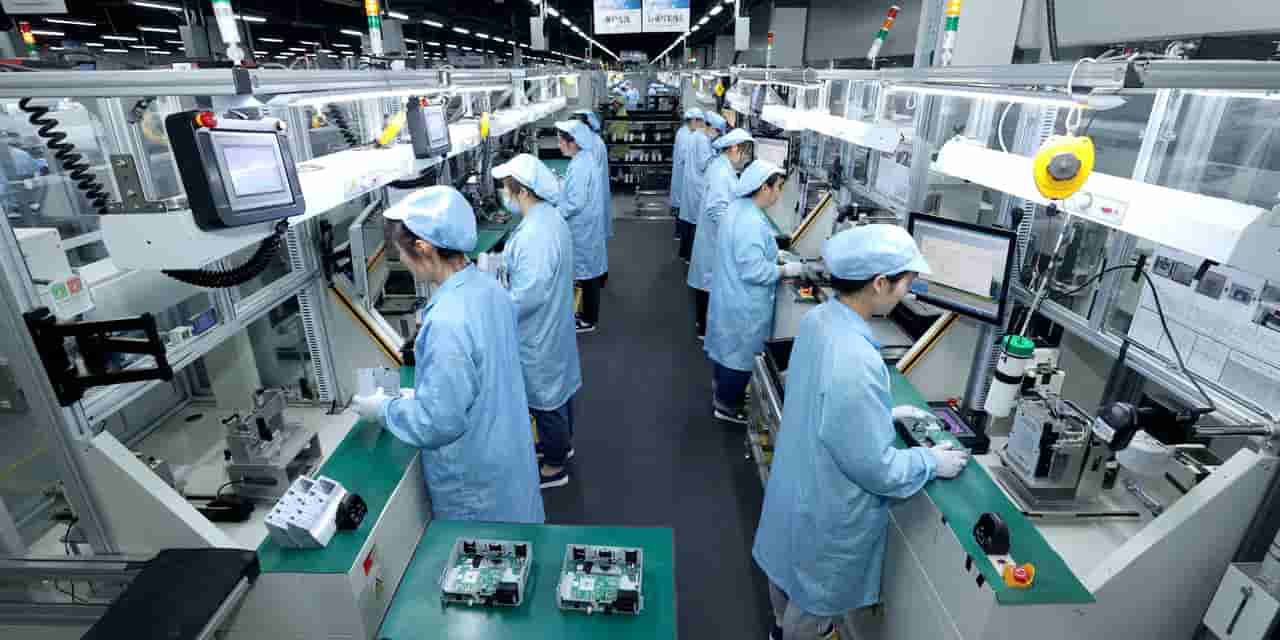
China's factory activity returned to expansion in June, with the official manufacturing purchasing managers' index (PMI) rising to 50.3 from 50.0 in May, surpassing forecasts. This improvement was largely driven by robust export orders for AI-related products, including chips and computers, and front-loading of shipments to the United States to preempt new tariffs expected in late July. Domestic demand also saw a slight uptick due to lower upstream costs.
Despite the positive manufacturing data, challenges persist in other sectors. The property crisis shows no signs of stabilizing, and household spending remains subdued, creating a two-speed economy. Exports of goods like furniture grew modestly, while shipments of automated data processing equipment surged by 60% in May, highlighting the concentration of demand in technology.
Factory gate prices slipped to 48.2 in June, indicating a move towards deflation, and employment continued to decline. Analysts noted that the export strength is expected to continue, supported by global AI investment, but also pointed to the need for increased domestic demand. Policymakers face pressure to implement further fiscal and monetary easing to support growth.
The non-manufacturing sector, encompassing services and construction, also improved slightly, with the PMI reaching 50.2. However, the overall economic outlook for the second quarter is projected to slow, with GDP growth estimated at 4.6% year-on-year, carrying downside risks.