Key facts
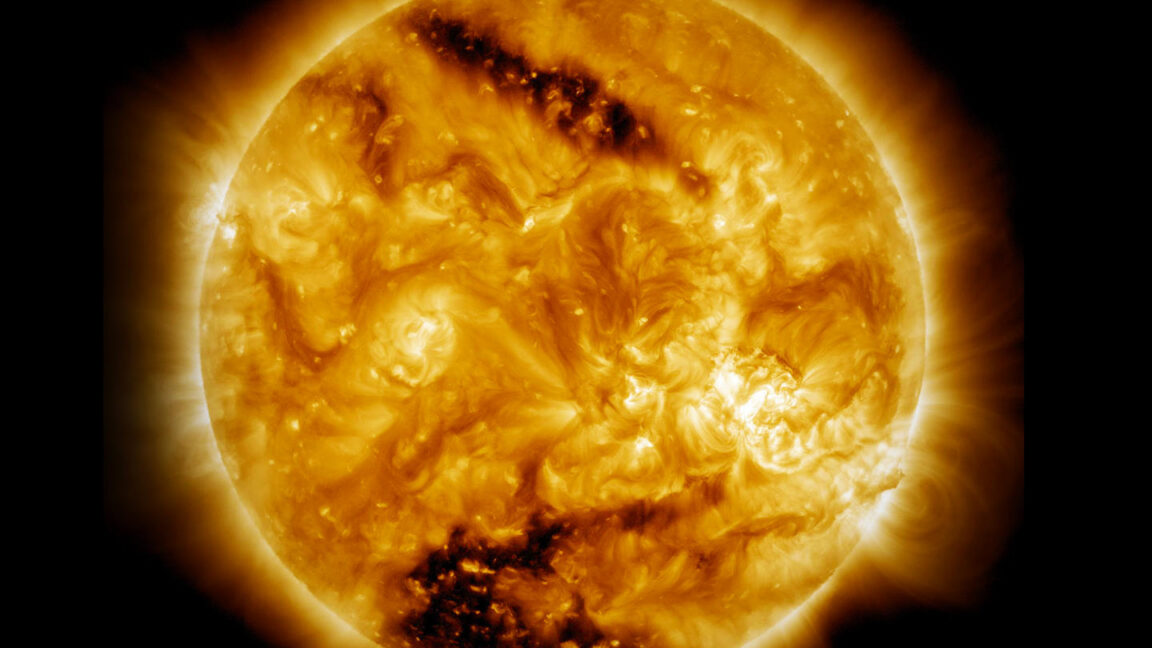
- The Daniel K. Inouye Solar Telescope has captured images of vortexes on the Sun's surface.
- These vortexes are known as Kelvin-Helmholtz instabilities.
- The phenomena were previously unobservable.
- The images may alter understanding of energy and mass transfer in the Sun's atmosphere.
- The Daniel K. Inouye Solar Telescope is the world's largest solar telescope.
The Daniel K. Inouye Solar Telescope, the world's largest solar observatory, has successfully captured never-before-seen images of vortexes on the Sun's surface. These phenomena are scientifically known as Kelvin-Helmholtz instabilities. The breakthrough images were captured by the telescope, which is equipped with advanced technology designed for detailed solar observation. Previously, these specific solar vortexes were unobservable, making this a significant advancement in the field of solar physics. The observation of Kelvin-Helmholtz instabilities is expected to alter current scientific understanding of how energy and mass are transferred throughout the Sun's atmosphere. This new data provides a unique opportunity for researchers to study the complex processes occurring on our star. The Inouye Solar Telescope's ability to capture such fine details marks a new era in solar research, potentially leading to revised models of solar activity and its impact.