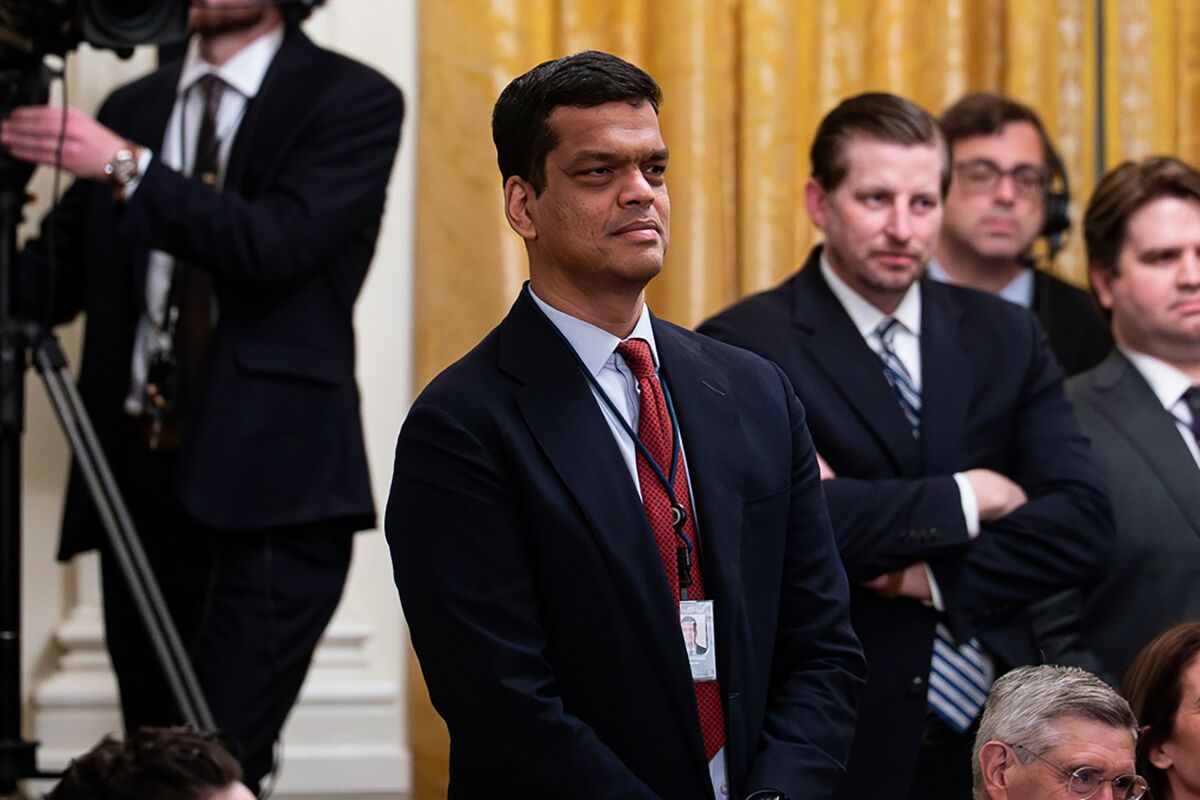
Key facts
- Sriram Krishnan is leaving his White House AI policy adviser role by the end of June.
- Krishnan was instrumental in developing the administration's AI regulatory framework.
- Krishnan was instrumental in developing national security testing initiatives for AI.
- Marc Andreessen described AI regulation as "red-tape monsters".
- Andreessen stated that AI regulation stifles innovation and burdens startups.
- The U.S. government ordered a suspension of access to Anthropic's advanced AI models.
- The suspension of Anthropic's AI models was cited as a national security concern.
- AI leaders were celebrated in Washington.
- Public skepticism exists regarding data centers and chatbots.
- The AI boom is driven by infrastructure like data centers and applications like chatbots.
Sriram Krishnan, a White House AI policy adviser, is set to depart his role by the end of June. Krishnan was instrumental in the development of the administration's AI regulatory framework and its national security testing initiatives. His departure occurs at a time when AI leaders are being celebrated in Washington, D.C. Concurrently, there is a growing public skepticism towards the infrastructure and applications that fuel the AI boom, such as data centers and chatbots.
Venture capitalist Marc Andreessen has voiced strong criticism of AI regulation, characterizing it as "red-tape monsters" that impede innovation and place undue burdens on startups. These remarks followed a U.S. government action to suspend access to Anthropic's advanced AI models, an order issued due to national security concerns. The tension between fostering AI development and implementing regulatory safeguards is evident, with differing perspectives on the impact of government oversight.