Key facts
- WeRide aims for full-year break-even by 2029.
- WeRide's break-even target is driven by sales of driver-assistance systems.
- WeRide is pursuing an asset-light international strategy.
- WeRide reported strong Q2 revenue growth.
- WeRide reported narrowing losses in Q2.
- Overseas markets contributed significantly to WeRide's Q2 performance.
- WeRide is exploring expansion into Australia.
- WeRide is exploring expansion into South Korea.
- WeRide is exploring expansion into Japan.
- WeRide is exploring expansion into Southeast Asia.
- WeRide aims to deploy 5,000 high-automation vehicles by year-end.
- Japanese startup Tier IV will design open-source AI chips.
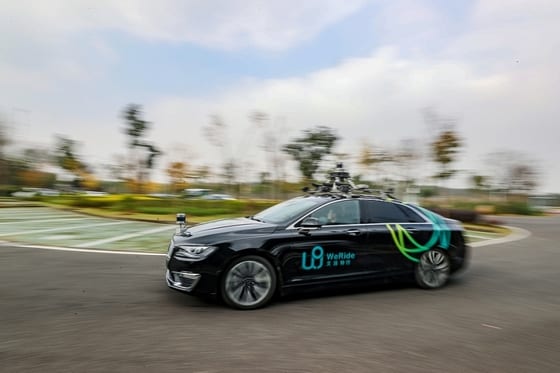
Chinese autonomous driving technology firm WeRide is setting a target for full-year break-even by 2029. This financial goal is to be achieved through the sale of driver-assistance systems and an international expansion strategy that emphasizes an asset-light approach. The company has reported robust revenue growth in the second quarter, alongside narrowing losses. Overseas markets have played a significant role in this performance, contributing substantially to the company's financial results.
WeRide is actively exploring new international markets for expansion. These include Australia, South Korea, Japan, and various countries in Southeast Asia. The company aims to deploy a total of 5,000 high-automation vehicles by the end of the current year. This expansion into new territories and the scaling of its vehicle deployment are key components of its growth strategy.
In a related development within the autonomous driving sector, Japanese startup Tier IV is planning to design and release open-source artificial intelligence semiconductor chip designs. This initiative is intended to benefit automakers by reducing their dependence on foreign suppliers for essential technology. The open-source nature of these designs aims to foster wider adoption and innovation in the automotive AI chip landscape.