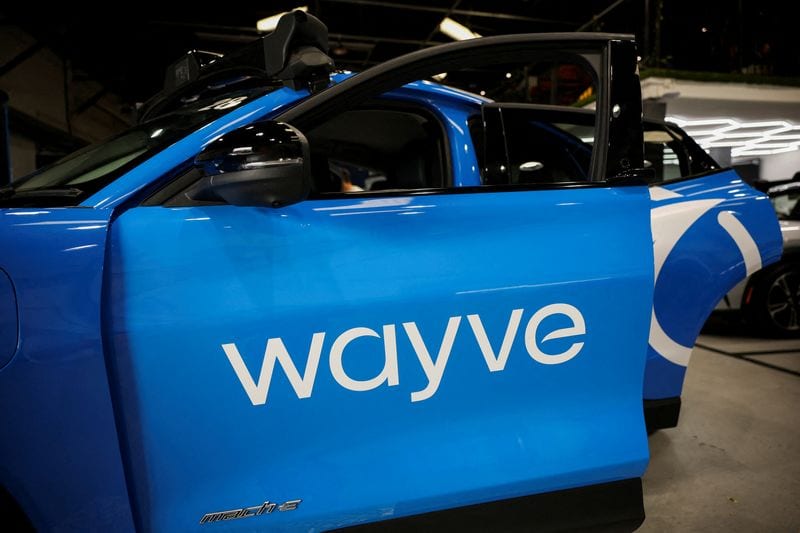
Wayve courts automakers with AI driving system that learns like humans
window 24h
IN SHORT
Autonomous driving startup Wayve has secured $2.8 billion in funding from investors including Nvidia, Mercedes-Benz, and Nissan. The company is developing an AI driving system that learns like humans, utilizing an end-to-end machine learning approach for broader applicability across vehicles and regions. Meanwhile, AI startup Oxmiq has raised $35 million to develop chip design architecture and software aimed at reducing AI application costs. Oxmiq plans to integrate graphics chips, central processors, and tensor engines into a single block of intellectual property.
✉Newsletter
PiQ Daily
Pick your topics. Get only what matters, on your cadence.
Key Numbers
$2.8 billionfunding secured by Wayve
$35 millionfunding raised by Oxmiq
Who's Involved
Wayve
autonomous driving startup developing an AI system
Nvidia
investor in Wayve
Mercedes-Benz
investor in Wayve
Nissan
investor in Wayve
Oxmiq
AI startup developing chip architecture
1 / 2
Key facts
Autonomous driving startup Wayve secured $2.8 billion in funding.
Nvidia, Mercedes-Benz, and Nissan are investors in Wayve.
Wayve's AI driving system learns like humans.
Wayve uses an end-to-end machine learning approach.
AI startup Oxmiq raised $35 million.
Oxmiq will develop chip design architecture and software.
Oxmiq's goal is to reduce the cost of AI applications.
Oxmiq plans to combine graphics chips, central processors, and tensor engines.
Oxmiq will integrate these components into a single block of intellectual property.
Autonomous driving startup Wayve is attracting significant investor interest, having secured $2.8 billion from investors including Nvidia, Mercedes-Benz, and Nissan. The company is developing an AI driving system that learns like humans, utilizing an end-to-end machine learning approach. This method aims for broader applicability across different vehicles and geographic regions, differentiating it from other autonomous driving systems that often rely on extensive pre-programmed rules and high-definition maps. Wayve's approach focuses on enabling the AI to learn and adapt in real-time, similar to human drivers.
In a separate development within the AI sector, startup Oxmiq has announced it has raised $35 million. This funding is intended for the development of chip design architecture and software specifically aimed at reducing the cost of AI applications. Oxmiq's strategy involves combining graphics chips, central processors, and tensor engines into a single block of intellectual property. This integrated approach is expected to lead to more efficient and cost-effective AI hardware solutions.
These two distinct funding rounds highlight continued investment in the artificial intelligence landscape, with Wayve focusing on AI for autonomous driving and Oxmiq targeting the underlying hardware infrastructure for AI applications. Both companies aim to innovate within their respective fields, with Wayve seeking to make AI driving more adaptable and Oxmiq striving to make AI more accessible through reduced costs.
↳ Why This Matters
Autonomous driving startup Wayve is attracting significant investor interest, having secured $2.8 billion from investors including Nvidia, Mercedes-Benz, and Nissan. The company is developing an AI driving system that learns like humans, utilizing an end-to-end machine learning approach. This method aims for broader applicability across different vehicles and geographic regions, differentiating it from other autonomous driving systems that often rely on extensive pre-programmed rules and high-definition maps. Wayve's approach focuses on enabling the AI to learn and adapt in real-time, similar to human drivers.
Frequently asked questions
Wayve utilizes end-to-end machine learning, which translates sensor data directly into driving decisions, mimicking human learning processes.
Traditional systems often combine AI with software coding and high-definition maps to create preset rules, whereas Wayve's end-to-end model relies on learning from data.
The system is designed to be adaptable to different vehicles, brands, and locations without extensive road mapping or coding for local quirks, potentially enabling faster global expansion.
The primary concern is the 'black box' nature of end-to-end AI, making it difficult to interpret decision-making and ensure safety at scale, especially in unusual situations.
What Happens Next
01Wayve will deploy its system in Stellantis robotaxis for Uber's network.
02Nissan plans to assess Wayve's technology for deployment in Japan on a people-mover van by March 2028.
Get the newsletter.
Pick the topics you actually care about. We'll email when there's news worth your time, on the cadence you choose. Cancel any time from your account.