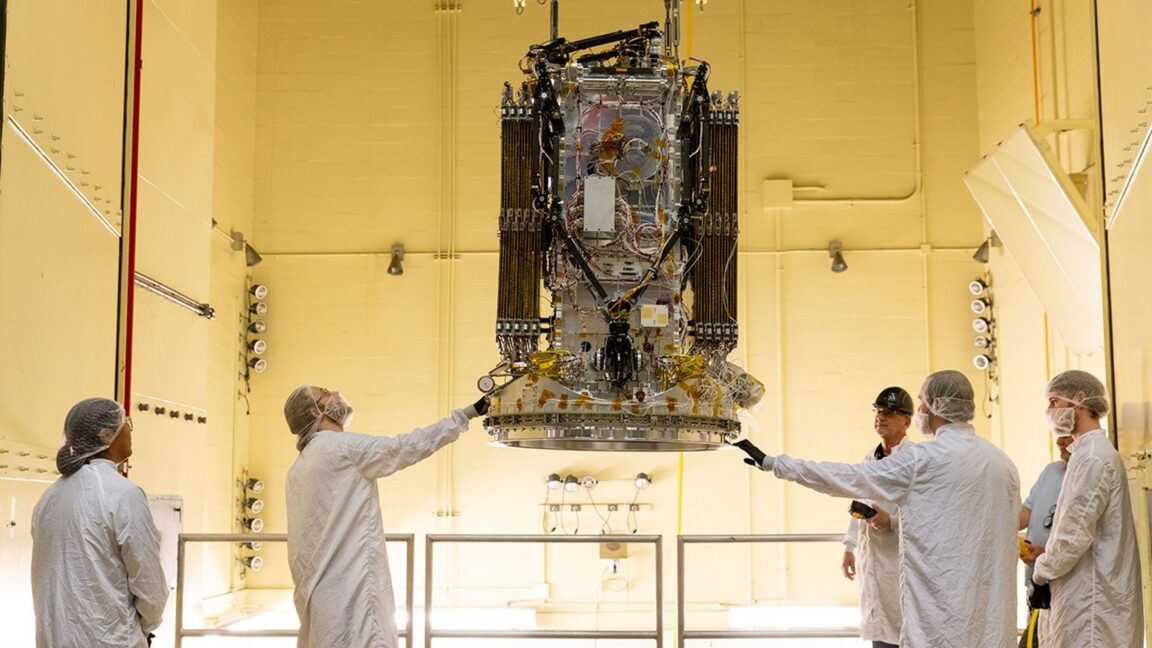
NASA has awarded two significant contracts to private space companies, signaling a new era of public-private partnerships in space exploration. Startup Katalyst Space Technologies will attempt to boost the orbit of the aging Swift telescope, preventing its potential reentry into Earth's atmosphere. Meanwhile, NASA has also contracted Eric Schmidt's Relativity Space to build and launch a spacecraft to Mars by 2028, a mission named Aeolus, which aims to provide daily atmospheric imaging of the Red Planet and could position Relativity ahead of competitors like SpaceX.

NASA is leveraging private space sector capabilities through two distinct contracts. The first involves startup Katalyst Space Technologies, founded in 2020, which has secured a $30 million contract from NASA. The objective of this contract is to launch a satellite specifically designed to increase the orbital altitude of NASA's Swift observatory. The Swift observatory is currently facing a risk of crashing back to Earth due to atmospheric drag, making this rescue mission critical for its continued operation.
In a separate development, NASA has contracted Relativity Space, an entity led by former Google executive Eric Schmidt, for a mission to Mars. Relativity Space is tasked with building and launching a spacecraft to the Red Planet with a target launch year of 2028. This mission, officially named Aeolus, has the primary goal of providing daily atmospheric imaging of Mars. This ambitious undertaking could potentially give Relativity Space a competitive advantage over other major players in Martian exploration, including SpaceX.
These contracts highlight NASA's strategy of partnering with commercial entities to achieve ambitious scientific and exploratory goals. The Swift telescope rescue mission addresses the immediate concern of orbital debris and the preservation of an active scientific instrument, while the Mars Aeolus mission represents a forward-looking investment in understanding and exploring another planet. The involvement of Relativity Space, with its stated aim of challenging established competitors like SpaceX, underscores the dynamic and competitive nature of the current space industry.
NASA is leveraging private space sector capabilities through two distinct contracts. The first involves startup Katalyst Space Technologies, founded in 2020, which has secured a $30 million contract from NASA. The objective of this contract is to launch a satellite specifically designed to increase the orbital altitude of NASA's Swift observatory. The Swift observatory is currently facing a risk of crashing back to Earth due to atmospheric drag, making this rescue mission critical for its continued operation.