Key facts
- Nvidia, OpenAI, and Chinese firms are investing in 'Physical AI' to develop humanoid robots.
- Chinese robotics firms are accelerating IPOs to fund AI development.
- Unitree Robotics has secured approval for a Shanghai listing.
- UBTech has launched pre-orders for its humanoid robot.
- Uber, Autobrains, and Nvidia are launching a robotaxi program in Munich, Germany.
- Self-driving robotaxi trials are planned for 2026 in Munich.
- Nvidia unveiled its RTX Spark PC platform with Microsoft.
- Seven Chinese universities supporting the military are seeking Nvidia H200 AI chips.
- Amazon is reportedly investing $50 billion into its chip development.
- Changguang Satellite released satellite images of Nvidia and Apple headquarters.
- LG Group plans to adopt 10,000 Nvidia GPUs.
- Apple is reportedly planning to use Nvidia's Blackwell B200 chips for Siri.
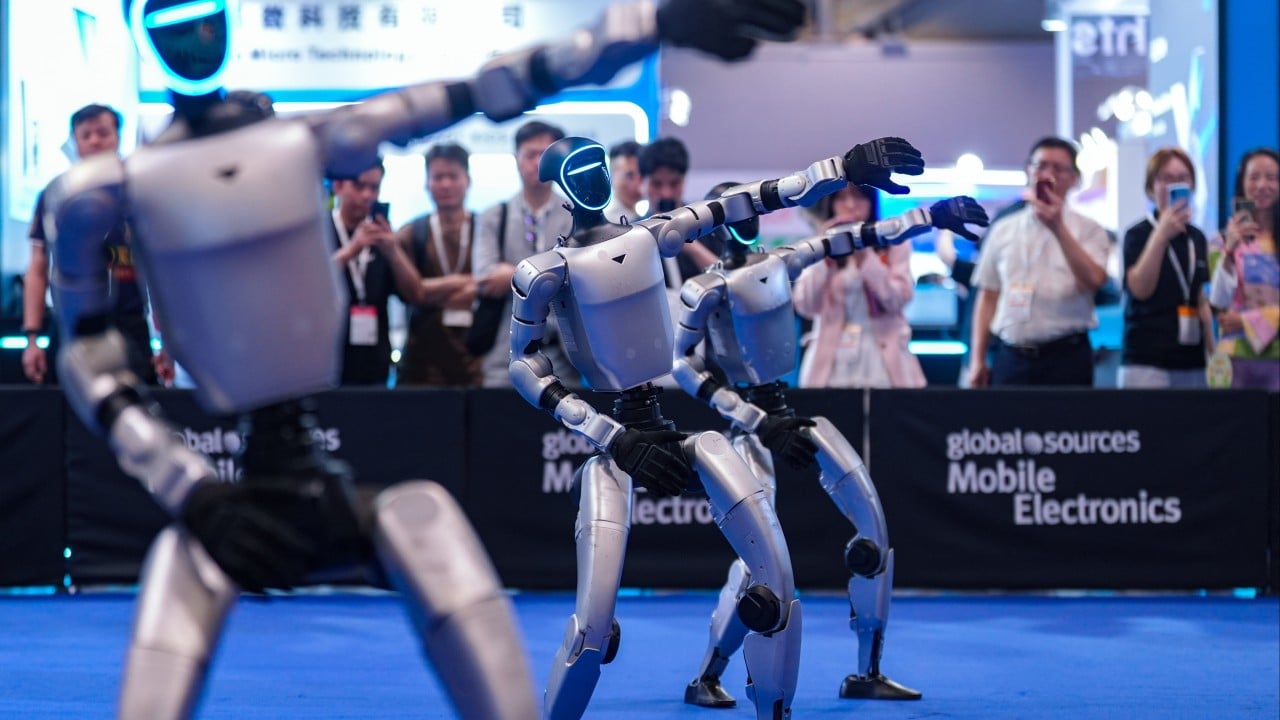
A global competition is underway to imbue artificial intelligence with physical capabilities, with tech giants such as Nvidia and OpenAI spearheading investments in 'Physical AI' and advanced humanoid robots. Nvidia, a key player, is also broadening its market presence by unveiling its RTX Spark PC platform, developed in collaboration with Microsoft and other partners, aiming to redefine the PC experience within the Windows ecosystem. Concurrently, Nvidia's advanced AI chips, specifically the H200, are reportedly sought by seven Chinese universities with military and defense ties, despite US export restrictions. In the automotive sector, Uber, Autobrains, and Nvidia are launching a robotaxi program in Munich, Germany, with self-driving trials slated for 2026, contingent on regulatory approval. Apple is rumored to be planning the integration of Nvidia's Blackwell B200 chips to enhance its Siri, potentially incorporating Google's Gemini AI model to improve chatbot functionalities while adhering to privacy standards. Amazon is reportedly making a significant investment of $50 billion into its chip development, a move that could position it as a formidable competitor to Nvidia in the AI chip market and grant it greater control over its AI hardware. In the realm of robotics, Chinese firms are accelerating their initial public offerings (IPOs), with Unitree Robotics securing approval for a Shanghai listing and UBTech launching pre-orders for its humanoid robot, underscoring China's ambition for leadership in physical AI. Unitree's robots have garnered public attention in the US, receiving a standing ovation on television, even as Congress considers potential bans on Chinese robots. Nvidia itself is actively acquiring AI startups, recently purchasing Kumo AI for over $400 million to bolster its predictive AI capabilities. The company is also integrating components from other firms, such as Sharpa's robot hands into its GR00T humanoid robot reference design, and powering YY Group's AI training lab in Singapore for human-robot co-working frameworks. Generalist AI has secured $400 million in funding at a $2 billion valuation, with Nvidia as a notable investor, highlighting the substantial financial backing for advanced AI development. Vertiv has introduced a digital twin for Nvidia's Omniverse DSX platform to streamline AI factory design and deployment. Meanwhile, Cerebras Systems, a competitor in the AI chip market, states it works with all AI infrastructure providers except Nvidia, emphasizing a strategy of openness. OpenAI and Anthropic are reportedly focusing on customer retention through coding intent databases, a strategy that could lead to increased profitability as both companies reportedly approach IPOs. Greg Brockman's prominence is increasing as OpenAI nears its IPO. Separately, LG Group plans to adopt 10,000 Nvidia GPUs, following Nvidia CEO Jensen Huang's visit to South Korea. A Chinese satellite firm, Changguang Satellite, has released satellite images of Nvidia and Apple headquarters in Silicon Valley.
These developments collectively illustrate a rapid expansion and diversification of AI applications, from data centers and personal computers to autonomous vehicles and humanoid robots. The intense focus on AI hardware, particularly advanced chips, is evident in the substantial investments by companies like Amazon and the strategic acquisitions by Nvidia. The integration of AI into physical systems, such as robots and autonomous vehicles, signifies a shift towards AI performing real-world tasks, with significant implications for various industries. The competitive landscape is characterized by both collaboration and intense rivalry, with companies like Nvidia playing a central role across multiple sectors. The potential for customer lock-in through data accumulation and the race for market dominance are key strategic considerations for AI companies as they prepare for public offerings. The global nature of this race is highlighted by the involvement of companies from China, South Korea, and the US, alongside international collaborations like the robotaxi program in Germany.
The burgeoning field of 'Physical AI' represents a significant evolution from purely software-based AI, aiming to bridge the gap between digital intelligence and the physical world. This involves developing robots capable of complex manipulation, navigation, and interaction, requiring advancements in hardware, software, and integrated systems. The race to commercialize these technologies is fueled by substantial venture capital and corporate investment, with companies like Nvidia providing foundational hardware and platforms that enable a wide ecosystem of AI development. The strategic importance of AI chips cannot be overstated, as they are the critical components driving the performance of AI models. Consequently, companies are investing heavily in developing their own custom silicon or securing access to the most advanced available chips, leading to both partnerships and intense competition. The trend towards integrating AI into everyday applications, from personal assistants like Siri to autonomous transportation, suggests a future where AI plays an increasingly pervasive role in society. The regulatory landscape, particularly concerning AI safety and the use of technology from specific countries, remains a crucial factor influencing the pace and direction of development and deployment.