Key facts
- China is accelerating the integration of AI into its digital healthcare ecosystem.
- The country aims to become a leader in AI applications, especially in biomedicine.
- Policy support and a vast data foundation are key enablers for China's AI advancements.
- Chinese technology companies are developing AI-powered helmets for delivery riders.
- These helmets include features like navigation, voice commands, and hazard detection.
- The AI helmet initiative aims to enhance safety and efficiency for delivery riders.
- These developments reflect a broader trend of integrating AI into everyday services in China.
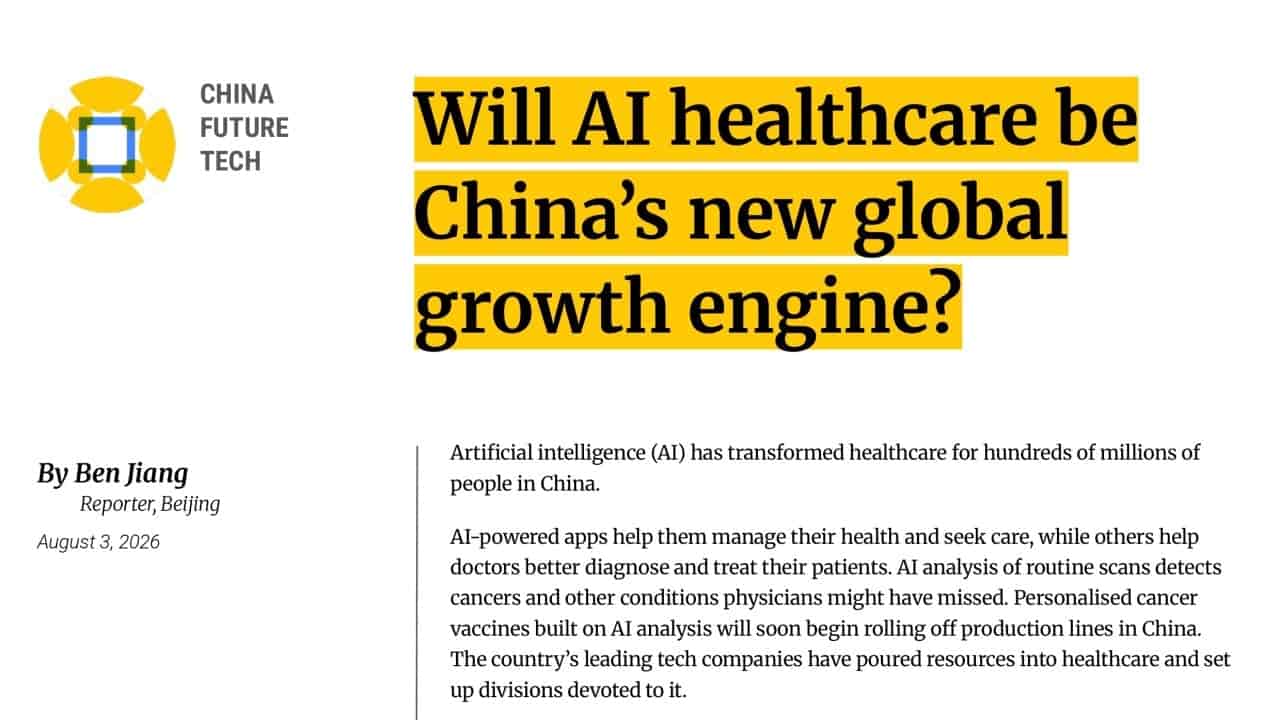
China is aggressively pursuing the integration of artificial intelligence (AI) across its digital healthcare ecosystem, aiming to significantly boost medical efficiency and broaden access to care. The nation's strategic objective is to establish itself as a global leader in AI applications, with a particular focus on the field of biomedicine. This push is underpinned by substantial policy support and the advantage of a vast data foundation, which is crucial for training and deploying sophisticated AI models.
In parallel, China's prominent technology companies are innovating in the logistics sector by developing AI-powered helmets for delivery riders. These advanced helmets are designed to enhance both the safety and efficiency of delivery operations. Key features include integrated navigation systems, voice command capabilities for hands-free operation, and sophisticated hazard detection systems to alert riders to potential dangers on the road. This development is part of a wider trend where AI is being embedded into various everyday services and consumer products.
The integration of AI in healthcare aims to streamline diagnostic processes, personalize treatment plans, and optimize hospital management, ultimately making healthcare more responsive and available to a larger population. The data-rich environment in China provides a fertile ground for developing and refining these AI healthcare solutions. The development of AI-powered helmets for delivery riders, on the other hand, addresses the challenges of urban logistics, aiming to reduce accidents and improve the speed and reliability of services like food and package delivery.