Key facts
- China activated the world's largest superconducting magnet.
- The magnet is part of the experimental advanced superconducting tokamak (EAST) nuclear fusion project.
- The magnet is designed to generate a stable plasma for extended periods.
- This advancement contributes to research into sustainable fusion energy.
- Superconducting magnets are crucial for confining plasma in tokamak reactors.
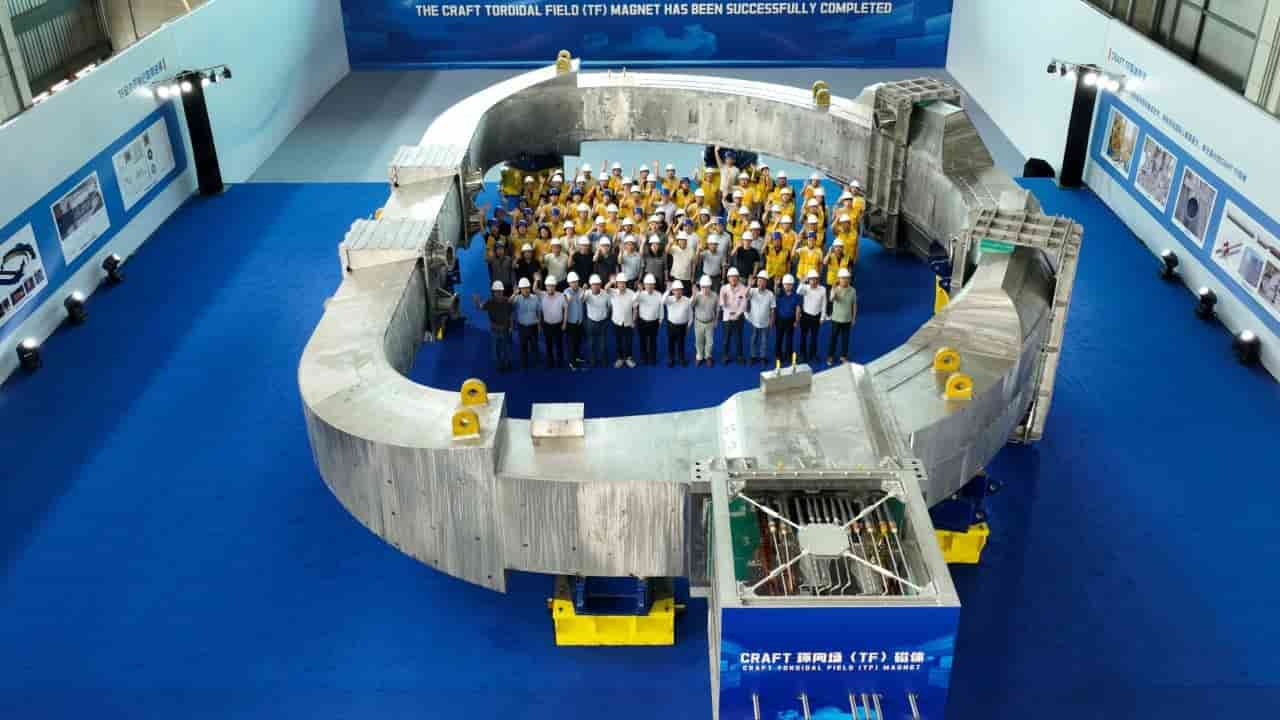
China has successfully activated the world's largest superconducting magnet, a pivotal component for its experimental advanced superconducting tokamak (EAST) nuclear fusion project. This activation marks a significant advancement in the nation's pursuit of sustainable fusion energy. The newly activated magnet is engineered to generate and sustain a stable plasma for extended periods, a critical requirement for the successful operation of a tokamak and for progressing fusion energy research.
The EAST project aims to develop a viable fusion power source, which promises a clean and virtually limitless energy supply. The ability to maintain a stable plasma for longer durations is a key challenge in fusion research, and this new magnet represents a substantial step towards overcoming that hurdle. The successful activation of such a large and powerful superconducting magnet demonstrates China's growing capabilities in advanced scientific research and engineering.
Superconducting magnets are essential for confining the superheated plasma within a tokamak reactor. They generate intense magnetic fields that prevent the plasma, which can reach temperatures of millions of degrees Celsius, from touching the reactor walls. This containment is necessary for the fusion reactions to occur and be controlled. The development and activation of this record-breaking magnet underscore the global effort to harness fusion energy, a goal that could revolutionize energy production and address climate change.