Key facts
- Unitree has priced its Shanghai IPO at 150.8 yuan per share.
- The company aims to raise 6.1 billion yuan ($904 million).
- Unitree will be the first mainland-listed humanoid robot manufacturer.
- Unitree reported revenue of nearly 1.7 billion yuan in 2025.
- The company achieved an adjusted net profit of approximately 600 million yuan.
Chinese robot maker Unitree has set its Shanghai initial public offering price at 150.8 yuan per share, with subscriptions scheduled to begin on Monday. The company aims to raise 6.1 billion yuan ($904 million), which would mark it as the first mainland-listed manufacturer of humanoid robots. This move highlights a broader trend of Chinese robotics companies seeking public listings.
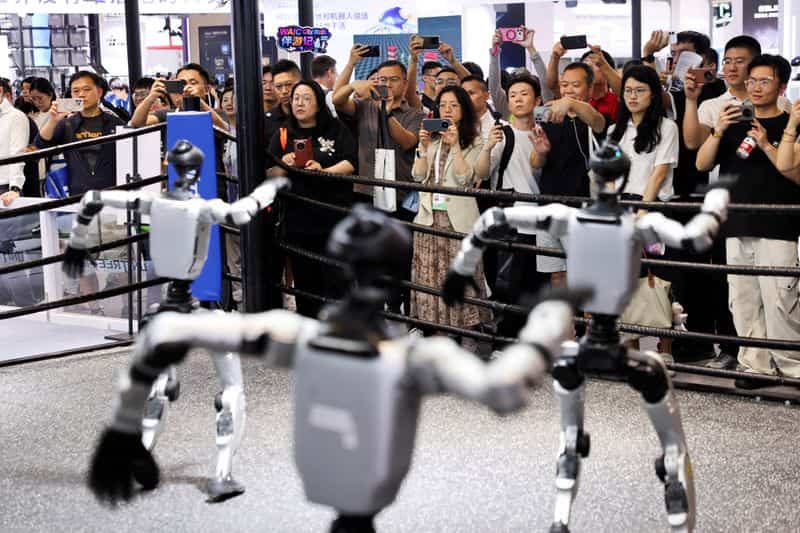
Founded in 2016 by engineer Wang Xingxing, Unitree, based in Hangzhou, initially gained recognition for its affordable quadruped robots, often referred to as robot dogs. The company has since attracted global attention with its G1, H1, and R1 humanoid robots, showcased in viral demonstrations of their advanced capabilities. Unitree operates in a competitive landscape that includes major players like Tesla and Boston Dynamics, as well as a growing number of Chinese startups focused on developing machines for industrial and domestic use.
Unitree has demonstrated significant financial growth, with its revenue increasing more than fourfold to nearly 1.7 billion yuan in 2025. Uniquely among many humanoid robot startups, Unitree is profitable, reporting an adjusted net profit of approximately 600 million yuan. Its international market presence is also substantial, with overseas revenue consistently accounting for over 40% of total sales across reported periods.
The company's success underscores China's capacity to produce sophisticated robots at prices considerably lower than many international competitors, leveraging the nation's robust supply chains for essential components like motors, sensors, and batteries. Unitree has also emerged as a symbol of Beijing's strategic push to lead in the field of embodied intelligence, which integrates AI models with physical machines capable of real-world interaction.
Despite Unitree's commercial achievements, the widespread replacement of human workers by humanoid robots remains a distant prospect. Current demand is primarily driven by educational institutions and government-funded research projects utilizing robots for learning, experimentation, and demonstrations. Significant challenges persist regarding the reliability, dexterity, and sustained performance of humanoids across varied tasks without human intervention.
The substantial capital required for developing humanoids—covering engineers, training data, AI models, and manufacturing infrastructure—necessitates significant funding, especially given the uncertain timeline for widespread adoption in factories and homes. Public markets are thus seen as a crucial source of capital, particularly while government support and investor enthusiasm for the sector remain high.
Other Chinese robotics firms are also pursuing public listings. Leju Robotics, known for its Kuavo humanoid, filed for a listing on Shenzhen's ChiNext market in May. AgiBot, a prominent Shanghai-based humanoid producer, commenced preparations for a Hong Kong IPO in July.