Key facts
- SpaceX is targeting Thursday, July 23, for the 13th test flight of its Starship rocket.
- The previous launch attempt on July 16 was aborted due to issues with some of the 33 Raptor 3 engines.
- Two Raptor 3 engines have been replaced on the Super Heavy booster.
- The Starship V3 rocket will carry 20 next-generation Starlink V3 internet satellites.
- The launch window opens at 6:45 p.m. ET from SpaceX's Starbase facility in South Texas.
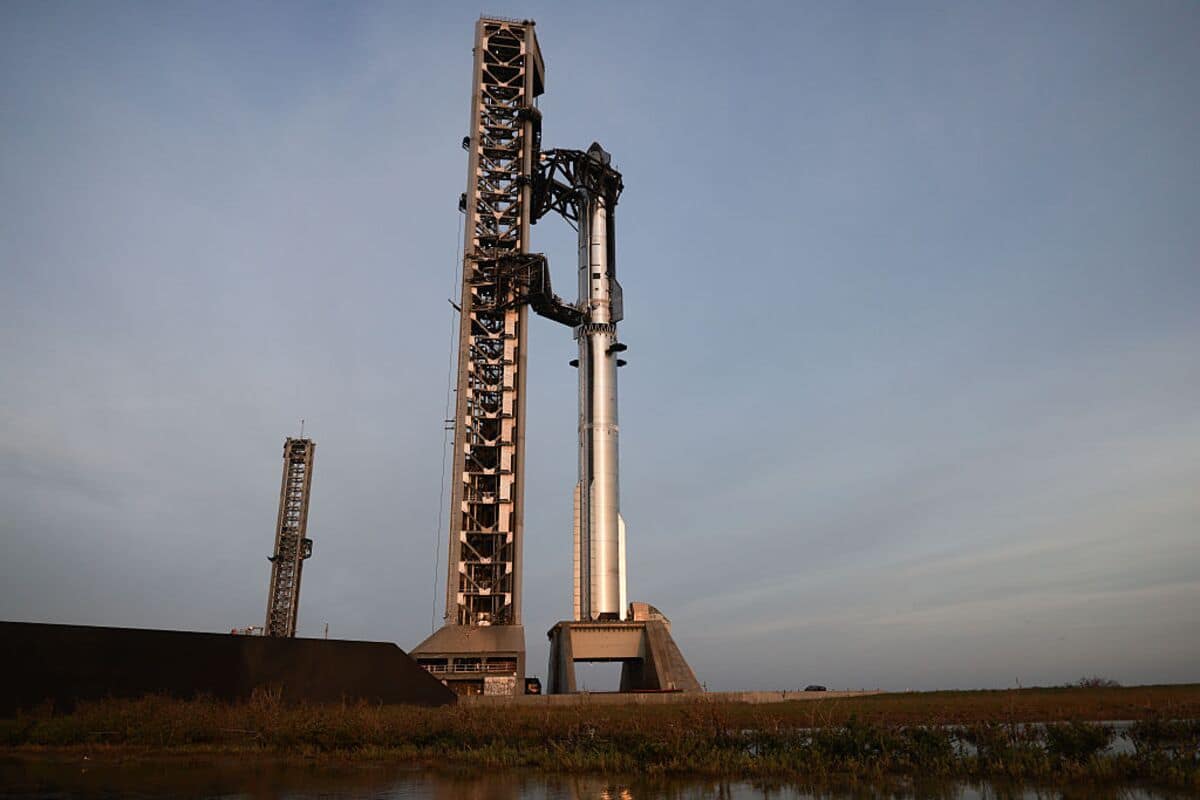
SpaceX is preparing for a critical test flight of its Starship rocket, designated Flight 13, on Thursday, July 23, following a previous launch abort. The mission, targeting a 6:45 p.m. ET launch window from Starbase in South Texas, aims to send upgraded Starlink V3 satellites into orbit.
The previous attempt on July 16 was halted just as the 33 Raptor 3 engines on the Super Heavy booster were firing up. SpaceX founder Elon Musk indicated that two of these engines were replaced, and the company has made corrections to issues discovered in the last mission. This iteration, Starship Version 3 (V3), is the latest and most advanced version of the megarocket, intended for future lunar and Martian missions.
If successful, the Super Heavy first stage is designed for a controlled splashdown in the Gulf of Mexico, while the Ship upper stage will perform a similar maneuver off the coast of Western Australia. Flight 13 will be the second launch of the V3 variant, following Flight 12 on May 22. The mission will carry 20 next-generation Starlink satellites, which are intended to burn up in the atmosphere about 20 minutes after deployment. NASA is also looking to utilize Starship for its Artemis IV mission in 2028, aiming to land humans on the moon. However, Tropical Storm Bertha poses a potential concern for the launch.