Key facts
- The US Space Force's Victus Haze mission demonstrated satellite pursuit and evasion in orbit.
- True Anomaly's Jackal and Rocket Lab's Puma satellites participated in the exercise.
- Rocket Lab launched Puma within 17 hours of being called up by the Space Force.
- Puma completed a rendezvous and inspection of Jackal in under 59 hours.
- The satellites engaged in multiple pursuit and evasion maneuvers without prior coordination.
The US Space Force's Victus Haze mission has successfully demonstrated advanced satellite capabilities, including rapid deployment, close-proximity inspection, and pursuit-evasion maneuvers in orbit. True Anomaly's Jackal satellite and Rocket Lab's Puma satellite participated in the exercise, simulating potential future conflict scenarios.
True Anomaly's Jackal satellite was launched in May, playing the role of an adversary. Rocket Lab's Puma satellite, based on the Pioneer spacecraft bus, was kept on standby. The Space Force activated Rocket Lab on June 19, tasking them to launch Puma within 24 hours. Rocket Lab successfully launched its Electron rocket and Puma satellite from New Zealand in less than 17 hours. Within 38 hours, Puma was activated and ready for maneuvers, beating the 72-hour requirement.
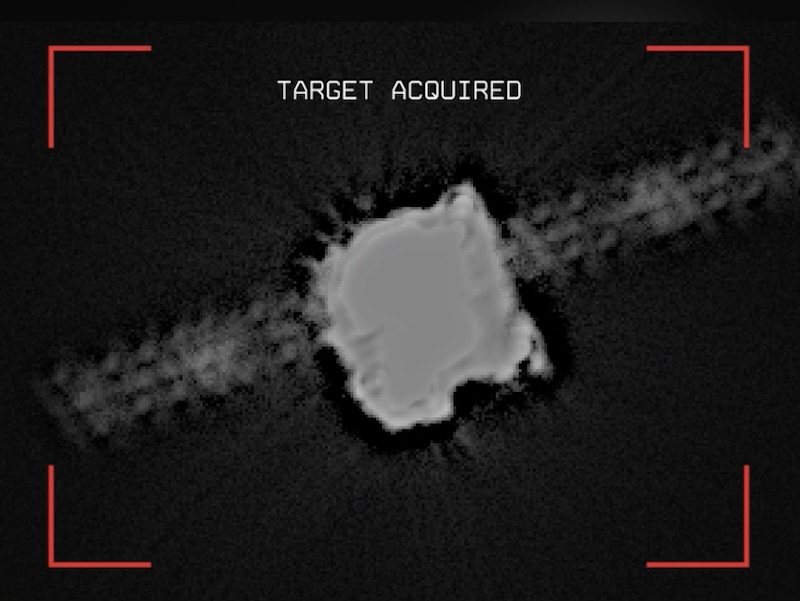
The first phase of the mission involved Puma approaching Jackal for inspection. Rocket Lab completed the rendezvous and photographed Jackal in under 59 hours, exceeding the Space Force's requirement of less than 84 hours. Both satellites captured images of each other, demonstrating their tracking and power-positive status.
The second phase, initiated on July 14, involved the satellites pursuing and evading each other repeatedly. True Anomaly stated that its ground controllers, using an algorithm for targeting estimates, produced a mission plan in under 30 minutes for Jackal to approach Puma. Puma then maneuvered away, and Jackal re-planned and executed further burns to re-engage. Details regarding distances, sensor suites, or docking were not disclosed due to operational security.
Even Rogers, CEO of True Anomaly, highlighted that the maneuvers were conducted without prior coordination between the companies, emphasizing the real-world conditions and the adversary's freedom to act. He noted that while the maneuvers resemble 'dogfighting in space,' the tempo and relative velocities are slower than aerial combat, occurring at approximately 500 kilometers above Earth at speeds of around 17,000 mph.
The Victus Haze mission is designed to continue over the coming months, with the satellites swapping roles to further learn and adapt in the orbital environment against a thinking adversary.