Key facts
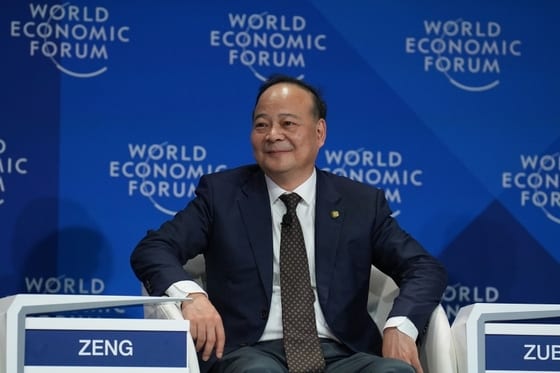
- CATL Chairman Zeng Yuqun stated solid-state battery technology is still far from mass production.
- He rated current solid-state battery technology at 'level four' on a scale of one to nine.
- Mass production of solid-state batteries is not anticipated before 2030.
- Key manufacturing challenges include the solid-solid interface layer.
- CATL is also developing sodium-ion and composite battery architectures.
- CATL announced its sodium-ion batteries will begin mass production in 2026.
CATL Chairman Zeng Yuqun stated that solid-state battery technology is still a considerable distance from mass production, likening its current readiness to 'level four' on a scale of one to nine. He indicated that widespread adoption is unlikely before 2030, citing significant manufacturing hurdles, particularly concerning the interface between solid components.
While solid-state technology matures, CATL is actively developing alternative battery chemistries. The company has unveiled its third-generation 'Shenxing' lithium iron phosphate (LFP) battery, capable of charging from 10% to 98% in just over six minutes, and even faster at extremely low temperatures. This new LFP battery also boasts a lifespan of over 1,000 ultra-fast charging cycles with minimal performance degradation.
Furthermore, CATL announced that its sodium-ion batteries are slated for mass production by 2026. The company's Chief Scientist, Wu Kai, confirmed that core manufacturing challenges for these batteries have been resolved. Sodium-ion batteries are positioned as a more affordable alternative to LFP, with expected price reductions of around 30%, and they maintain significant capacity even at very low temperatures, making them suitable for diverse environmental conditions. CATL has invested substantially in sodium battery research and development, projecting that vehicles equipped with these batteries could eventually achieve a range of up to 600 kilometers.