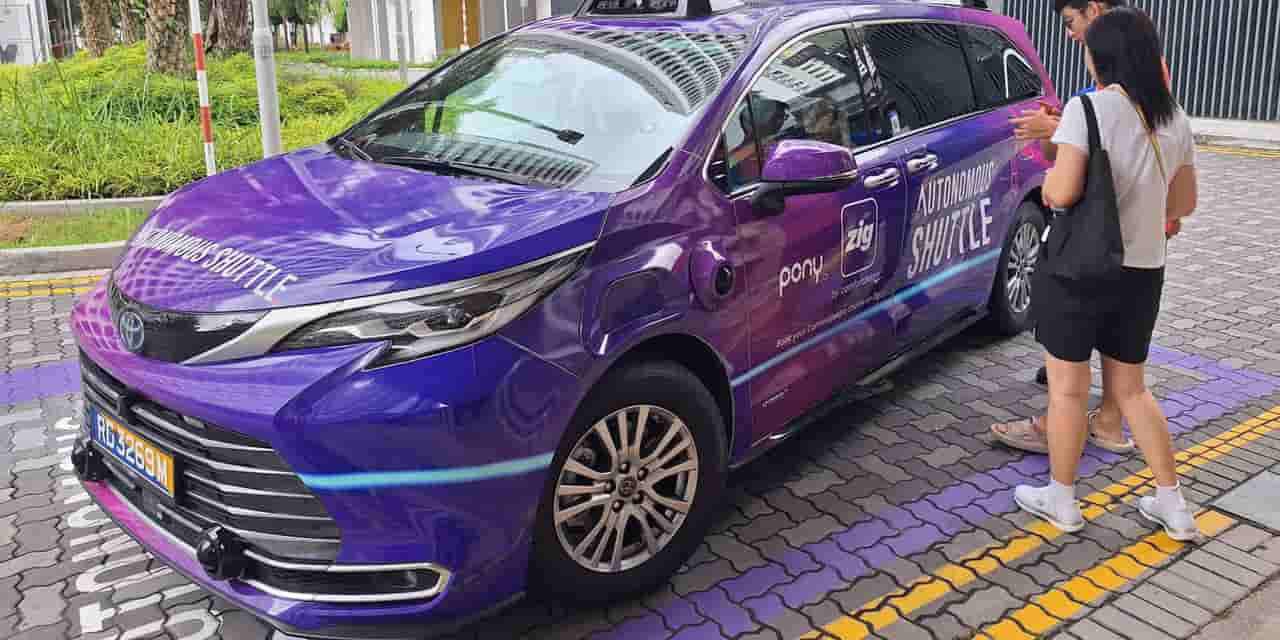
Singapore is accelerating its push for autonomous vehicle technology, with trials of self-driving taxis expanding in the Punggol district. The move aims to enhance the city-state's transport system.

Singapore's expansion of autonomous taxi trials signifies a commitment to leveraging advanced technology to improve urban mobility and create a more convenient transport system, while also navigating the complex regulatory and safety challenges associated with driverless vehicles.
Singapore is intensifying its efforts to integrate autonomous vehicles into its public transport system, with expanded trials of self-driving taxis underway. ComfortDelGro has initiated free shuttle service trials via its app in the Punggol district, a move that began on June 22.
During a recent visit to Guangzhou, China, a delegation led by Acting Transport Minister Jeffrey Siow observed the operations of robotaxi companies like Pony.AI. These companies are already running commercial driverless services, navigating complex traffic conditions and intersections. ComfortDelGro's group chief executive, Cheng Siak Kian, noted the significant advancements in self-driving technology, suggesting that passengers will soon find the experience indistinguishable from being driven by a human.
Singapore plans to deploy autonomous vehicles on fixed routes in Punggol starting in the fourth quarter of the year. Punggol was selected due to its mature travel patterns and available public transport data, which helps in determining optimal routes. The Ministry of Transport is collaborating with potential operators and AV companies to identify suitable vehicles and assess service demand and frequency.
While the technology has matured, questions remain regarding safety records, the extent of testing in complex environments like expressways, and the supervision of vehicles by remote operators. Regulatory frameworks, liability laws, and insurance readiness for autonomous vehicles are also areas requiring further development. China, for instance, largely leaves regulation to local governments, with dedicated insurance policies for AVs still limited. Britain has passed legislation to hold manufacturers and developers responsible for traffic rule violations by autonomous vehicles, effective in 2027.