Key facts
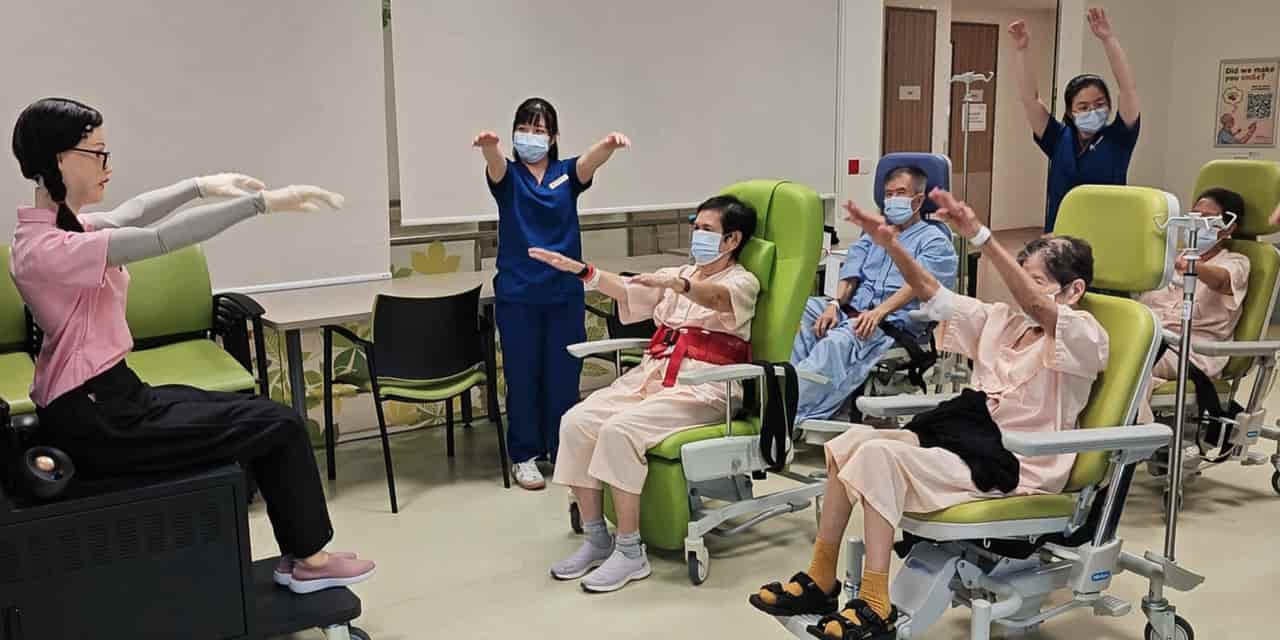
- Humanoid robots like Dexie are leading physiotherapy sessions and social activities for seniors in Singapore.
- Robotic pets such as Paro are being used to provide companionship and emotional support to the elderly.
- Generative AI is being employed in programs to help seniors write autobiographical books.
- Singapore is experiencing a rapid aging of its population, leading to a shortage of human caregivers.
- The government is actively adopting AI technologies to address healthcare and eldercare needs.
- AI monitoring systems are in place to alert caregivers to potential issues like falls among seniors.
Singapore is increasingly integrating artificial intelligence and robotics into its eldercare sector to manage a rapidly aging population and a shortage of human caregivers. Robots like Dexie, a humanoid AI, are now leading physiotherapy sessions, karaoke, and bingo games in facilities such as Outram Community Hospital and Lions Home for the Elders. Companion robots like Paro, a therapeutic seal, are also being used to provide emotional support and reduce loneliness.
These technologies are part of a broader effort to keep seniors active and engaged, with generative AI tools like those used in the Golden Memories program enabling individuals to document their life stories. As Singapore heads towards becoming a "super-aged" society, with a significant portion of its population expected to be over 65 by 2026, these technological solutions are seen as crucial for complementing human care.
Authorities are leveraging AI to address the critical manpower gap in the healthcare sector, which faces high nurse attrition rates. Beyond social engagement, AI is also being used for health monitoring, with systems designed to detect unusual behaviors such as falls. Furthermore, initiatives like the SoundKeepers program are exploring voice biomarker technology to detect early signs of depression among seniors, addressing a largely unaddressed health risk.