Key facts
- Drones capable of spraying water and fire retardants are being tested for early wildfire suppression.
- Seneca's Argo-1 drones can carry approximately 100 pounds of payload and operate autonomously in swarms.
- CAL FIRE conducted a field test with five autonomous drones deploying foam.
- Dryad Networks' Silvaguard system uses tree-mounted sensors and autonomous drones to detect and suppress fires.
- The Aspen Fire Protection District has committed to purchasing five of Seneca's drones.
- The XPRIZE Wildfire competition is testing advanced firefighting drone systems.
Drones equipped to spray water and fire retardants are undergoing trials in California and Alaska, signaling a potential new tool for combating wildfires that are increasingly becoming a year-round threat across the United States. While these drones cannot replace large airtankers for massive payloads in remote areas, they are being tested for their ability to rapidly respond to smaller fires and prevent them from escalating.
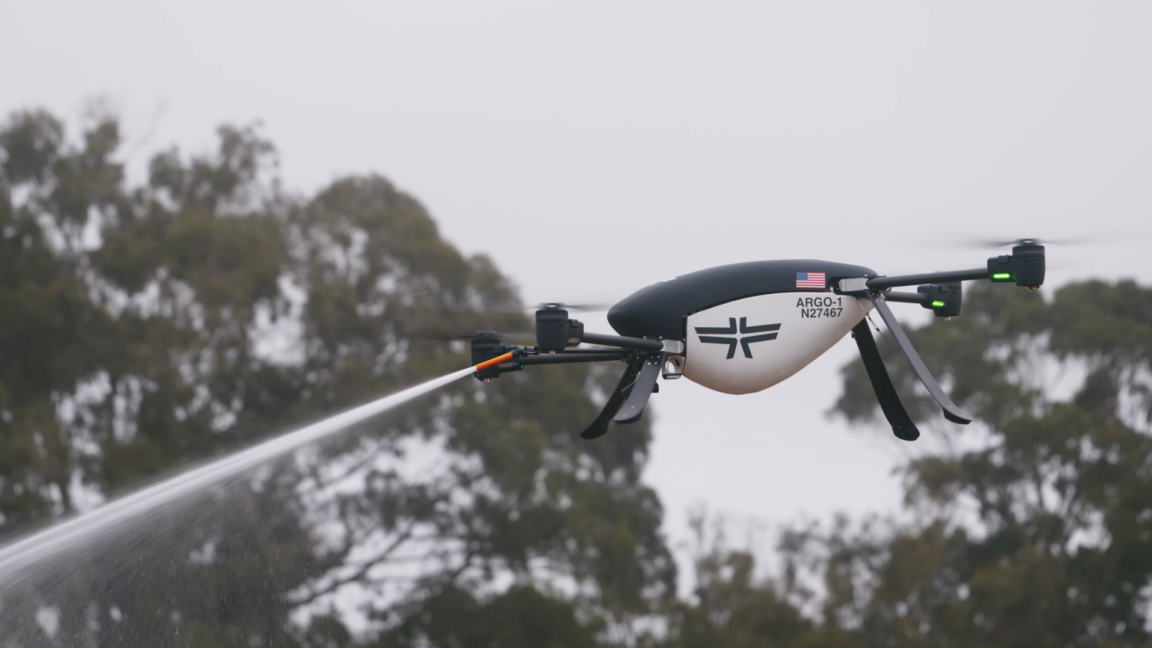
Seneca's Argo-1 drones, designed for commercial availability starting in 2026, can carry approximately 100 pounds of water or fire retardant. These autonomous drones can operate in swarms of four to six, using onboard sensors to detect heat signatures and autonomously deploy their payloads. CAL FIRE conducted a field test on July 15, with five such drones working together to deploy between 500 and 1,000 gallons of foam. Seneca aims for a rapid turnaround time, allowing a drone to be refilled and have its battery swapped in just two minutes.
Separately, the XPRIZE Wildfire competition held its finals testing in Alaska in June 2026. The German company Dryad Networks demonstrated its Silvaguard system, which integrates solar-powered tree sensors for early smoke detection with autonomous drones. Upon detection, an observation drone confirms the fire, followed by a suppression drone that can deploy up to 26 gallons of fire suppressant. These drones can be stored in solar-powered hangar pods.
The effectiveness of these drone systems in preventing fires will be crucial as the wildfire season lengthens. The Aspen Fire Protection District in Colorado has already committed to a $5 million contract over five years for five of Seneca's drones. CAL FIRE, which operates a large aerial firefighting fleet, is also a potential customer.