HomeEverythingEducation
Equities & FundsCrypto & Digital AssetsAI & TechnologyBusiness & CorporateUS Politics & PolicyGeopolitics & Global RiskMacro, Rates & FXCommodities & EnergyEuropean Politics & MarketsAsia-PacificReal Estate & Property
← All Stories

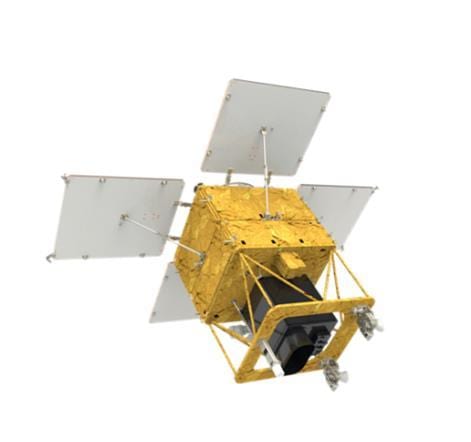
S. Korea's Earth observation satellite launched from U.S. base

Created at 7 Jul · 7:30 AM1 source↑ Market-relevant
IN SHORT

South Korea successfully launched its next-generation medium-sized satellite No. 4 aboard a SpaceX Falcon 9 rocket from Vandenberg Space Force Base in California. The satellite, designed for agriculture, forestry, and disaster response, is expected to enter full-scale service in early 2027.

✉Newsletter

PiQ Daily

Pick your topics. Get only what matters, on your cadence.

Key Numbers

12:12 a.m. TuesdaySatellite launch time
2 hours and 22 minutesTime to satellite separation
31 minutesTime to first communication attempt
3 daysImaging frequency of Korean Peninsula
3 to 4 monthsCalibration and verification period
first half of 2027Expected full-scale service entry

Who's Involved

Korea AeroSpace Administration (KASA)
South Korean space agency that announced the satellite launch
SpaceX
Company that provided the Falcon 9 rocket for the launch
S. Korea's Earth observation satellite launched from U.S. base

↳ Why This Matters

The successful launch of South Korea's new Earth observation satellite enhances its capabilities in critical areas such as agriculture, forestry, disaster management, and climate analysis, with a focus on monitoring the Korean Peninsula.

Key facts

  • South Korea launched its next-generation medium-sized satellite No. 4 from Vandenberg Space Force Base.
  • The satellite was carried by a SpaceX Falcon 9 rocket as part of the Transporter-17 rideshare mission.
  • The satellite is designed for applications in agriculture, forestry, disaster response, and climate analysis.
  • It features a domestically developed wide-area observation camera capable of imaging the Korean Peninsula every three days.
  • Full-scale service is anticipated in the first half of 2027 following a calibration period.

South Korea's next-generation medium-sized satellite No. 4 was successfully launched aboard a SpaceX Falcon 9 rocket from Vandenberg Space Force Base in California on Tuesday. The launch was part of the Transporter-17 rideshare mission, which carried 81 payloads.

The satellite is scheduled to separate from the launch vehicle approximately two hours and 22 minutes after liftoff. Its first communication attempt with the Svalbard ground station in Norway is expected about 31 minutes later, according to the Korea AeroSpace Administration (KASA).

This satellite is dedicated to agriculture and forestry and is designed to support various applications, including crop monitoring, forest management, disaster response, and climate analysis. It is equipped with a domestically developed wide-area observation camera that can image the entire Korean Peninsula every three days.

If initial operations proceed as planned, the satellite will undergo three to four months of image calibration and data verification before entering full-scale service in the first half of 2027.

Frequently asked questions

The satellite is named the next-generation medium-sized satellite No. 4.

It was launched from Vandenberg Space Force Base in California, USA.

The satellite is dedicated to agriculture and forestry and will support applications like crop monitoring, forest management, disaster response, and climate analysis.

It is expected to enter full-scale service in the first half of 2027, following a calibration period.

What Happens Next

01Satellite separation from launch vehicle.
02First communication with Svalbard ground station.
03Three to four months of image calibration and data verification.
04Entry into full-scale service in the first half of 2027.

Get the newsletter.

Pick the topics you actually care about. We'll email when there's news worth your time, on the cadence you choose. Cancel any time from your account.

Cadence

How It Developed

A South Korean Earth observation satellite was launched from Vandenberg Space Force Base.
The satellite, named next-generation medium-sized satellite No. 4, was aboard a SpaceX Falcon 9 rocket.
The launch was part of the Transporter-17 rideshare mission, carrying 81 payloads.
The satellite is designed for applications including crop monitoring, forest management, disaster response, and climate analysis.
It carries a domestically developed wide-area observation camera.
The satellite is scheduled to enter full-scale service in the first half of 2027 after calibration and verification.

Sources

T1
S. Korea's Earth observation satellite launched from U.S. baseYonhap News Agency

Related Stories

Katalyst's Link satellite launched to rescue NASA's Swift observatory
6 Jul · 5:20 PM
Synopsys to discontinue chip manufacturing control software to focus on AI design
7 Jul · 6:20 AM
China's asteroid hunter nears target after 400-day journey
6 Jul · 1:05 PM
US Cyber Agency Uses Anthropic's Mythos AI to Audit Government Code
6 Jul · 8:12 PM
TeraWulf jumps on $19B AI data center lease with Anthropic
6 Jul · 1:37 PM