Key facts
- Katalyst's Link satellite was launched on a Pegasus XL rocket from Kwajalein Atoll.
- The mission aims to rescue NASA's Swift observatory by boosting its altitude.
- Swift is at risk of falling out of orbit by October due to atmospheric drag.
- The Link satellite is equipped with robotic arms and plasma thrusters for the capture and orbital boost.
- This is the first mission of its kind, a robotic capture of an unprepared satellite.
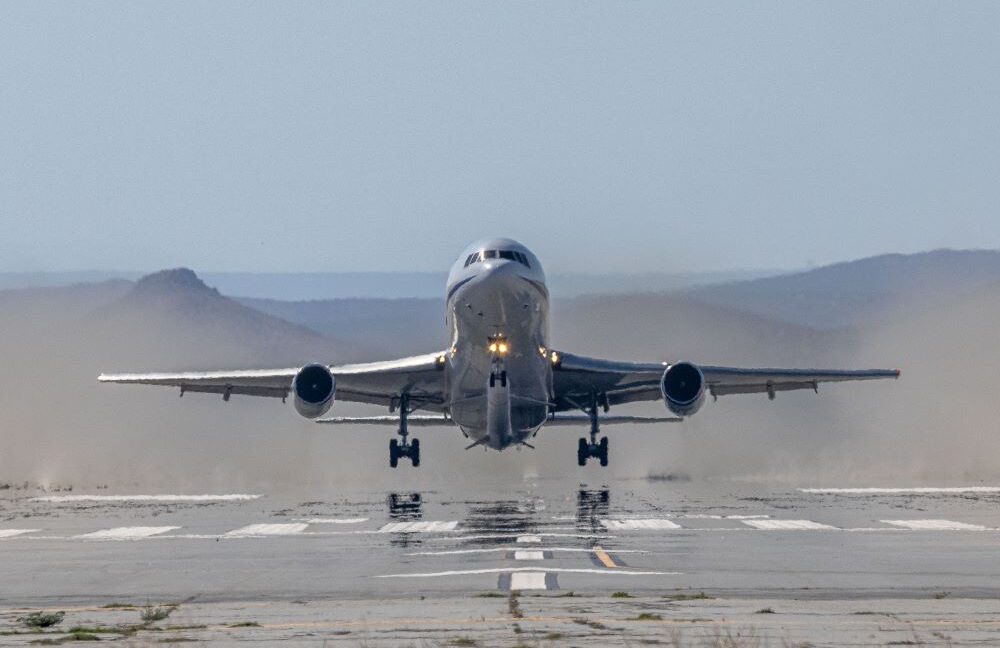
Katalyst Space Technologies has successfully launched its Link satellite, marking the first mission of its kind to rescue a NASA observatory. The Link satellite was deployed into orbit on Friday via a Northrop Grumman Pegasus XL rocket launched from Kwajalein Atoll. The mission's objective is to rendezvous with NASA's Swift observatory, which is perilously close to falling out of orbit, and boost its altitude.
NASA awarded Katalyst a contract last September to develop and launch the rescue mission. The company achieved a remarkable feat by building, testing, and launching the nearly half-ton Link satellite in less than a year, a process that typically takes several years. The launch required a specific low-inclination orbit, which was achieved by launching from the equatorial Pacific.
Over the coming weeks, Katalyst will conduct checkout procedures for the Link satellite's systems, including its propulsion, sensors, and navigation. The satellite will then approach Swift, survey the 21-year-old observatory, and use its robotic arms to capture it. Three plasma thrusters will then propel both satellites to a higher orbit. Engineers acknowledge the challenges and risks, as Swift was not designed for orbital rendezvous and capture, and the condition of its thermal insulation is unknown.
Swift, a $500 million observatory primarily used for detecting gamma-ray bursts, remains crucial for astrophysicists. This mission also serves as a test for a robotic servicing platform, a safer and potentially cheaper alternative to astronaut-led missions like those for the Hubble Space Telescope. NASA officials emphasized the success of the launch itself, given the tight deadline to prevent Swift from falling below an altitude where atmospheric drag would make a rescue impossible.