Key facts
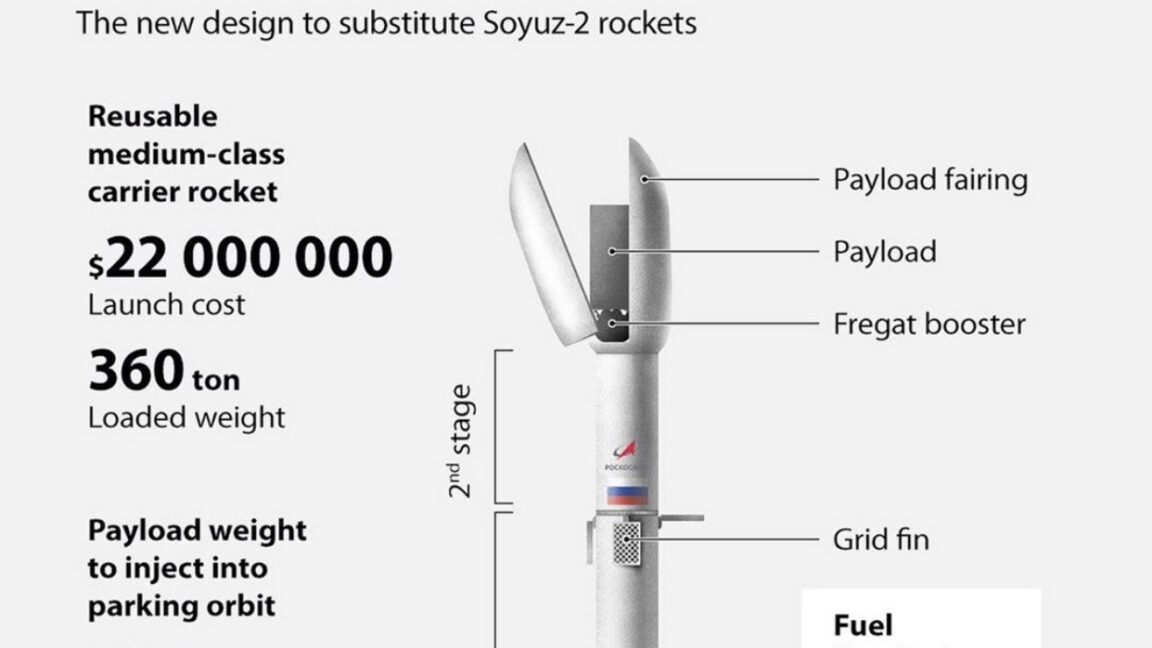
- Russia's Roscosmos is developing a reusable rocket named Amur-LNG.
- The Amur-LNG is designed to compete with SpaceX's Falcon 9.
- It was initially planned for a 2026 debut.
- Current development is focused on a first-stage demonstrator.
- The rocket is intended to have a reusable first stage and methane-powered engines.
While many countries and private companies are advancing reusable rocket technology, Russia's development of its Amur-LNG rocket appears to be facing delays. Roscosmos, the Russian space corporation, unveiled plans for the Amur-LNG six years ago, aiming for a 2026 debut. Designed as a response to SpaceX's Falcon 9, the rocket was intended to feature a reusable first stage powered by methane engines, with a payload capacity of 10.5 metric tons to low-Earth orbit.
However, recent statements from Russian space officials indicate a shift in focus. Dmitry Baranov, Roscosmos' Deputy Director General for Rocket Programs, stated that the current priority is the development of a 'demonstrator' for the rocket's first stage. This suggests that the original timeline for the Amur-LNG's debut may not be met, contrasting with aggressive progress seen in China, Japan, and the United States, where companies like SpaceX, Blue Origin, Stoke Space, Rocket Lab, and Relativity Space are all making strides in rocket reusability.