Key facts
- SpaceX's Starship rocket has a payload capacity exceeding 100 metric tons to low-Earth orbit.
- The rocket's design may enable new applications for satellites, including communications, sensing, and orbital data centers.
- Historically, rocket designs were dictated by satellite industry trends and customer needs.
- Starship's capacity allows for the deployment of up to 60 Starlink V3 satellites in a single launch.
- Muon Space's Condor-Ultra satellite platform is designed for stackable deployment through Starship's fuselage.
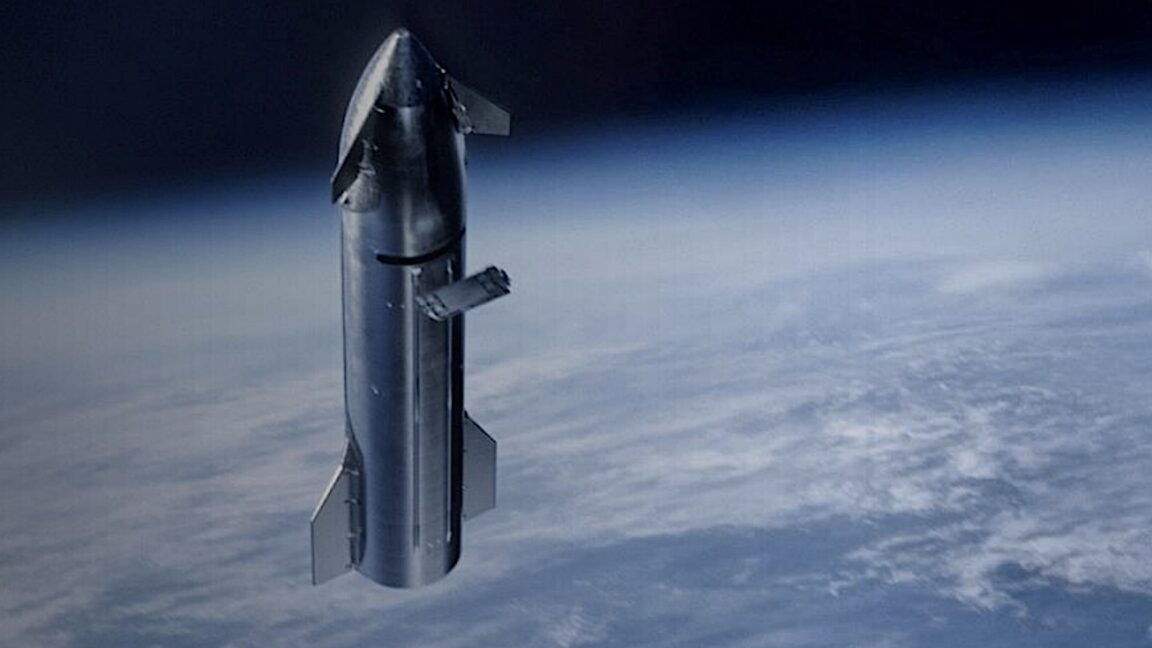
SpaceX's Starship rocket, with its unprecedented payload capacity of over 100 metric tons, is poised to fundamentally alter the space industry's supply and demand dynamics. Historically, rocket designs were engineered to meet the needs of satellite manufacturers. However, Starship's capabilities are prompting satellite makers to adapt their designs to leverage the rocket's enormous volume and unique deployment systems.
This shift is exemplified by SpaceX's own Starlink V3 satellites, which are designed for stackable mass deployment from Starship's fuselage, ejecting like a 'Pez dispenser.' This approach differs from traditional satellite designs and deployment methods, which involved stacking payloads within a fairing atop the rocket. Competitors and new entrants are taking note; Muon Space, a satellite manufacturing startup, is developing its Condor-Ultra platform specifically optimized for deployment from Starship, targeting communications, sensing, and orbital data center missions.
While Starship is still in its experimental phase, its potential to carry large payloads to higher orbits, the Moon, or Mars has captured the attention of government agencies like NASA and the US military, as well as scientists eager to launch large space telescopes. The development of super-heavy-lift rockets like Starship and Blue Origin's New Glenn signals a new era of abundant launch capacity expected around 2026, promising to unlock entirely new applications for space-based technologies.