Key facts
- City Labs launched the BOHR satellite on a SpaceX rideshare mission.
- BOHR is described as the world's first commercial nuclear-powered satellite and first nuclear CubeSat.
- The satellite's power source is a nuclear betavoltaic battery using tritium decay.
- The technology enables persistent, always-on payload operations independent of sunlight.
- City Labs is also exploring the technology for implantable medical devices.
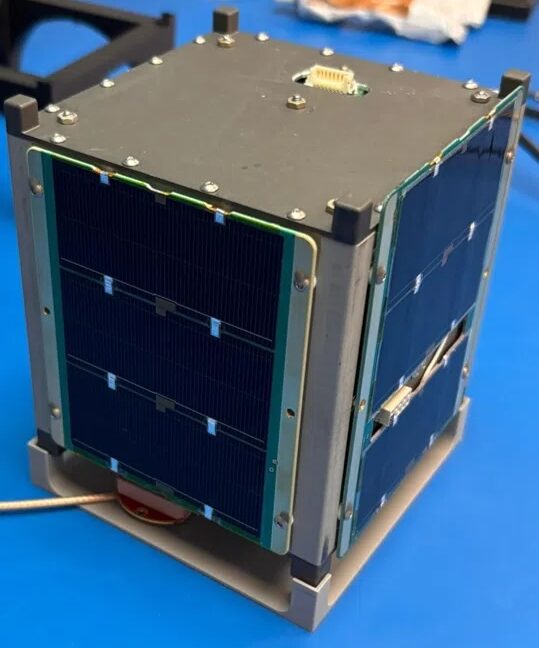
The development of nuclear power for space applications took a step forward Tuesday with the launch of a small satellite by Miami-based City Labs. The satellite, named BOHR (Betavoltaic Orbital High-Reliability), was sent into orbit between 350 and 400 miles altitude as part of a SpaceX rideshare mission carrying over 80 other payloads.
City Labs is touting BOHR as the world's first commercial nuclear-powered satellite and the first nuclear CubeSat. The satellite utilizes a nuclear betavoltaic battery, which generates electricity from the radioactive decay of tritium, an isotope of hydrogen. This technology is designed to provide a reliable, long-duration power source for low-power applications.
Peter Cabauy, CEO of City Labs, stated that the launch marks a historic step for commercial nuclear power in space, demonstrating the readiness of safe, compact, and regulatory-approved nuclear power systems for deployment. He added that this capability allows for persistent, always-on payload operations that are not dependent on sunlight or conventional battery life. While the BOHR satellite uses solar power for regular operations, its experimental NanoTritium power generator will be used in demonstration mode to supply electricity to a payload. The company is also investigating the use of its NanoTritium technology for implantable medical devices.