HomeEverythingEducation
Equities & FundsCrypto & Digital AssetsAI & TechnologyBusiness & CorporateUS Politics & PolicyGeopolitics & Global RiskMacro, Rates & FXCommodities & EnergyEuropean Politics & MarketsAsia-PacificReal Estate & Property
Story archiveAll categories
← All Stories

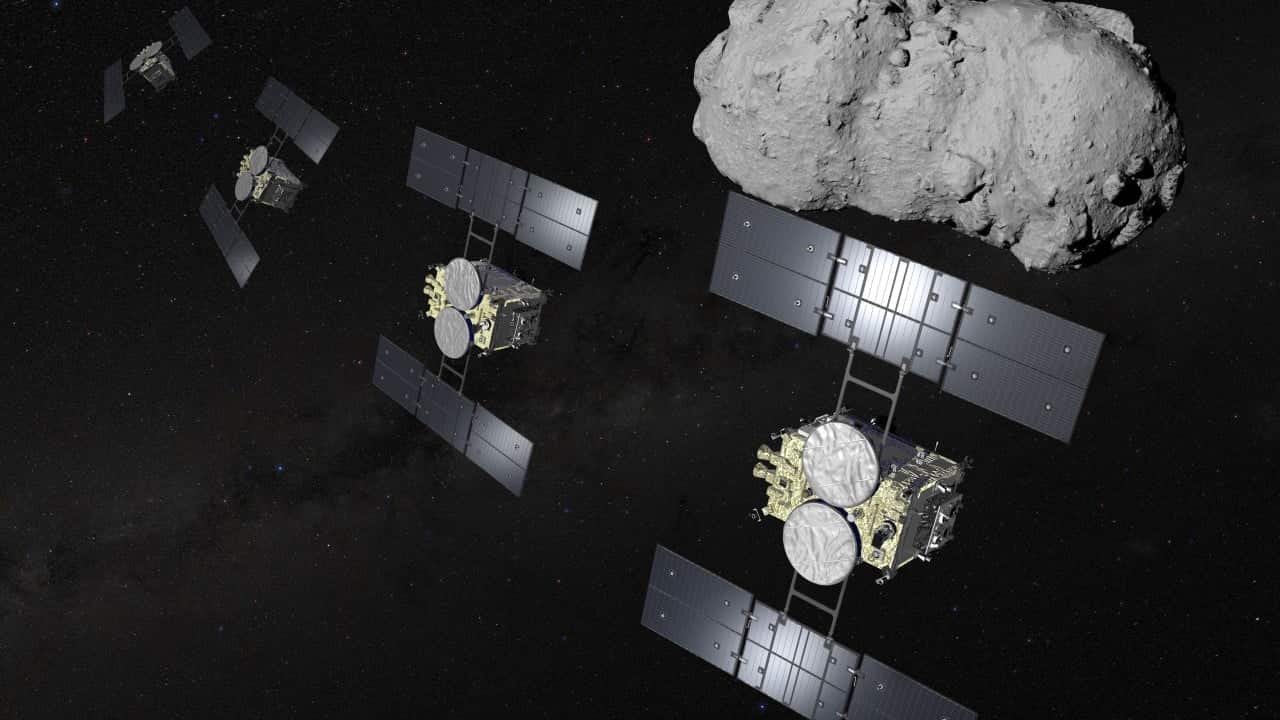
NASA's asteroid deflection success prompts questions about Japan's Hayabusa2 mission

Created at 12 Jul · 4:20 AM1 source↑ Market-relevant
IN SHORT

NASA's successful asteroid deflection mission using the DART spacecraft raises questions about whether Japan's Hayabusa2 mission could achieve a similar feat. Hayabusa2 previously collected samples from the asteroid Ryugu.

✉Newsletter

PiQ Daily

Pick your topics. Get only what matters, on your cadence.

Who's Involved

NASA
agency that successfully deflected an asteroid with the DART mission
Hayabusa2
Japanese space mission that collected samples from asteroid Ryugu
NASA's asteroid deflection success prompts questions about Japan's Hayabusa2 mission

↳ Why This Matters

The success of asteroid deflection missions is crucial for planetary defense, offering a potential method to mitigate the risk of future asteroid impacts on Earth. Comparing the capabilities of different international space missions highlights advancements in space technology and international collaboration in addressing global threats.

Key facts

  • NASA's Double Asteroid Redirection Test (DART) mission successfully altered the trajectory of the asteroid Dimorphos.
  • The Hayabusa2 mission, led by the Japan Aerospace Exploration Agency (JAXA), previously collected samples from the asteroid Ryugu.
  • The success of DART raises questions about the capabilities of other space missions, such as Hayabusa2, in asteroid deflection.

NASA's recent successful deflection of an asteroid using its Double Asteroid Redirection Test (DART) spacecraft has sparked discussions about the capabilities of other space missions in similar endeavors. The DART mission intentionally impacted the asteroid Dimorphos, altering its orbit around a larger asteroid, Didymos. This achievement has led to comparisons with Japan's Hayabusa2 mission, which successfully collected samples from the asteroid Ryugu and returned them to Earth. The question now is whether Hayabusa2, or similar missions, could replicate NASA's success in asteroid deflection.

Frequently asked questions

The Double Asteroid Redirection Test (DART) was a NASA mission that intentionally crashed a spacecraft into the asteroid Dimorphos to test the feasibility of deflecting an asteroid by kinetic impact.

The Hayabusa2 mission, operated by JAXA, successfully collected samples from the asteroid Ryugu and returned them to Earth for scientific analysis.

The article raises this as a question, comparing its sample collection capabilities to NASA's DART mission's deflection success. It does not state whether Hayabusa2 could perform such a deflection.

What Happens Next

01Further analysis of Hayabusa2's capabilities in relation to asteroid deflection.
02Potential future missions designed for asteroid deflection.

Get the newsletter.

Pick the topics you actually care about. We'll email when there's news worth your time, on the cadence you choose. Cancel any time from your account.

Cadence

How It Developed

NASA successfully deflected an asteroid with the DART mission.
The success of NASA's mission prompts comparisons to Japan's Hayabusa2.
Hayabusa2 previously collected samples from the asteroid Ryugu.

Sources

T1
Nasa knows how to deflect an asteroid. Can Japan’s Hayabusa2 pull it off?South China Morning Post

Related Stories

China's Long March-10B Rocket Launch Sparks Social Media Buzz
11 Jul · 1:06 PM
Astronomers Discover Jupiter-Size Planet Surviving Star's Death
11 Jul · 12:06 PM
Ukraine's Secret Drone Factories Illustrate Shift in Military Spending
11 Jul · 12:11 PM
Chinese parents use AI to guide university degree choices
11 Jul · 1:06 PM
BYD showcases battery, charging technology in 15,000km journey from Rome to Hong Kong
11 Jul · 9:12 AM