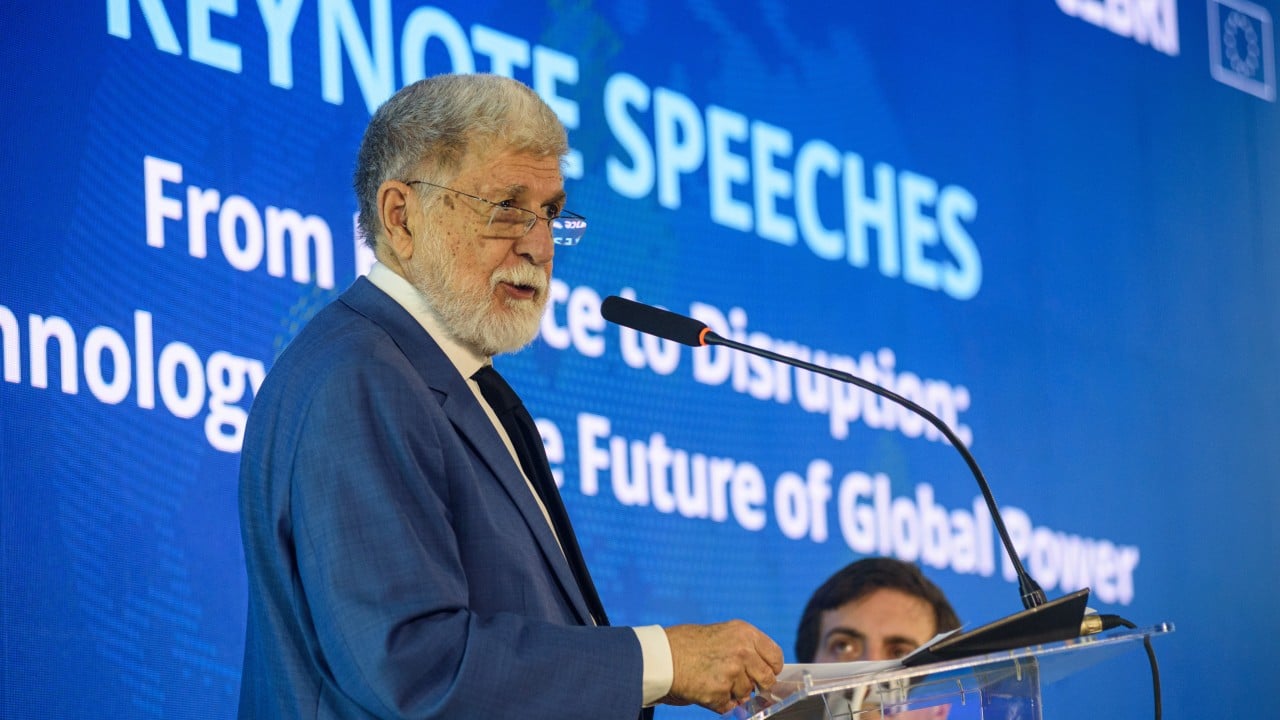
The global race for artificial intelligence dominance has coalesced into a two-power contest between the United States and China, with Latin America and Europe largely on the sidelines, according to Celso Amorim, Brazil's top foreign policy adviser.
Speaking at the Forte de Copacabana International Security Conference in Rio de Janeiro, Amorim, a former foreign and defence minister, stated that neither Latin America nor Europe is currently leading the AI race. He characterized the competition as being between the US and China, emphasizing that the resulting technological gap will have significant practical consequences, as technology inherently multiplies power and asymmetries.
Amorim outlined Brazil's proposed approach: to avoid picking sides and instead to attract capital and technology from both the US and China. He suggested that Brazil, as part of BRICS and the broader Global South, could maintain this balance.
However, he acknowledged the difficulty in maintaining such a balance amidst the intensifying rivalry. The article notes that recent US actions, such as President Trump's visit to Beijing where AI chips and critical minerals were discussed, have settled little. Washington has imposed limitations on the sale of advanced Nvidia H200 chips to approximately ten Chinese companies and has blocked exports of its most sophisticated processors. Concurrently, China is advancing its own proposals for global AI governance, while the US has also tightened national security rules for AI firms through an executive order.