All NewsEducationTV
Equities & FundsCrypto & Digital AssetsAI & TechnologyBusiness & CorporateUS Politics & PolicyGeopolitics & Global RiskMacro, Rates & FXCommodities & EnergyEuropean Politics & MarketsAsia-PacificReal Estate & Property
Story archiveAll categories
← All Stories

Katalyst's Link satellite faces reaction wheel failures during NASA Swift rescue mission

Created at 28 Jul · 10:12 PM1 source↑ Market-relevant
IN SHORT

Katalyst Space Technologies' Link satellite, designed to save NASA's Swift observatory from reentry, is experiencing critical issues. Two of its three reaction wheels are inoperable, impacting attitude control and communications, potentially jeopardizing the rescue mission.

✉Newsletter

PiQ Daily

Pick your topics. Get only what matters, on your cadence.

Key Numbers

2inoperable reaction wheels on Link satellite
3reaction wheels on Link satellite
200 milesaltitude of Swift observatory above Earth
9 monthstimeline for Katalyst to build and launch Link satellite
$30 millionNASA payment to Katalyst for rescue service

Who's Involved

Katalyst Space Technologies
Developer of the Link satellite
NASA
Agency overseeing the Swift observatory and Link mission
Swift
NASA gamma-ray telescope facing reentry
Stephen Clark
Space Reporter
Shawn Domagal-Goldman
Director of NASA's astrophysics division
Kieran Wilson
Link's principal investigator at Katalyst
Katalyst's Link satellite faces reaction wheel failures during NASA Swift rescue mission

↳ Why This Matters

The failure of critical components on the Link satellite jeopardizes NASA's $30 million mission to save the Swift observatory, a vital instrument for detecting gamma-ray bursts. It also raises questions about the readiness and reliability of the burgeoning commercial satellite servicing industry.

Key facts

  • Katalyst's Link satellite, intended to save NASA's Swift observatory from reentry, is experiencing critical failures.
  • Two of the Link satellite's three reaction wheels are inoperable, affecting its attitude control.
  • The satellite is also experiencing issues with its cold gas thruster system.
  • NASA is paying Katalyst $30 million for the satellite servicing mission.
  • The Link satellite's electric thrusters are being used to stabilize its attitude, a task they were not designed for.

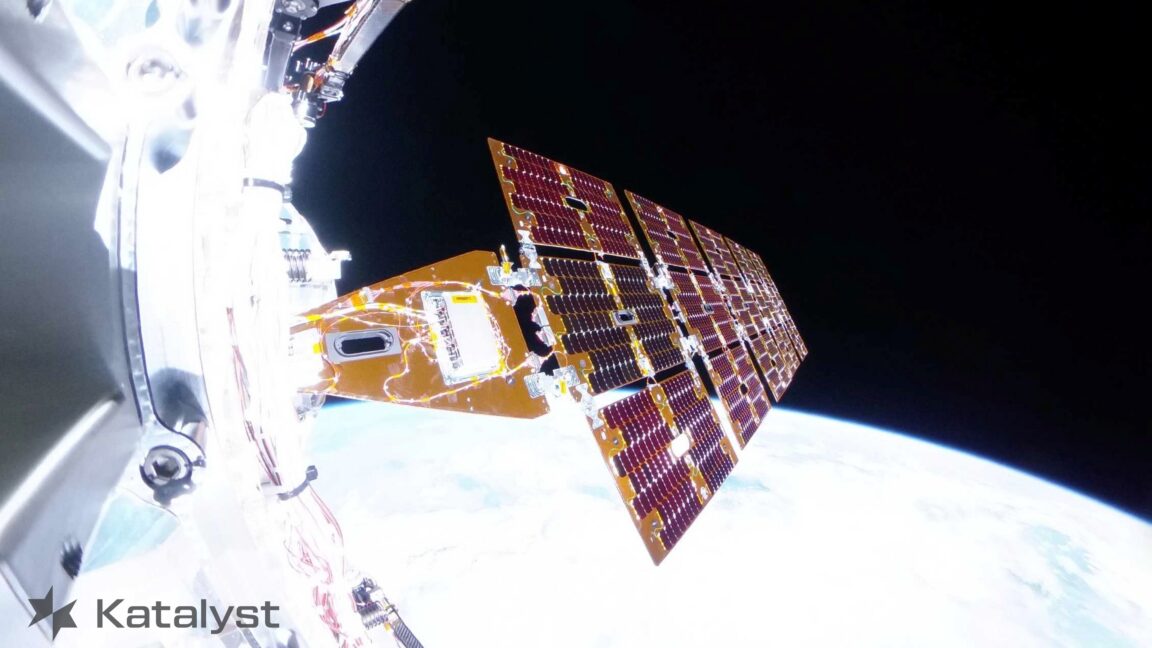
The Link satellite, a commercial spacecraft developed by Katalyst Space Technologies and tasked with saving NASA's aging Swift gamma-ray telescope from atmospheric reentry, is facing significant technical challenges. Launched on July 3, the satellite has experienced critical failures in its attitude control system, specifically with its reaction wheels. Preliminary investigations indicate that two of the Link satellite's three reaction wheels are non-operational, and there is also a loss of functionality in its cold gas thruster system. These failures are causing the satellite to spin and have led to sporadic communications.

Reaction wheels are standard components used to control a satellite's orientation in orbit. The Link satellite's cold gas thruster system is intended for finer control as it approaches its target, NASA's Swift observatory, which is approximately 200 miles above Earth. With the primary attitude control systems compromised, Katalyst is now attempting to utilize the satellite's xenon-fueled electric thrusters for stabilization, a role they were not originally designed for. These electric thrusters are crucial for raising Swift's orbit once Link attaches to it.

Despite these setbacks, the Link spacecraft continues to generate sufficient electrical power and maintain communication with ground teams, providing engineers with time to devise a plan. NASA is paying Katalyst $30 million for the rescue service, viewing the mission as both a critical endeavor to extend Swift's scientific life and a technology demonstration for the commercial satellite servicing industry. The rapid nine-month timeline for building and launching Link, though challenging, was met by Katalyst. NASA officials have stated that even the attempt itself is considered a programmatic success, regardless of the final outcome for the Swift rescue.

Frequently asked questions

The Link satellite was built by Katalyst Space Technologies to perform a rescue mission for NASA's Swift gamma-ray telescope, aiming to boost its orbit and prevent it from burning up during reentry.

The Link satellite has suffered failures in its attitude control system, with two of its three reaction wheels becoming inoperable and partial loss of functionality in its cold gas thruster system.

Katalyst is attempting to use the satellite's electric thrusters for attitude stabilization, a function they were not originally designed for.

The Swift observatory is nearly 22 years old and is operating beyond its intended lifetime, with its orbit rapidly decaying and on track for reentry in the next few months.

What Happens Next

01Katalyst plans to update Link's guidance, navigation, and control systems.
02Katalyst will evaluate revised plans to approach and capture Swift based on Link's health.

Get the newsletter.

Pick the topics you actually care about. We'll email when there's news worth your time, on the cadence you choose. Cancel any time from your account.

Cadence
CME Headlines
  • Is AI Making Inflation Better or Worse?
    22 Jul · 3:26 PM

How It Developed

Katalyst's Link satellite, built to save NASA's Swift observatory, launched on July 3.
The Link satellite experienced issues with attitude control over the weekend, causing it to spin and leading to sporadic communications.
Preliminary investigations reveal two of Link's three reaction wheels are not operable, and there is some loss of functionality in its cold gas thruster system.
Katalyst is now attempting to use the satellite's electric thrusters for attitude stabilization, a function they were not originally intended for.
Engineers have time to develop a plan to address the reaction wheel problems due to sufficient electrical power and communication with ground teams.
Katalyst plans to update Link's guidance, navigation, and control systems to accommodate the new configuration and will then evaluate revised plans to approach and capture Swift.

Sources

T1
Reaction wheel failures leave Swift rescue mission spinning in orbitvar abtest_2165132 = new ABTest(2165132, 'impression');Ars Technica

Related Stories

NASA telescope rescue robot tumbles out of control
28 Jul · 7:16 PM
JFrog confirms OpenAI exploit of Artifactory zero-days
28 Jul · 9:42 PM
Philly suburb demands 43 conditions for data center construction
28 Jul · 8:47 PM
Sam Altman suggests pacing AI development for societal readiness
28 Jul · 8:46 PM
Biotech firms develop new measles treatments amid rising US cases
28 Jul · 1:37 PM