Key facts
- Japanese startups are entering the defense drone production sector.
- Japan's drone budget has seen a significant expansion in fiscal year 2026.
- The government aims to reduce dependence on China and expand domestic manufacturing.
- Several domestic startups and foreign firms are competing for defense drone contracts.
- Japan has a goal of producing 80,000 drones annually by 2030.
Japanese startups are increasingly venturing into the defense drone sector, spurred by a substantial increase in the nation's drone budget and a strategic imperative to bolster domestic manufacturing and reduce reliance on China. The fiscal year 2026 budget allocates ¥100.1 billion for SHIELD unmanned assets, with total unmanned-vehicle procurement reported at approximately ¥277 billion, a significant jump from the previous year. Japan has also set an ambitious goal of achieving an annual production capacity of 80,000 drones by 2030.
This expanding market has created a competitive landscape involving traditional industrial giants like Mitsubishi Heavy and Kawasaki Heavy, alongside domestic startups such as ACSL, Liberaware, Terra Drone, Blue Innovation, and Prodrone. Foreign players, including Anduril, Shield AI, and General Atomics, are also actively pursuing opportunities in Japan.
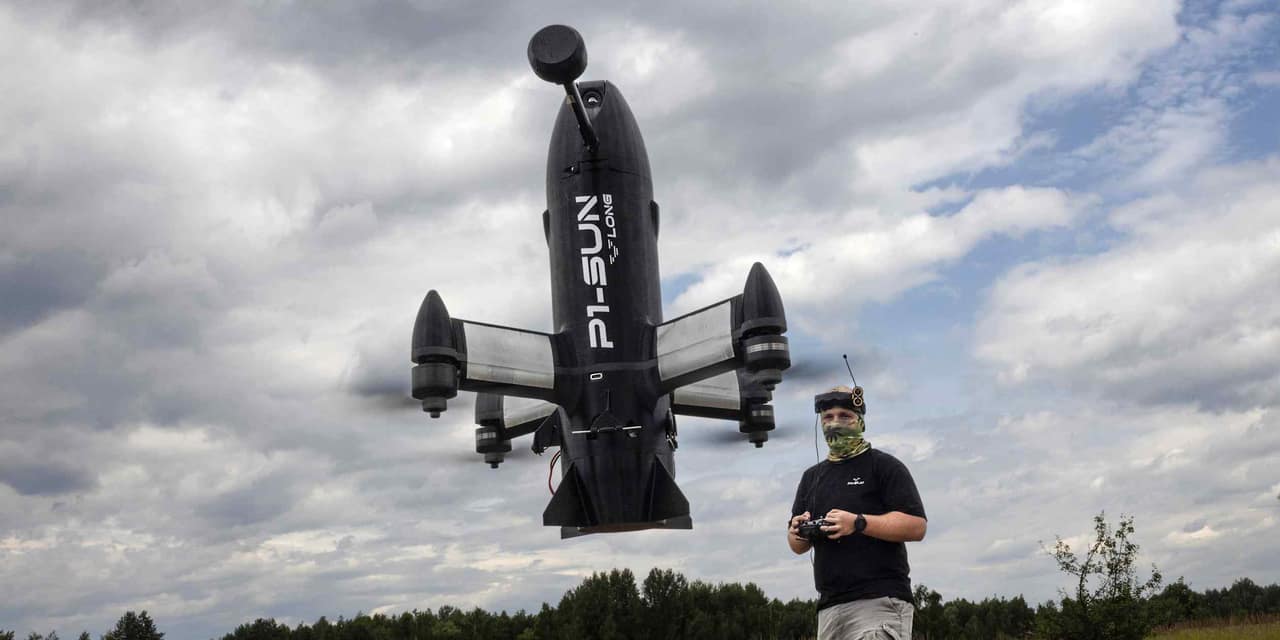
Terra Drone exemplifies this shift, moving from its origins in industrial infrastructure inspection to defense applications. The company has been involved with interceptor drones, including a strategic investment in Ukraine's Amazing Drones, and plans to acquire a 50% stake to consolidate it as a subsidiary. Terra Drone's listing on the Tokyo Stock Exchange Growth Market in November 2024 under code 278A has provided it with increased credibility for stricter defense and industrial customers. The company has also signed a memorandum of understanding with Saudi Aramco to explore drone, robotics, and AI-driven solutions.
While large contractors offer integration capabilities for complex systems, startups bring specialization in rapid product cycles and specific technologies like swarming and image analysis. The defense contracts, however, come with stringent requirements for cost accounting, security, and long-term support, posing administrative challenges for smaller firms.