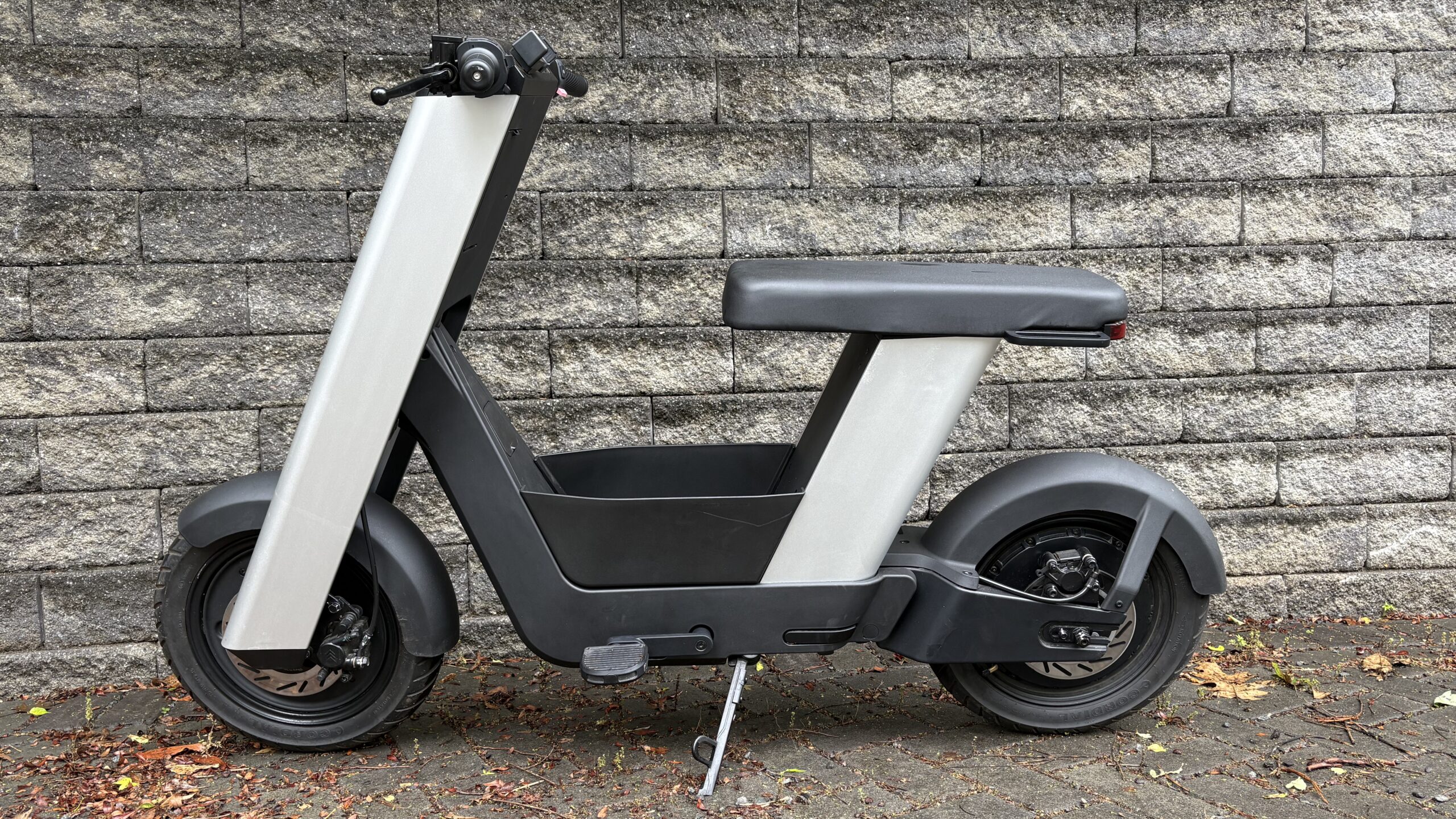
The Infinite Machine Olto is presented as an electric scooter that technically qualifies as a bicycle, designed to leverage urban bike lane infrastructure. While it possesses pedals, the scooter's low seat relative to the pedals and wide frame make pedaling an uncomfortable and impractical experience. The designers, cyclists from New York City, aimed to provide a scooter-like ride while adhering to bicycle classifications, allowing users to navigate bike lanes with electric assist.
The Olto can operate in Class 2 mode, offering throttle and assist up to 20 mph, or Class 3 mode with assist up to 28 mph. However, it functions best in Class 2 with the throttle, and the pedals are designed to be stowed and used as footrests. The process of stowing the pedals involves disconnecting the cranks and securing them forward, a maneuver that takes under a minute. The scooter's phone app allows for adjustments to acceleration, with a slower mode for traffic and a quicker mode for open roads.
Weighing approximately 175 lbs, the Olto is heavy and can be difficult to maneuver by hand. A potential safety issue arises from accidentally twisting the throttle when the scooter is not in use, causing it to leap forward. The controls are minimalist, featuring throttle and brake levers, turn signals, a power button, lights, and a boost button that can exceed the legal speed limit. The ride is described as comfortable, with thick tires smoothing out bumps and potholes, making it suitable for errands.
The Olto is available in all-black or silver trims, featuring a striking, modern design. While it has a long seat designed for two, taller riders may find rear passenger accommodation limited. Storage is minimal, with optional accessories available. The scooter's battery is located under the seat, providing ample charge for extended riding.