Key facts
- The Link satellite, owned and operated by Katalyst Space Technologies, experienced a loss of control.
- The satellite is intended to boost the orbit of NASA's Swift gamma-ray observatory.
- Two of Link's three reaction wheels and some cold gas thrusters are inoperable.
- Katalyst is using the satellite's electric propulsion system to slow its spin.
- The spin rate has been reduced by half, and engineers are developing new control algorithms.
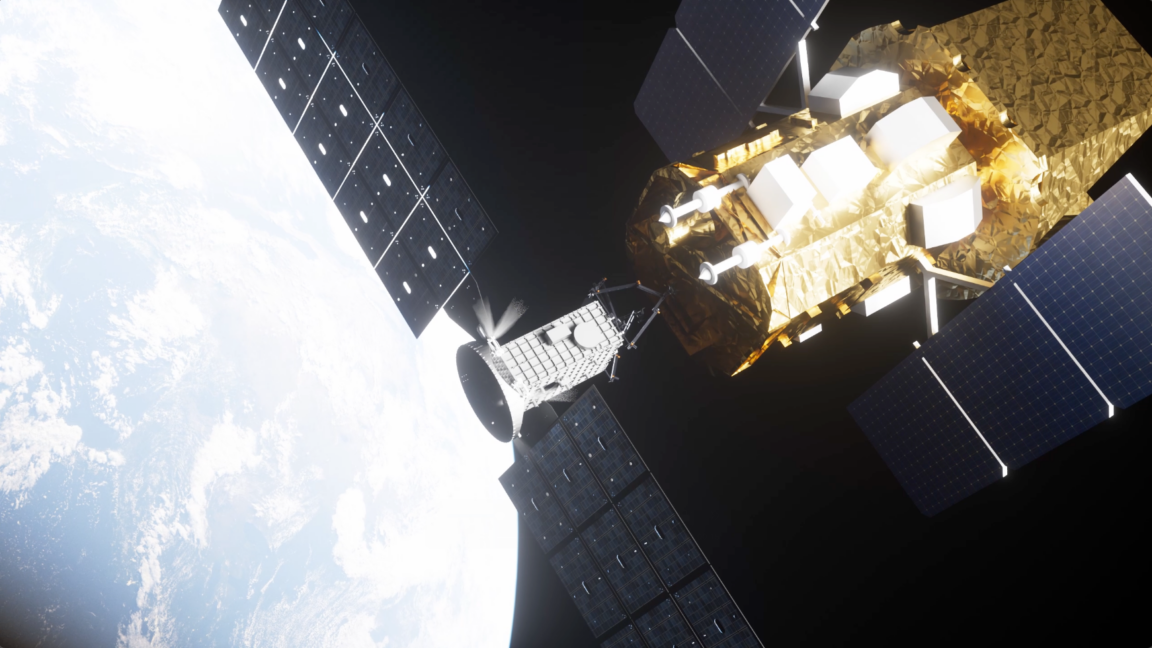
Engineers are working to regain control of the Link satellite, a spacecraft sent to rescue NASA's Swift gamma-ray observatory, after it unexpectedly spun out of control. The Link satellite, built and operated by Katalyst Space Technologies, experienced issues with its reaction wheels and cold gas thrusters, rendering it unable to maintain stable communication and pointing.
Katalyst's ground team is utilizing the satellite's efficient, xenon-fueled electric thrusters, which are designed for orbit-raising but can also vector thrust for attitude control, to gradually slow the spin. This method has already reduced the satellite's rotation rate by half, from approximately 9 degrees per second to about 4 degrees per second. The company's guidance, navigation, and control team is collaborating with NASA to remap control algorithms and prepare an updated controller.
The exact cause of the emergency remains under investigation, with possibilities including an internal malfunction or a collision with space debris. A built-in fault protection logic triggered a power cycle after a 24-hour communication loss, which may have caused a thermal spike affecting the reaction wheels. Engineers are also investigating a separate issue with the cold gas thrusters. Despite these challenges, Katalyst remains committed to the mission and aims to proceed with the rendezvous and inspection of the Swift observatory, believing a capture attempt is still feasible.