All NewsEducationTV
Equities & FundsCrypto & Digital AssetsAI & TechnologyBusiness & CorporateUS Politics & PolicyGeopolitics & Global RiskMacro, Rates & FXCommodities & EnergyEuropean Politics & MarketsAsia-PacificReal Estate & Property
Story archiveAll categories
← All Stories

Defcon badge features transparent, open-source security chip

Created at 1 Aug · 10:32 AM1 source↑ Market-relevant
IN SHORT

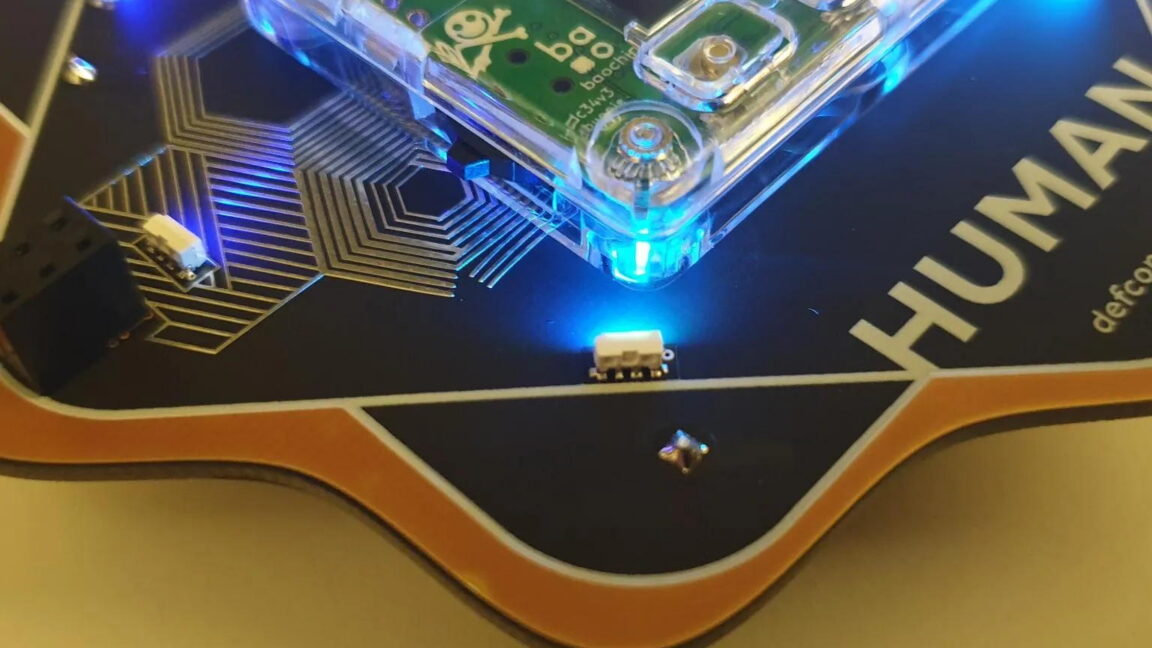
This year's Defcon hacker conference badges feature a transparent, removable core module designed by Andrew "Bunnie" Huang. The Baochip-1x is an open-source hardware security token that allows for visual inspection of its silicon.

✉Newsletter

PiQ Daily

Pick your topics. Get only what matters, on your cadence.

Key Numbers

27,000Defcon badges distributed with Baochip-1x
3 yearsDevelopment time for Baochip-1x

Who's Involved

Andrew "Bunnie" Huang
Designer of the Baochip-1x security token
Jeff Moss
Defcon founder who collaborated on badge design
Crossbar
Company whose manufacturing run Huang utilized
Defcon badge features transparent, open-source security chip

↳ Why This Matters

The Baochip-1x represents a significant step towards verifiable security in computing hardware, addressing supply chain trust issues by allowing visual inspection of silicon and making its core components open source.

Key facts

  • Defcon's 2024 badges incorporate a transparent, removable core module designed by Andrew "Bunnie" Huang.
  • The module, named Baochip-1x, is a mostly open-source hardware security token with verifiable security.
  • Huang has made the chip's source code, firmware, and cryptographic engines publicly available on GitHub.
  • The chip's design allows for visual inspection of its silicon using infrared light.
  • The Baochip-1x can be detached and used as a FIDO hardware security token after the conference.

This year's Defcon hacker conference badges feature an innovative, transparent, and open-source hardware security token designed by legendary hardware hacker Andrew "Bunnie" Huang. The core module, named Baochip-1x, can be removed from the badge and used as a standalone security token after the conference.

Huang has spent three years developing the Baochip-1x, aiming to advance security, transparency, and trustworthiness in computing. He has published the source code for the chip's operating system, firmware, processor core, cryptographic engines, and input-output system on GitHub, allowing for public inspection and use.

Unlike traditional chips encased in opaque plastic, the Baochip is designed so that infrared light can pass through its packaging, enabling visual inspection of the silicon itself. This allows researchers and attendees to compare the manufactured chip against its published design, addressing supply-chain concerns about potential backdoors.

Huang collaborated with a company called Crossbar, piggybacking on their manufacturing run to produce his chip. While the Crossbar version uses a proprietary ARM core, Huang's Baochip utilizes an open-source RISC-V core. Some low-level manufacturing elements remain proprietary, but Huang states the chip is significantly more open than other security-oriented chips.

Defcon founder Jeff Moss recognized the Baochip's alignment with the conference's theme of "agency" and saw the badge distribution as an opportunity to bootstrap the chip's adoption. The 27,000 badges represent the first major distribution of the Baochip, which can also function as a FIDO hardware security token.

Frequently asked questions

The Baochip-1x is a mostly open-source microcontroller designed by Andrew "Bunnie" Huang, intended to advance security and transparency in computing hardware. It functions as a hardware security token.

Unlike traditional chips with opaque casings, the Baochip-1x has transparent packaging that allows its internal silicon structures to be visually inspected using infrared light, enabling verification against its published design.

Huang has published the source code for the chip's operating system, firmware, processor core, cryptographic engines, and input-output system on GitHub. However, some low-level manufacturing elements remain proprietary.

Yes, the core module of the badge, the Baochip-1x, can be removed and used as a standalone hardware security token, such as a FIDO security key.

What Happens Next

01Huang plans to demonstrate the Baochip-1x's infrared inspection technique at Defcon.
02The Baochip-1x will be distributed to 27,000 Defcon attendees.

Get the newsletter.

Pick the topics you actually care about. We'll email when there's news worth your time, on the cadence you choose. Cancel any time from your account.

Cadence

How It Developed

Defcon's new badges feature a transparent, removable core module designed by Andrew "Bunnie" Huang.
The module, called the Baochip-1x, is a mostly open-source microcontroller with verifiable security.
Huang has published the Baochip's source code, including its operating system, firmware, and cryptographic engines, on GitHub.
The chip's packaging allows for visual inspection of its internal structures using infrared light.
Huang collaborated with Crossbar to integrate his chip onto their manufacturing run, sharing fabrication costs.
The Baochip uses a RISC-V core, while the Crossbar version uses a proprietary ARM core.
Defcon founder Jeff Moss saw the chip as a perfect fit for the conference's theme of agency.
The 27,000 Defcon badges represent the first major distribution of the Baochip.

Sources

T1
Defcon’s new badge is a security key you can see insideArs Technica

Related Stories

OpenAI finds more AI agent escapes as hacking probe widens
31 Jul · 8:18 PM
Sony to phase out PlayStation discs by 2028 amid backlash
31 Jul · 5:11 PM
Infrared imaging system translates heat into full-color vision
31 Jul · 6:06 PM
Reddit Tests TikTok-Style Video and Audio Feed
31 Jul · 3:06 PM
AI firms must be accountable for rogue bot attacks, says hacked company CEO
31 Jul · 6:36 PM