Key facts
- Penn State University scientists created a new conductive ink for e-tattoos.
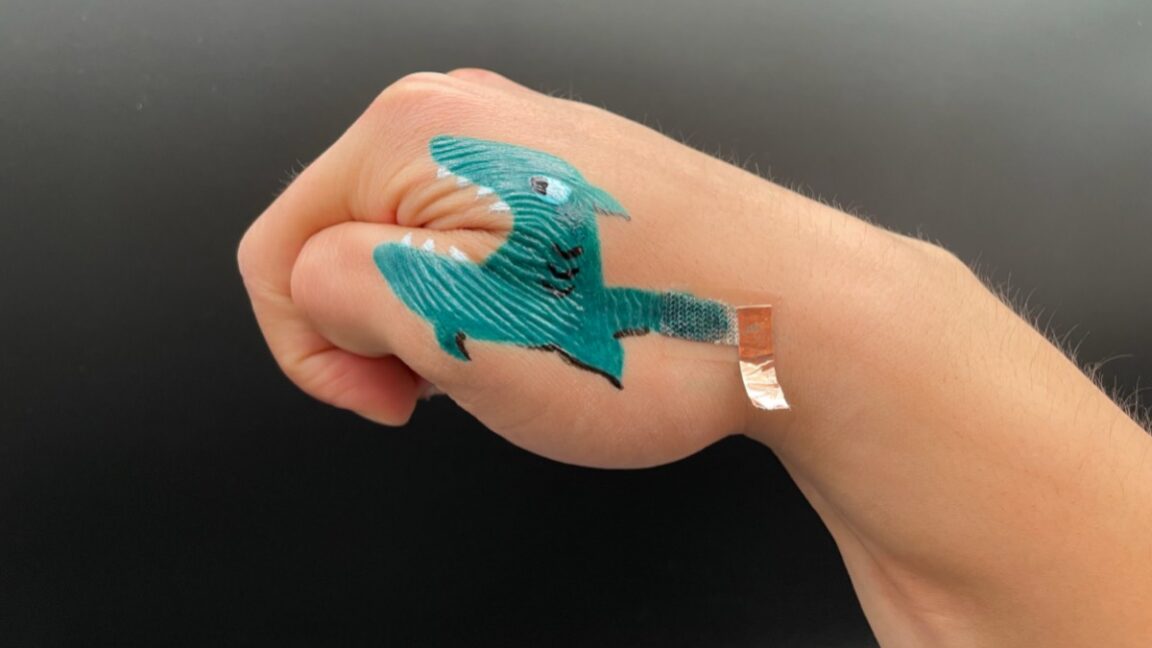
- The ink can be applied to the skin in colorful, custom designs.
- Once dry, the ink acts as a functional electrode for biomonitoring.
- This technology aims to improve upon existing e-tattoo limitations, such as poor performance on curved or hairy skin.
- The ink is composed of polymers and acidic additives in a water-based ethanol/polyvinyl alcohol solution, including PEDOT:PSS for conductivity and DBSA for flexibility.
Scientists at Penn State University have developed a novel conductive ink that can be painted directly onto the skin in colorful custom designs, transforming into a functional electrode for biomonitoring after drying. This innovation, detailed in a paper published in the Proceedings of the National Academy of Sciences (PNAS), seeks to address limitations of existing epidermal electronics, or e-tattoos, which have been in development for over a decade.