All NewsEducationTV
Equities & FundsCrypto & Digital AssetsAI & TechnologyBusiness & CorporateUS Politics & PolicyGeopolitics & Global RiskMacro, Rates & FXCommodities & EnergyEuropean Politics & MarketsAsia-PacificReal Estate & Property
Story archiveAll categories
← All Stories

China's 'whole nation' push in physical AI and robotics could spark 'China shock'

Created at 17 Aug · 1:26 AM1 source↑ Market-relevant
IN SHORT

A Taipei-based think tank warns of a potential 'China shock' in advanced robotics and physical AI, despite lagging in certain components. China is heavily investing in robotics, aiming to dominate the next frontier of AI, which could reshape global manufacturing and economic power.

✉Newsletter

PiQ Daily

Pick your topics. Get only what matters, on your cadence.

Key Numbers

42%China's robotics spending advantage over the U.S.
90%China's share of global humanoid robot production
60%China's share of global robotic installations
1.5 billion yuanSpirit AI funding round
$222 millionSpirit AI funding round equivalent
500,000Lingyi iTech's planned annual robot production by 2030
$620 millionUnitree's planned IPO fundraising target
295,000New robot installations in China annually
2 millionTotal robots built in Chinese factories

Who's Involved

DSET
Taipei-based think tank assessing China's AI and robotics strategy
Spirit AI
Chinese startup leading in AI robotics performance metrics
Nvidia
Tech company partnering with Unitree for robotics systems
Unitree
Chinese robotics company racing toward IPO and partnering with Nvidia
Jensen Huang
Nvidia CEO predicting massive physical AI market value
Lingyi iTech
Smartphone manufacturer expanding into robot production
BYD
Carmaker reportedly running a humanoid robot program
Deng Xiaoping
Former Chinese leader quoted on pragmatism in catching mice
Xi Jinping
Chinese President visiting North Korea and emphasizing tech cooperation
China's 'whole nation' push in physical AI and robotics could spark 'China shock'

↳ Why This Matters

China's aggressive push into physical AI and robotics, backed by substantial state and private investment, could disrupt global manufacturing and economic power dynamics, mirroring previous 'China shocks' in other industries. This development signals a potential shift in technological leadership and supply chain structures.

Key facts

  • A Taipei think tank warns China's 'whole nation' push in physical AI and robotics could lead to a 'China shock'.
  • China leads in robotics investment and production, producing 90% of humanoid robots and 60% of global installations.
  • Chinese startup Spirit AI has surpassed its U.S. rival in a key AI robotics metric.
  • China's robotics industry is driven by economic and demographic factors, aiming for control and reduced foreign dependence.
  • The country is rapidly advancing from basic industrial robots to sophisticated AI-powered systems.

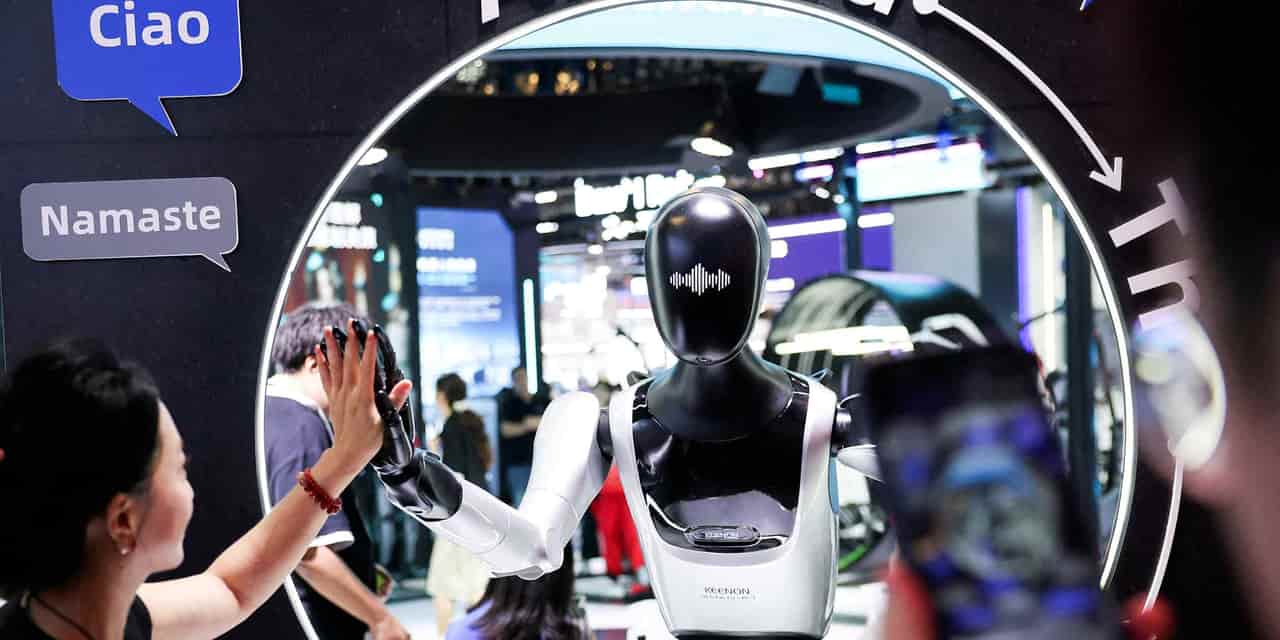
A leading Taipei-based think tank has warned that China's comprehensive national strategy to dominate advanced robotics and physical artificial intelligence could trigger a 'China shock' similar to what occurred in the electric vehicle and drone sectors. Despite acknowledged lags in cutting-edge chips, sensors, and precision machine tools, China is making significant strides in AI for robotics.

In the race to develop AI that enables robots to perceive, understand, and interact with the physical world, China is reportedly outpacing the U.S. in key metrics. Chinese startup Spirit AI recently surpassed its American rivals on a global ranking for AI in robotics, shortly after Nvidia launched its Cosmos 3 model aimed at enhancing robot decision-making. Nvidia has also partnered with Chinese robotics firm Unitree.

China's commitment to robotics is substantial, with the country spending 42% more on robotics than the U.S., a gap expected to grow. This investment is fueled by a deliberate, state-backed strategy to modernize manufacturing, driven by rising wages and an aging workforce, making automation essential for consistency, speed, and cost efficiency. The country collects vast amounts of physical world data to train its AI models, enhancing robot intelligence.

China's dominance in robot production is evident, accounting for 90% of the world's humanoid robots and 60% of all robotic installations. Chinese factories are building over two million robots, and the nation adds around 295,000 new robot installations annually, more than any other country. Domestic robot makers have already secured a majority share in their home market, and as these robots become cheaper and more capable, they are increasingly exported, potentially reshaping global supply chains.

The focus is shifting beyond basic industrial robots to advanced AI-powered systems capable of learning and adapting. Companies like Lingyi iTech plan to significantly increase robot production, while carmaker BYD is reportedly developing its own humanoid robots. This strategic push into physical AI is attracting significant investment, with companies like Spirit AI and Unitree raising substantial funds.

Frequently asked questions

The 'China shock' refers to a potential scenario where China's rapid advancement and dominance in a specific technological sector, like physical AI and robotics, could significantly disrupt global markets and supply chains, similar to past impacts from China's growth in EVs and drones.

China's investment is driven by economic and demographic factors, including rising wages and an aging workforce, making automation necessary for efficiency, consistency, and cost-effectiveness. It's also a strategic move to reduce reliance on foreign technology and strengthen its global manufacturing position.

Physical AI refers to artificial intelligence systems that enable robots and machines to perceive, understand, and interact with the physical world, moving beyond purely digital or software-based AI applications.

China's dominance in producing humanoid robots and overall robotic installations gives it a significant advantage in developing and deploying these technologies globally, potentially influencing manufacturing standards and economic competitiveness worldwide.

What Happens Next

01Further analysis on the specific technological advancements in China's AI robotics sector.
02Monitoring of Chinese robotics companies' IPOs and funding rounds.
03Tracking the export of Chinese robots and their impact on global manufacturing.

Get the newsletter.

Pick the topics you actually care about. We'll email when there's news worth your time, on the cadence you choose. Cancel any time from your account.

Cadence

How It Developed

A Taipei think tank warns of a potential 'China shock' in advanced robotics and physical AI.
China is making a 'whole nation' effort to dominate next-generation robotics and physical AI.
Despite lagging in cutting-edge chips and sensors, China is investing heavily in robotics.
Chinese startup Spirit AI ranked ahead of its U.S. rival in a global measure for AI in robotics.
Nvidia has partnered with Chinese startup Unitree for its robotics system.
China spends 42% more on robotics than the U.S., a gap expected to widen.
China collects vast amounts of physical world data to train its AI models for robots.
China produces 90% of the world's humanoid robots and 60% of robotic installations.

Sources

T1
China shock looms for robotics as physical AI race heats up: think tankNikkei Asia
T2
Robotics Race Heats Up as AI Moves Into the Real Worldprofgmedia.com
T2
China is quietly winning the physical AI racetbsnews.net

Related Stories

China develops 'electric eel' sensor for robots to feel objects without touch
16 Aug · 4:06 AM
Hong Kong firm bets on Chinese open-weight models to rival CoreWeave
17 Aug · 1:06 AM
Home province of DeepSeek, Moonshot founders seeks to retain, attract future AI talent
16 Aug · 3:06 AM
World Robot Conference 2025 Concludes in Beijing
16 Aug · 6:36 AM
Waymo's ride-hailing share grows, but impact on human drivers remains unclear
16 Aug · 7:21 AM