All NewsEducationTV
Equities & FundsCrypto & Digital AssetsAI & TechnologyBusiness & CorporateUS Politics & PolicyGeopolitics & Global RiskMacro, Rates & FXCommodities & EnergyEuropean Politics & MarketsAsia-PacificReal Estate & Property
Story archiveAll categories
← All Stories

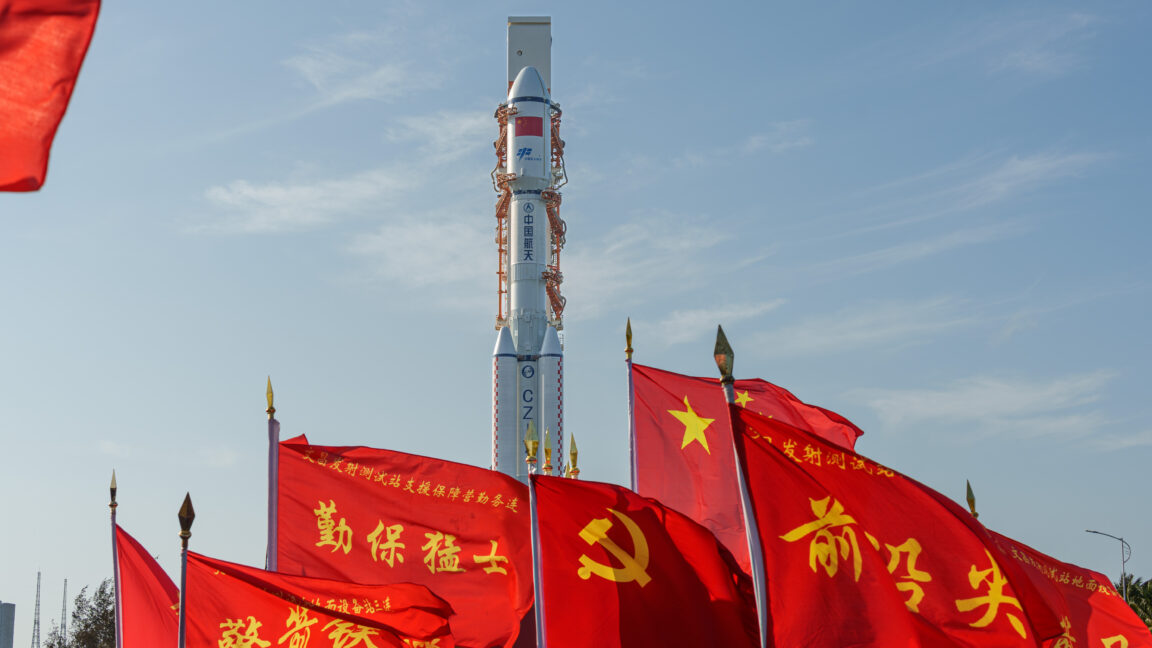
China's Long March 7A rocket explodes shortly after launch

Created at 10 Aug · 3:11 PM1 source↑ Market-relevant
IN SHORT

China's Long March 7A rocket exploded approximately 80 seconds after liftoff on Monday evening, local time. The rocket was carrying a classified payload, believed to be a military communications satellite. If the failure is linked to the YF-100 engine, it could impact other Chinese space missions.

✉Newsletter

PiQ Daily

Pick your topics. Get only what matters, on your cadence.

Key Numbers

50+annual launch total for China's space program
1 minute 20 secondstime into flight when rocket exploded
270,000 poundsthrust of YF-100 engine at sea level
9Chinese rockets that use YF-100 engines
2 weeksapproximate launch window for Chang'e 7 mission

Who's Involved

Long March 7A
Chinese medium-lift rocket that exploded in flight
China Aerospace Science and Technology Corporation
Developer of the Long March 7A rocket
YF-100
Engine potentially responsible for the rocket failure
Chang'e 7
Chinese lunar mission potentially impacted by rocket failure
Eric Berger
Senior Space Editor and author
China's Long March 7A rocket explodes shortly after launch

↳ Why This Matters

The failure of a workhorse rocket like the Long March 7A raises concerns about the reliability of China's space program, potentially impacting its ambitious lunar exploration goals and its growing role in space activities.

Key facts

  • China's Long March 7A rocket exploded approximately 80 seconds after liftoff on Monday evening.
  • The rocket's payload was classified but believed to be a military communications satellite.
  • The explosion occurred during the first stage of flight.
  • The YF-100 engine, used in the Long March 7A and other Chinese rockets, is a potential cause.
  • The Chang'e 7 lunar mission, reliant on YF-100 engines, may face delays.

One of China's most frequently used rockets, the Long March 7A, exploded approximately 80 seconds after its liftoff on Monday evening, local time. The rocket was carrying a classified payload, believed to be a military communications satellite.

The liftoff from the Wenchang Space Launch Site appeared normal, but videos captured the rocket's first stage exploding about 1 minute and 20 seconds into its flight. The Long March 7A is developed by the China Aerospace Science and Technology Corporation and operated by the state's space agency. Chinese officials have not yet commented on the incident.

Given the timing of the explosion, it likely occurred during the first stage's flight, possibly at the point of maximum dynamic pressure. While a flight termination system could have been activated if the rocket veered off course, the exact cause remains unconfirmed due to the closed nature of China's space program.

However, if the failure is attributed to the first stage's main engine, the YF-100, it could have significant implications for China's broader space endeavors. The YF-100, a liquid oxygen and kerosene-fueled engine with 270,000 pounds of thrust at sea level, has been a workhorse for the past decade, powering the Long March 7 and its 7A variant. It is also used in various configurations across as many as nine Chinese rockets, including the Long March 5 and 8, and modified versions are incorporated into new rockets like the Long March 10.

This potential engine issue could delay critical upcoming missions, such as China's Chang'e 7 robotic mission to the Moon, which is slated to launch on a Long March 5 rocket in about two weeks. The Long March 5's boosters are powered by YF-100 engines. The Chang'e 7 mission is a key part of China's lunar program, aiming to deploy an orbiter, lander, rover, and mini-hopper near the Moon's South Pole, a region also targeted by NASA for potential resource development.

Frequently asked questions

China's Long March 7A rocket exploded shortly after liftoff on Monday evening.

The rocket exploded approximately 1 minute and 20 seconds into its flight.

The payload was classified, but it is believed to have been a military communications satellite.

If the failure is engine-related, the YF-100 engine, which powers several Chinese rockets, is a potential cause.

Yes, if the YF-100 engine is the cause, it could delay important missions like the Chang'e 7 lunar mission.

What Happens Next

01Chinese officials are expected to comment on the rocket explosion.
02The cause of the explosion, particularly if engine-related, will be investigated.
03The Chang'e 7 lunar mission's launch schedule may be adjusted.

Get the newsletter.

Pick the topics you actually care about. We'll email when there's news worth your time, on the cadence you choose. Cancel any time from your account.

Cadence

How It Developed

China's Long March 7A rocket exploded about 80 seconds after liftoff.
The rocket was carrying a classified payload, believed to be a military communications satellite.
The explosion occurred during the first stage of flight, potentially at maximum dynamic pressure.
If the cause is related to the YF-100 engine, it could affect other Chinese rockets and missions.
The Chang'e 7 lunar mission, scheduled to launch on a YF-100 powered Long March 5 rocket, could be delayed.

Sources

T1
One of China’s workhorse rockets just exploded in flightvar abtest_2166774 = new ABTest(2166774, 'impression');Ars Technica

Related Stories

CATL battery breakthrough could advance China's flying car ambitions
10 Aug · 10:06 AM
China halts drone shows nationwide amid tightened airspace controls
10 Aug · 9:46 AM
Researcher's "noreply" domains reveal corporate data leaks
10 Aug · 2:31 PM
OpenAI Pauses Development of 'Astra' AI Model Over Cyber Risk Concerns
10 Aug · 3:11 PM
Waymo's rapid expansion is accompanied by an increase in operational glitches
10 Aug · 2:06 PM