Key facts
- Waymo is expanding its autonomous driving services to 15 U.S. cities.
- The company's vehicles are encountering novel situations for which they lack programmed responses.
- Investigations have been opened by the NTSB and NHTSA into Waymo's robotaxis.
- Incidents under investigation include illegally passing stopped school buses and a collision with a child.
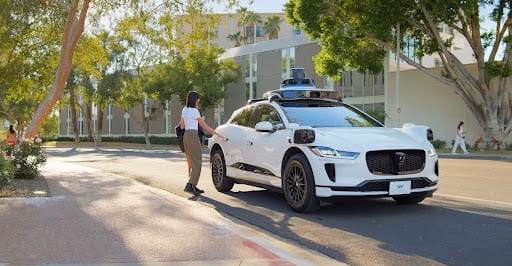
Waymo, an autonomous driving technology company and subsidiary of Alphabet Inc., is expanding its driverless car services across 15 U.S. cities. However, this expansion is accompanied by an increase in operational glitches as the vehicles encounter new and unexpected situations for which they are not programmed to handle.
In response to recurring incidents, including illegally passing stopped school buses and a collision with a child in a school zone, both the National Transportation Safety Board and the National Highway Traffic Safety Administration have opened investigations into Waymo's robotaxis. As of June 2026, Waymo operates public commercial robotaxi services in 10 U.S. metropolitan areas, with 3,871 robotaxis in service, providing 500,000 paid rides per week and having logged 200 million fully autonomous miles.
The company traces its origins to the Stanford Self-Driving Car Team in 2004 and was founded as the Google Self-Driving Car Project in 2009, later becoming Waymo in 2016. Waymo is run by co-CEOs Tekedra Mawakana and Dmitri Dolgov. By 2024, the company had raised $11 billion in outside funding rounds, and in February 2026, it raised $16 billion, valuing the company at $126 billion.