Key facts
- China successfully recovered its first reusable orbital-class rocket booster.
- The Long March 10B rocket launched from Hainan Island and its booster was caught mid-air by a net system on a ship.
- This achievement is a major step towards reusable launch capabilities for China's space program.
- The recovery method differs from SpaceX's propulsive landings and Blue Origin's approach.
- The Long March 10B is a medium-lift rocket with a payload capacity of approximately 16 metric tons to low-Earth orbit.
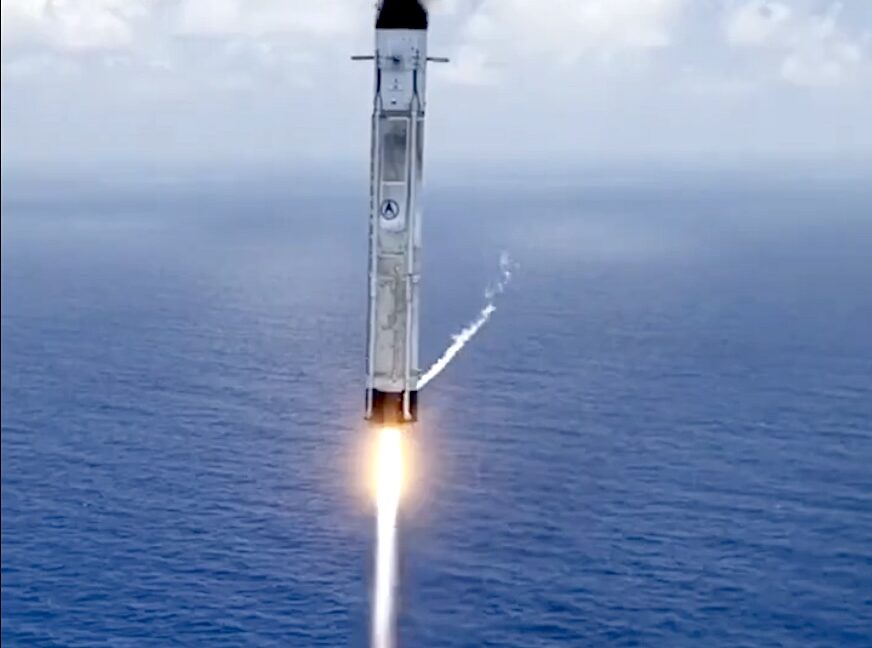
China has successfully recovered its first reusable orbital-class rocket booster, marking a significant advancement in its space program. The Long March 10B rocket launched from the Wenchang Commercial Space Launch Site and its first stage booster was captured mid-air by a net system affixed to an offshore vessel in the South China Sea. This method differs from the propulsive landings used by SpaceX and Blue Origin, and is seen as a way to reduce the impact of reusability on payload capacity.
The successful test flight validates key technologies for a reusable launch architecture, including multiple engine restarts with high-altitude ignition, high-precision navigation and control, and the net capture system. The Long March 10B is a medium-lift rocket with a payload capacity of approximately 16 metric tons to low-Earth orbit, comparable to SpaceX's Falcon 9. This development is part of China's broader ambitions, including landing astronauts on the Moon by 2030.
China is aiming to increase its launch cadence to compete with the United States, where companies like SpaceX dominate orbital launches due to their reusable rocket technology. US military officials have expressed concern that China's advancements in reusable rocketry could enhance its ability to deploy capabilities in space more rapidly.