HomeEverythingEducation
Equities & FundsCrypto & Digital AssetsAI & TechnologyBusiness & CorporateUS Politics & PolicyGeopolitics & Global RiskMacro, Rates & FXCommodities & EnergyEuropean Politics & MarketsAsia-PacificReal Estate & Property
Story archiveAll categories
← All Stories

China lands reusable rocket for first time

Created at 10 Jul · 7:21 AM2 sources↑ Market-relevant2 events
IN SHORT

China Aerospace Science and Technology Corporation successfully landed a reusable rocket for the first time on Friday, a key step toward lowering the cost of space missions and potentially challenging US dominance in the sector.

✉Newsletter

PiQ Daily

Pick your topics. Get only what matters, on your cadence.

Key Numbers

12:15local time launch
04:15GMT launch
6 minutestime after separation for booster return
16 metric tonspayload capacity to low-Earth orbit
10%stock increase for China Spacesat and China Satellite Communications

Who's Involved

China Aerospace Science and Technology Corporation
state-owned enterprise that achieved the reusable rocket landing
Elon Musk
founder of SpaceX, which has successful reusable rockets
Jeff Bezos
founder of Blue Origin, which has successful reusable rockets
China lands reusable rocket for first time

↳ Why This Matters

This achievement signifies China's growing capabilities in space technology and its potential to disrupt the market for space launches, which could lead to lower costs for satellite deployment and space exploration globally.

Key facts

  • China Aerospace Science and Technology Corporation successfully landed a reusable rocket for the first time.
  • The Long March 10B rocket launched from Hainan and its booster returned vertically to a floating platform.
  • This achievement marks a significant advancement in China's space technology capabilities.
  • The reusable rocket technology aims to lower the cost of space missions and compete with US companies like SpaceX and Blue Origin.
  • China Spacesat and China Satellite Communications shares rose by their daily limit of 10% following the announcement.

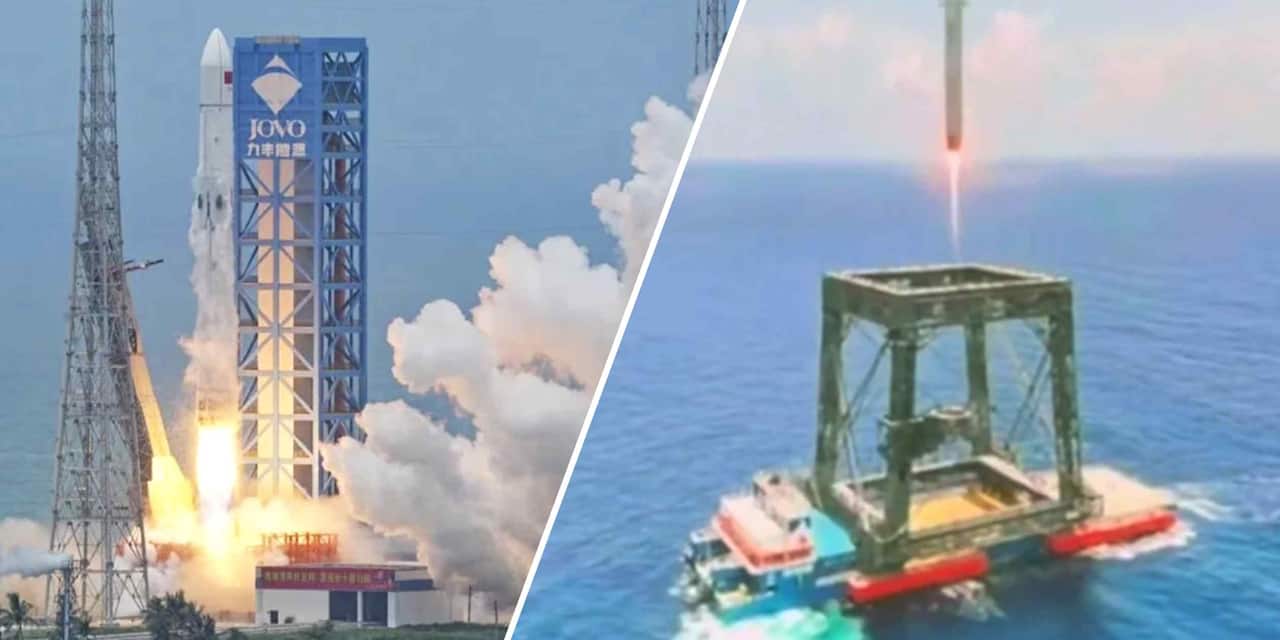
China has successfully landed a reusable rocket for the first time, a significant advancement for its space program according to state media. The China Aerospace Science and Technology Corporation announced that its Long March 10B rocket launched from Hainan at 12:15 local time on Friday. Approximately six minutes after its upper stage separated, the rocket's booster returned vertically to Earth and was recovered on a floating platform.

This development positions China to potentially compete with the United States' established dominance in reusable rocket technology, pioneered by companies like SpaceX and Blue Origin. Traditionally, rockets are expendable, making space launches costly. Reusing boosters, the most valuable component, can substantially reduce the expense of satellite launches and space exploration.

SpaceX achieved the first orbital reusable rocket landing with its Falcon 9 in December 2015, followed by Blue Origin's New Glenn in November 2025. The Falcon 9 now operates around 150 times annually, with boosters capable of multiple reuses. China's previous attempt at reusable rocket recovery occurred in February with a Long March 10A, which completed a controlled descent and splashdown near a recovery platform.

The Long March 10B has a payload capacity of at least 16 metric tons to low-Earth orbit, drawing comparisons to SpaceX's Falcon 9. However, unlike the Falcon 9's autonomous ground or drone ship landings, the Long March 10B utilizes 'landing hooks' to catch a net on a floating platform.

Following the news, shares in Chinese space firms saw a notable increase, with China Spacesat and China Satellite Communications each rising by their daily limit of 10%.

Frequently asked questions

A reusable rocket is a spacecraft component, typically the booster, that can be recovered after launch and used for subsequent missions, significantly reducing the cost of space exploration.

It signifies China's advancement in space technology and its potential to compete with established players like SpaceX and Blue Origin, potentially lowering the cost of space launches.

Unlike some US rockets that land autonomously on pads or ships, the Long March 10B uses 'landing hooks' to catch a net attached to a floating platform.

China Spacesat and China Satellite Communications each rose by the daily limit of 10%.

What Happens Next

01Further development and deployment of China's reusable rocket technology.

Get the newsletter.

Pick the topics you actually care about. We'll email when there's news worth your time, on the cadence you choose. Cancel any time from your account.

Cadence

How It Developed

China Aerospace Science and Technology Corporation successfully landed a reusable rocket for the first time.
The Long March 10B rocket launched from Hainan.
The booster returned vertically and was recovered on a floating platform.
This achievement could challenge US dominance in reusable rocket technology.
China previously attempted reusable rocket recovery in February with a Long March 10A.
China successfully tested rocket recovery at sea on Friday, July 10, 2026.

Sources

T1
China lands reusable rocket for first time, state media saysBBC News
T1
China successfully recovers rocket at sea in push for reusable launchesNikkei Asia

Related Stories

China's Long March 10B rocket completes maiden launch with booster recovery
10 Jul · 4:40 AM
Japan to test launch reusable rocket prototype
9 Jul · 8:50 PM
US Firm AMPERA Advances Thorium Reactor Development with 3D Printing
9 Jul · 9:50 PM
China Eases Restrictions on AI Firms Purchasing Nvidia H200 Chips
9 Jul · 2:15 PM
Rocket developers used to chase satellite trends. Is the inverse now true?
9 Jul · 11:05 AM